When the world’s leading wealthy democracies gathered for their first ever summit in a French countryside chateau in 1975, China was never in the room. That original gathering of six major powers, which would become the annual Group of 7 a year later after Canada joined, was created to coordinate policy for a slumping global economy — and Beijing’s absence was never controversial.
At the time, China was mired in domestic political upheaval, decades away from its transformation into a global economic powerhouse. The idea of Mao Zedong, China’s revolutionary leader, joining U.S. President Gerald Ford and other Western heads of state for policy talks was unthinkable: Beijing had provided extensive military support to Ho Chi Minh’s communist forces in Vietnam, which ultimately defeated both U.S. and French military campaigns in the region. A seat at the 1975 Rambouillet summit would have never been on the table.
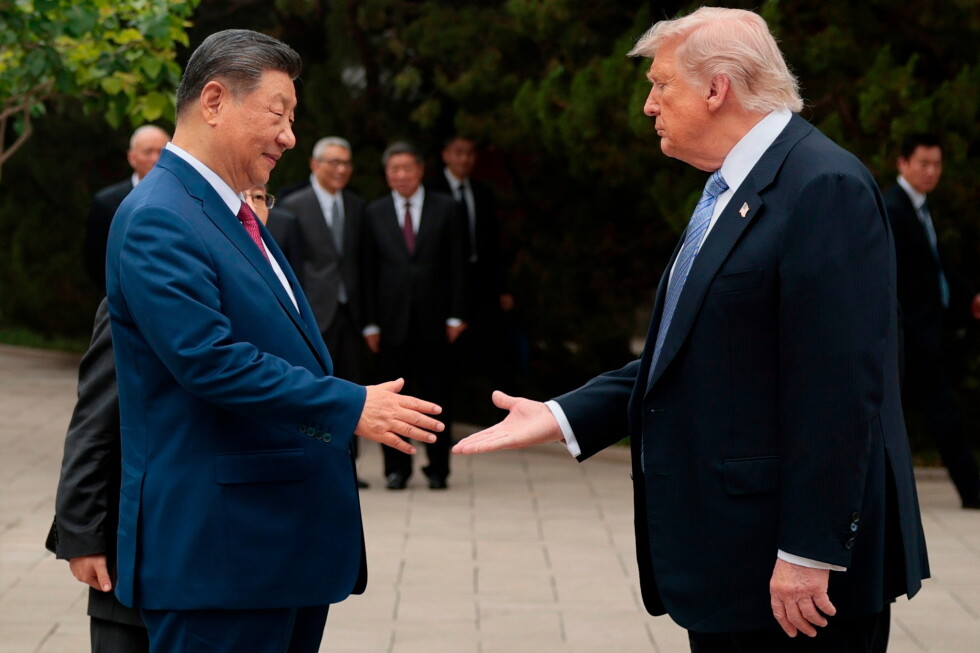
Decades later, as then-U.S. President Donald Trump and other G7 leaders convened for their summit in the French Alpine town of Evian-les-Bains, that historic exclusion has started to look increasingly out of step with global reality. Today, China holds enormous influence over global economic stability and international affairs, prompting a pressing question that hangs over every G7 gathering: Does the bloc make any sense without China at the table?
By any economic metric, China would qualify for membership without question. Following decades of rapid expansion after Mao’s death in 1976, China’s economy now outpaces every G7 member except the United States — it is larger than the economies of Germany, Japan, the United Kingdom, France, Italy and Canada combined. By that measure, a G7 summit without China is analogous to organizing a men’s soccer World Cup and excluding five-time champion Brazil, analysts note.
John Kirton, a University of Toronto scholar who specializes in G7 research, summed up China’s transformation: “From being only a tiny, benign panda bear in 1975, China has become a great global dragon.” He added that many observers agree the G7 and the broader global community would benefit from Chinese membership, with a plausible answer to the question of inclusion being “Yes.”
Yet a fundamental barrier stands in the way: the G7’s long-standing unwritten rule that membership is limited to functioning democracies. In their 1975 founding declaration at Rambouillet, the original leaders explicitly stated the bloc was built for nations “each responsible for the government of an open, democratic society, dedicated to individual liberty and social advancement.”
China would never have met that threshold during Mao’s rule, when tens of millions died from famine and political upheaval tied to the Chinese Communist Party’s revolutionary campaigns. Under current President Xi Jinping, it still does not qualify: multiple independent global rankings, including Freedom House’s annual Freedom in the World report, Reporters Without Borders’ World Press Freedom Index and the Fraser Institute’s economic freedom ranking, all place China far behind G7 members when it comes to civil liberties and political openness.
Even without a seat at the table, China is set to be the most consequential unspoken topic at the G7 summit. Beijing’s global clout touches nearly every policy area the bloc addresses, from trade to climate to national security. China posted a record annual trade surplus of nearly $1.2 trillion in 2025, maintaining a massive export imbalance that has long been a source of friction with other major industrialized economies. It controls a dominant share of the global supply of critical rare minerals required for green energy and advanced technology, its rapid military and tech advancement has sparked widespread anxiety among Western rivals, and it remains the world’s top emitter of greenhouse gases driving climate change.
That makes China the unavoidable “elephant in the room” for the three-day Evian summit. As summit host, French President Emmanuel Macron has specifically set aside time for leaders to discuss rebalancing trade relations with China, amid growing fears that a surge in Chinese exports — particularly of electric vehicles — could harm domestic manufacturing sectors across G7 nations.
While relations between Trump and other G7 leaders had been strained in the lead-up to the summit over disagreements on Iran policy and other contentious issues, China is widely seen as a unifying point for the bloc, according to Cédric Dupont, an international politics specialist at the Geneva Graduate Institute. “They agree on the same thing, you know: China is a problem,” Dupont explained.
For its part, Beijing has watched G7 developments with open caution. Historically, the Chinese government has criticized the bloc as an outdated Cold War-era institution designed to advance Western ideological interests in a divided world. But in a statement provided to the Associated Press ahead of the Evian summit, China’s Foreign Ministry struck a more measured tone, saying “the G7 should serve as a catalyst for solidarity and cooperation rather than an amplifier of division and confrontation.”
Beijing-based analyst Wang Zichen noted that China’s wariness stems from the bloc’s inherent alignment with U.S.-led Western power. “Beijing is wary of the G7 because it sees the group as structurally aligned with U.S.-led Western power, and increasingly as a venue where China is discussed as a challenge or threat,” Wang said. Even so, China cannot dismiss the G7’s influence: “China recognizes that the G7 still represents a very significant concentration of economic, technological, military and financial power,” he added.
Beyond the democracy requirement, analysts argue that admitting China would irrevocably fracture the G7’s internal cohesion. Beijing’s authoritarian political system, core national interests and policy positions on flashpoints including Russia’s war in Ukraine and Iran’s nuclear program are fundamentally misaligned with those of Western G7 democracies. Even more, analysts warn Chinese membership could split long-standing alliances within the bloc, as individual nations could be tempted to strike separate side deals with Beijing to secure favorable terms on trade, critical minerals, technology and other key issues.
“China inside would indeed be a Trojan horse,” Kirton said. “With a Chinese leader at the table, individual members might be tempted to break G7 ranks to secure special favors from him on the economic, critical minerals, digital technology and other issues they address.”
Chris Alden, an international relations expert at the London School of Economics and Political Science, echoed that assessment, saying adding China “would make it very difficult for it [the G7] to function.”
The bad experience of Russia’s brief membership also serves as a major warning for G7 leaders. The bloc’s last expansion, which added Russia as a full member in 1998, ended in acrimony: the G7 froze Russia out after Vladimir Putin seized Crimea from Ukraine in 2014, a move that foreshadowed Russia’s full-scale invasion of Ukraine in 2022. While Trump argued last year that excluding Russia was “a very big mistake,” the experience convinced most other G7 leaders that they should never again allow a non-democratic power to join their fully democratic bloc.
Associated Press writers Ken Moritsugu and E. Eduardo Castillo in Beijing and Jamey Keaten in Geneva contributed reporting to this article.