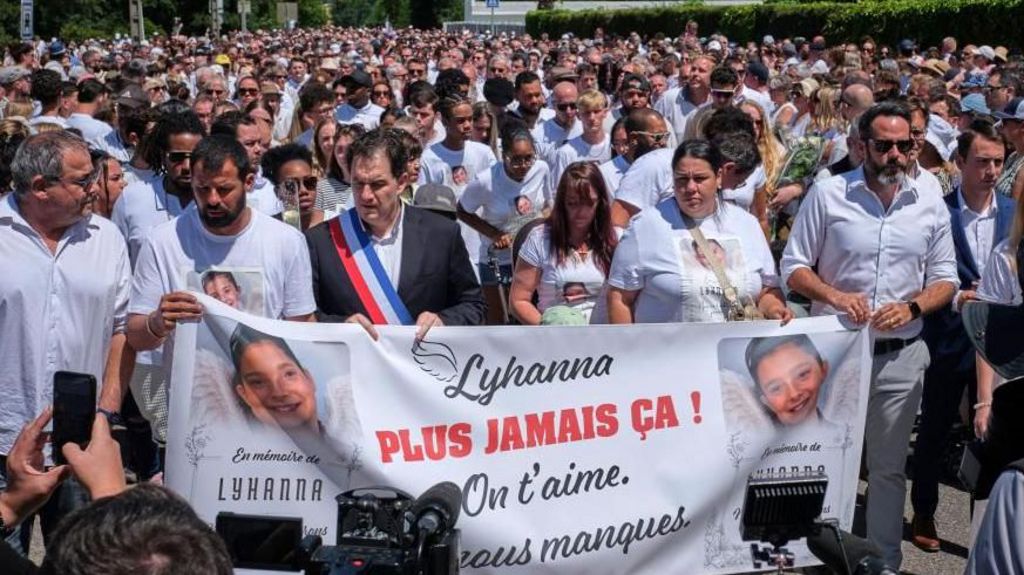
Two weeks after 11-year-old Lyhanna was killed in southwestern France, the young girl was laid to rest on Wednesday, a tragedy that has roiled the nation in anger over catastrophic systemic failures that allowed her suspected killer to remain free despite multiple red flags. Hundreds of local residents joined Lyhanna’s family for the funeral service in the small town of Fleurance, located roughly 30 miles west of Toulouse. Following the ceremony, she was interred at the town’s municipal cemetery. In a show of collective solidarity across the wider Gers region, mayors ordered flags lowered to half-mast outside town halls and called on local communities to gather in remembrance and support for the victim’s family. The murder sparked a national wave of revulsion once details of systemic missteps came to light: the prime suspect, 41-year-old Jérôme Barella, had been reported to French law enforcement nine months earlier for repeated sexual abuse allegations against a 10-year-old child, yet investigators never once summoned him for questioning. Further records show that U.S. authorities had previously alerted French police to suspicious online activity by Barella that indicated he may have been accessing child sexual abuse material. According to reporting from French newspaper Le Monde, this alert was only uncovered after a post-arrest search of Barella’s records last week. The French National Office for Minors (OFMIN) confirmed the alert was received in 2023 and was classified as a “low priority” signal, noting the office processes roughly 300,000 such notifications annually. The scandal has expanded beyond Jérôme Barella, with new sexual abuse allegations now levied against his father and brother as well. This week, Jérôme’s 44-year-old brother Yannick was taken into custody after he presented himself to police to file a defamation complaint. He was subsequently placed under formal investigation for rape, based on claims from two accusers: one who was a minor at the time of the alleged assault, and a second who is Yannick’s former partner. Yannick has denied all allegations against him. The family’s 71-year-old patriarch, Joël Barella, is also now under formal investigation after prosecutors in Béziers reopened a 2019 sexual abuse case accusing him of assaulting his partner’s granddaughter. A second granddaughter has since come forward with additional abuse allegations in national media, and Joël has repeatedly denied all claims. Investigative records confirm Jérôme Barella, whose daughter was a close friend of Lyhanna, was seen driving the 11-year-old away from her school on the Friday she disappeared. He was taken into custody three days later, and Lyhanna’s remains were discovered on a nearby farm eight days ago. What began as a horrific local murder has rapidly escalated into a national political scandal, as the French public has confronted the full scope of official failures that allowed Barella to remain at liberty. Court records show Barella had already been linked to three separate open sexual abuse cases when he was reported for the alleged rape of 10-year-old Rosa in August 2023. A medical examination confirmed the credibility of Rosa’s claims, yet justice officials and gendarmes moved so slowly that Barella was never contacted over the nine months between the report and Lyhanna’s killing. The case has erupted at a moment of growing public anxiety across France over systemic failures in how the justice system handles sexual violence against women and children. In recent weeks, Paris City Hall has faced widespread accusations of negligence over a string of sexual abuse charges against school employee. Just this week, iconic French singer Patrick Bruel was placed under formal investigation for rape and sexual assault, charges he has repeatedly denied. In response to mounting pressure for his resignation over the Lyhanna case, Justice Minister Gérald Darmanin has refused to step down. A public opinion poll released Friday found that two-thirds of French respondents support Darmanin remaining in his post. Darmanin has pushed back against claims that the failures stem from chronic underfunding or understaffing in the justice system — a common criticism from activists. Instead, he has framed the blunder as a failure of priority-setting, arguing the obvious severity of the allegations against Barella should have elevated the case much earlier. Prime Minister Sébastien Lecornu has already announced plans to strengthen France’s legal framework for sexual violence crimes, proposing longer prison sentences for child rapists and mandatory statutory deadlines for the completion of investigations into child sexual abuse claims. But advocacy groups and labor unions say incremental changes are not enough. They are calling for a sweeping new standalone law addressing sexual violence against women and children, paired with a dedicated €2.7 billion ($3.1 billion) budget to implement systemic reforms. Activists have pledged to hold weekly peaceful protests outside court buildings across France every Monday to demand action. “This isn’t hysteria — this is a call for structural change,” said Sophie Binet, general secretary of the powerful CGT labor union, which has backed the reform movement.