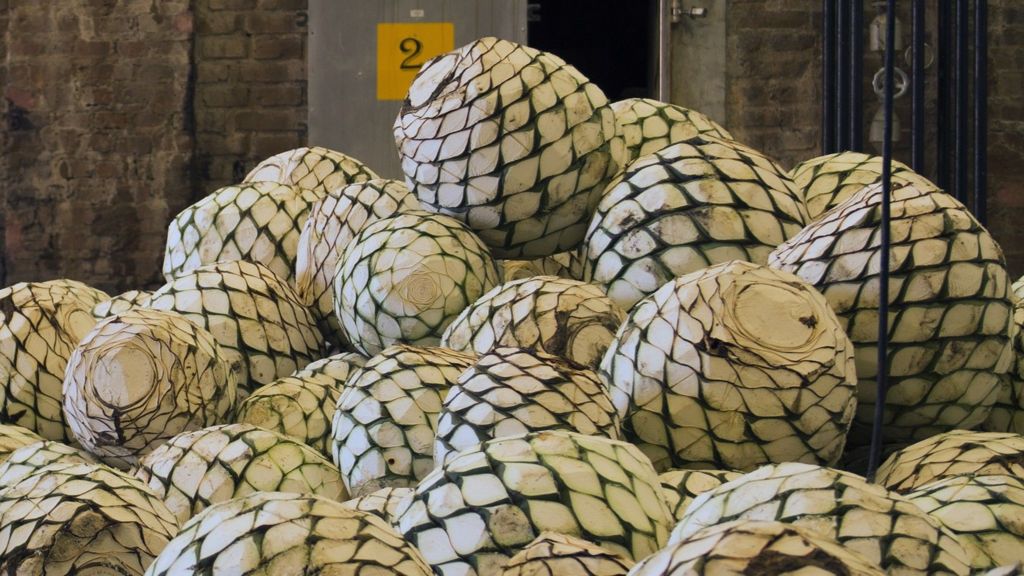
For generations of Indian farmers across the Deccan Plateau, the spiky, hardy agave Americana plant served only one purpose: a low-maintenance, impenetrable natural fence to keep wild animals away from valuable food crops. To them, it was nothing more than a stubborn, valueless weed growing along property lines. Today, this native desert plant is being rebranded as “blue gold,” unlocking unexpected new income streams for rural communities and laying the groundwork for India’s nascent homegrown agave spirits industry, tapping into a $15 billion global market long dominated by Mexico.
The turning point for many smallholder farmers like Masapalli Venkatesh came in 2010, when traders began approaching rural landholders seeking to source wild agave for spirit production. Venkatesh, who previously grew tomatoes, peanuts, and corn on his 10-acre Kandukur farm, quickly transformed into a regional agave aggregator, coordinating a network of villagers and farmers across a 100-kilometer range to meet growing demand from domestic distilleries. “By combining the yields of multiple small holdings, I ensure a steady, high-volume supply that distilleries are willing to pay a premium for,” Venkatesh explained, turning what was once unused plant life into a reliable source of supplementary income.
Harvesting agave for spirit production is a far more nuanced process than many outsiders realize. The critical component of the plant is its carbohydrate-dense core, called the piña for its resemblance to a large pineapple. Skilled harvesters must first strip away the plant’s sharp, spiky leaves to expose the core, but timing is everything: once the plant begins to bloom, it redirects all its stored sugar reserves to the flowering stalk in just a matter of days, leaving the piña completely depleted and useless for alcohol production. “Gatherers must accurately identify the exact pre-blooming window to harvest the plant at its absolute peak sugar capacity, making the timing of the harvest incredibly narrow,” noted Rakshay Dhariwal, founder of Indian craft distiller Maya Pistola Agavepura.
The clock does not stop once harvesting is complete. To preserve sugar content and flavor, piñas must reach a processing facility to undergo sugar extraction within 24 hours of harvest. Any longer delay triggers uncontrolled fermentation and sugar rot, ruining the delicate flavor profile required for premium spirits. This logistical challenge is particularly acute in India, where wild agave grows in scattered patches across four states: Karnataka, Maharashtra, Rajasthan, and Andhra Pradesh. Unlike Mexico’s centralized, large-scale agave plantations, Indian distillers rely on a decentralized network of local aggregators to source semi-wild plants growing on marginal lands and rural property boundaries.
Despite these logistical hurdles, demand for agave spirits is surging across India. Industry insiders report the domestic market is growing at an annual rate of 31%, as domestic consumers grow more open to exploring craft spirits beyond India’s long-standing favorite, whisky. “It’s only been a few years now that India’s finally caught the tequila bug,” said Vikram Achanta, co-founder of 30 Best Bars India. “Producers are beginning to experiment with it seriously, and there’s a consumer base today that is far more open to exploring new spirits than before.” While agave spirits are unlikely to displace whisky as India’s top-selling spirit, Achanta notes that domestic producers are already carving out a unique niche, building an emerging Indian agave identity around the Deccan Plateau’s wild plants that sets their products apart from imported Mexican offerings. “It’s still early days, but they’re helping move the category from curiosity to something more credible,” he added.
Desmond Nazareth, founder of Agave India, is widely recognized as the pioneer of India’s agave spirit sector, having launched the country’s first domestic agave spirit back in 2011, nearly a decade before the market began to develop. “What started as kitchen experiments eventually became India’s first craft agave distillery after nearly 12 years of research and experimentation,” Nazareth said. “We were making Indian agave spirit long before the market was ready for it. It was a craft business way ahead of its time.” Today, he is taking a data-driven approach to scaling the industry, using satellite imagery to map existing successful agave growing regions and identify new areas with matching environmental conditions. This careful planning is critical: agave takes between 9 and 13 years to mature, so a poor site selection can mean losing an entire decade of investment.
A common concern around the emerging industry is whether growing demand will deplete India’s wild agave supplies, but agricultural expert Miguel Braganza says there is little immediate risk. For one, India’s domestic processing capacity remains extremely small, with just one commercial processing plant currently operating, owned by Nazareth’s Agave India. Additionally, wild agave is an exceptionally effective self-propagator. Over its 10 to 20-year lifespan, a single mother plant sends out long underground root runners that sprout genetically identical baby agaves every few feet, slowly growing into large, self-sustaining colonies without any human intervention. “So one plant can naturally turn into dozens of plants across an area without any human help,” Braganza explained.
Not all Indian agave spirit brands rely on domestic wild agave, however. Entrepreneur Sree Harsha Vadlamudi, co-founder of tequila brand Loca Loka, argues that wild agave has inherent limitations for large-scale, standardized production. Unlike selectively bred farmed agave in Mexico, wild Indian agave is genetically inconsistent, leading to fluctuating sugar yields that make consistent alcohol output difficult to achieve. To avoid this issue, Loca Loka sources its blue agave from established plantations in Jalisco, Mexico, the only region in the world legally allowed to produce tequila. “We wanted to leverage the rich, iron-heavy red soil left behind by ancient volcanic eruptions in Jalisco, Mexico,” Vadlamudi said. “This unique terroir imparts a distinct flavour profile to the agave that cannot be replicated by growing the same seeds in Indian soil.” Mexico’s large-scale commercial operations also benefit from modern technological investments, including drones and artificial intelligence systems that monitor crop health, track piña growth, and pinpoint the ideal harvest window – resources that remain out of reach for most emerging Indian producers.
While Nazareth acknowledges that building a competitive, large-scale agave industry in India will take decades of patient investment, he remains optimistic about the sector’s long-term potential. “India could absolutely become a major agave economy,” he said. “The Deccan Plateau alone has millions of acres suitable for cultivation. We could theoretically rival Mexico if there’s long-term vision and patience.”