June 12 marks one year since one of the deadliest aviation disasters in India’s history, when an Air India passenger flight crashed just 32 seconds after taking off from Ahmedabad, Gujarat, killing 260 people — 241 on board the aircraft and 19 more on the ground. Only one passenger survived the catastrophic impact, which left emergency response teams and forensic experts facing an unprecedented challenge to identify the hundreds of victims.
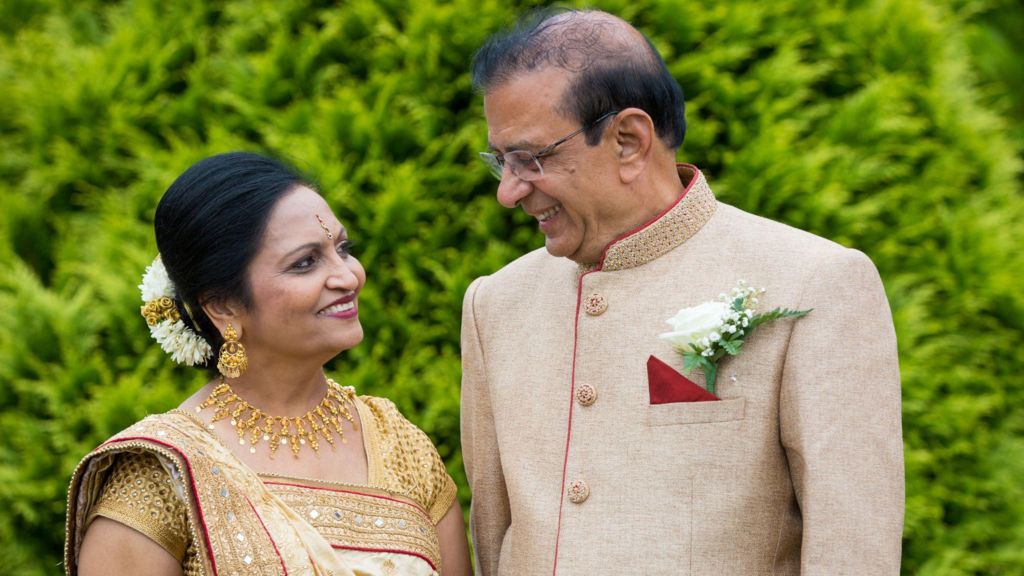
Among those killed were London residents Ashok and Shobhana Patel, who were heading home after their trip. Their son Miten Patel, who traveled to Ahmedabad just hours after the crash with his brother to deliver his parents’ dental records, still carries the trauma of the chaotic aftermath. With no other commercial options available, the pair flew Air India to reach the city, and Miten credits his parents’ decision to teach him the local Gujarati language for helping him navigate the overwhelming logistics of recovering his parents’ remains.
It took more than a week for the Patels’ remains to be repatriated to the United Kingdom, but the ordeal was far from over. Four days after the remains arrived in London, local police contacted Miten to request an urgent evening meeting, refusing to share details over the phone. Further imaging revealed that Shobhana Patel’s casket held mixed remains: alongside her body were additional skeletal fragments belonging to an unrelated unidentified man. UK authorities asked Miten to keep the error secret for weeks, but he pushed to meet with the coroner directly to demand separation of the remains. The family was forced to wait another full month to hold a joint cremation for both of his parents, delaying Ashok’s final rites to allow the separation and reprocessing to be completed.
Today, almost 12 months after the crash, the unidentified man found in Shobhana Patel’s casket remains unrecognized. UK Coroner Fiona Wilcox confirmed during a hearing this week that palm prints and DNA samples have been sent to Indian authorities for matching, but no confirmation of identity has been received to date. She noted that opening an inquest almost a year after a death is an extraordinary step, adding that she remains hopeful the man’s identity will be confirmed.
The Patel family is not alone in their suffering. At least one other family affected by the crash has reported a major identification error: Amanda Donaghey returned to the UK last year believing she was bringing home the remains of her 39-year-old son Fiongal Greenlaw-Meek, only to discover she had been given the body of 70-year-old Indian woman Vasuben Narendrasinh Raj. Wilcox confirmed this week that authorities have only recently connected with Raj’s son, and Donaghey is still waiting to recover her son’s remains.
Forensic experts who responded to the crash say the scale of the disaster created unavoidable challenges for victim identification. The aircraft broke apart on impact after crashing into a block of medical student accommodation, scattering wreckage and human remains across 37,000 square meters — an area roughly equal to five full-sized football pitches. Ninety percent of victims suffered severe charring from the post-crash fire, with extreme thermal damage destroying fingerprints, facial features and other common visual identifiers. Forensic teams spent months working through the rubble in 40-degree-plus Celsius heat, surrounded by decomposing remains, a working environment many describe as permanently traumatic.
Dr Deepak Venkatesh, an independent forensic expert deployed to the crash site to assist with identification, explained that in the immediate aftermath of the disaster, emergency responders prioritized search and rescue over strictly segregating recovered remains. “The recovery environment presented challenges for maintaining the separation of remains, which can contribute to commingling,” he said, noting that commingling — the mixing of remains from multiple individuals — was an unavoidable risk given the conditions. After the initial rescue effort wrapped up, teams conducted a systematic grid search of the entire crash site to recover all remaining fragments.
India’s National Disaster Management Authority (NDMA) has formally acknowledged the systemic gaps exposed by the crash, and in January 2026, released updated victim identification guidelines that use the Air India crash as a core case study. The guidelines note that prior to the disaster, comprehensive disaster victim identification had not received adequate systematic attention in India’s national disaster management framework. At the time of the crash, protocols prioritized DNA verification over the globally recognized faster, more reliable method of dental identification, which created a crippling bottleneck at the only regional forensic laboratory in Gandhinagar. The sudden influx of hundreds of highly degraded DNA samples overwhelmed the lab’s capacity, the NDMA report found, concluding that India needs to expand regional DNA testing infrastructure and integrate more dental identification into standard protocols.
Despite the procedural changes that have come from the tragedy, grieving families say they have yet to receive the transparency and accountability they deserve. James Healey-Pratt, the lawyer representing both Miten Patel and Amanda Donaghey, argues that even with the unprecedented scale of the disaster, authorities owe families a full accounting of what went wrong. “There still needs to be transparency and accountability, because the families deserve it,” he said, adding that no senior Indian authority has accepted responsibility for the identification errors more than a year later. “It’s highly embarrassing, and it makes them look incompetent.”
For Miten Patel, the fight for accountability is a way to honor the parents he lost. Most days, he sets his grief aside to focus on his advocacy, but late at night, he retreats to a private room to watch old videos of his parents. “At the end of the day, my mother came back home with somebody else,” he said. When he thinks about the future, he says he only wants one thing: to be able to tell his parents he did everything he could after they were gone. “I want them to say to me, Beta (son), we are so proud of you. You did everything you could after we went.”
The BBC has reached out to India’s foreign ministry, the Ahmedabad hospital that led on-site identification, and the UK Foreign Office for comment on the ongoing inquest and identification errors, but has not received a response. Last July, roughly one month after the crash, the Indian foreign ministry said in a statement that authorities had “carried out identification of victims as per established protocols and technical requirements” and “handled all mortal remains with utmost professionalism and with due regard for the dignity of the deceased.”