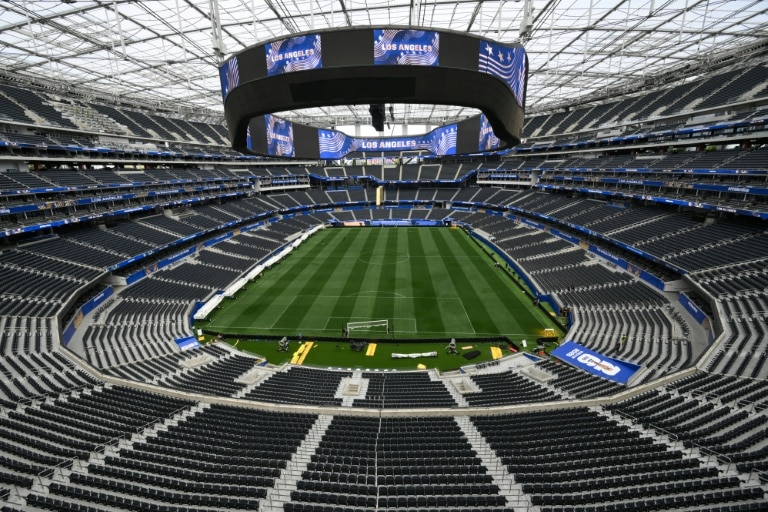
As the 2026 FIFA World Cup — the largest edition in tournament history, co-hosted by the United States, Mexico, and Canada — gets underway, top U.S. homeland security officials have outlined a sweeping multi-layered security plan for all 78 matches hosted across 11 American cities, while acknowledging lingering concerns over unpredictable lone wolf attacks and unruly international fan behavior.
The first U.S.-hosted match of the tournament, pitting the host nation against Paraguay, is scheduled for June 12 at Inglewood, California’s SoFi Stadium, kicking off 38 days of play that will conclude with the final on July 19. In comments to Fox News’ *Fox and Friends* just hours before the tournament’s opening kickoff, Department of Homeland Security Secretary Markwayne Mullin emphasized that authorities have done everything in their power to secure match venues. “We feel like we’re as safe as we can possibly be,” Mullin said, noting that every venue will have dedicated crowd control protocols and anti-drone countermeasures. However, he added a key caveat: “But we can’t control… the lone wolf.”
Mullin explained that the highest area of vulnerability lies in so-called “soft zones” outside the secured perimeter around stadiums, where crowds gather before and after matches. To mitigate this risk, he said local and state law enforcement agencies will maintain a visible, flexible presence in these outer areas to respond quickly to any incident, reaffirming that “the games are going to be very secure.”
Drawing a comparison to the United States’ most-watched annual sporting event to put the World Cup’s scale in perspective, Mullin noted the tournament will deliver what amounts to 78 Super Bowls over just 38 days. Many matches will draw crowds larger than the annual NFL championship, he added, with a projected global audience of 1.4 billion viewers — far outstripping the 250 million who tune into the Super Bowl annually.
Andrew Giuliani, head of the White House World Cup Task Force, detailed key new security upgrades this week during an appearance at the Washington-based Atlantic Council. A core addition is full anti-drone coverage for every U.S.-hosted match, backed by a $500 million federal grant that funded specialized training for local and state officers to counter unauthorized drone incursions. The need for this measure was underscored by recent incidents at other major global events: a French National Assembly report recorded 355 unauthorized drone intrusions during the 2024 Paris Olympic Games, resulting in 81 arrests.
Giuliani noted that the 2026 World Cup marks the first time the United States has hosted a global sporting event of this scale since the 2002 Salt Lake City Winter Olympics. As of the tournament’s opening, he confirmed there are no credible active threats against the event, but authorities are maintaining constant, intensive monitoring. “I can tell you that a big part of my day gets spent in a SCIF” — a sensitive compartmented information facility, the secured room used to discuss classified intelligence — Giuliani said, adding that “the intelligence community is tripled down looking at this World Cup, and we’ll continue to monitor it between now and whenever the final goal is scored on July 19th.”
Much of the on-the-ground security responsibility falls to local police departments, which face the unique challenge of adapting to the different crowd dynamics of international soccer, compared to the more reserved crowds the majority of U.S. officers are accustomed to managing at NFL games. The 2024 Copa America, held in the U.S. as a warm-up event for the World Cup, exposed this gap: stadium security and local officers were caught off guard by the more boisterous behavior of international soccer fans. Giuliani told ESPN that many common celebratory behaviors from international fans may look like a riot to officers who only have experience with domestic U.S. sports crowds, requiring adjusted training and expectations.
Local departments have rolled out targeted adaptations to address this gap. The Philadelphia Police Department, for example, will equip all officers working matches with body cameras that feature live translation capabilities, to streamline communication with foreign fans who do not speak English. Philadelphia, a city with deep historical significance to the United States, will host six matches during the tournament — including a Round of 16 matchup on July 4, which coincides with 250th anniversary celebrations of the signing of the Declaration of Independence. The city’s Fraternal Order of Police Lodge 5 president Roosevelt Poplar told ESPN that the department has implemented mandatory overtime for all officers during the “all hands on deck” tournament period, with a focus on ensuring officers are prepared for the extended 39-day operational window. “We want to make sure our officers are mentally prepared to handle the long 39 days this is going to be,” Poplar said.