The 2026 FIFA World Cup, the most prestigious tournament in global football, kicked off Thursday amid a wave of controversy that has pitted the joy of the world’s game against systemic issues ranging from harsh visa restrictions and exploitative dynamic pricing to overt political interference from the Trump administration. What was billed as a historic first tri-nation co-hosting effort between the United States, Mexico and Canada has instead been defined by barriers for teams, officials and fans, particularly those from Global South nations. Play opened with the host Mexico facing 2010 World Cup winner South Africa in Mexico City, followed by a Group Stage clash between South Korea and Czechia. The North American leg of the tournament gets underway on Friday, with Canada’s opening match against Bosnia and Herzegovina in the afternoon and the United States taking on Paraguay in the evening. Of the tournament’s 104 total matches, 78 will be held across the U.S., while Canada and Mexico will host 15 matches apiece.
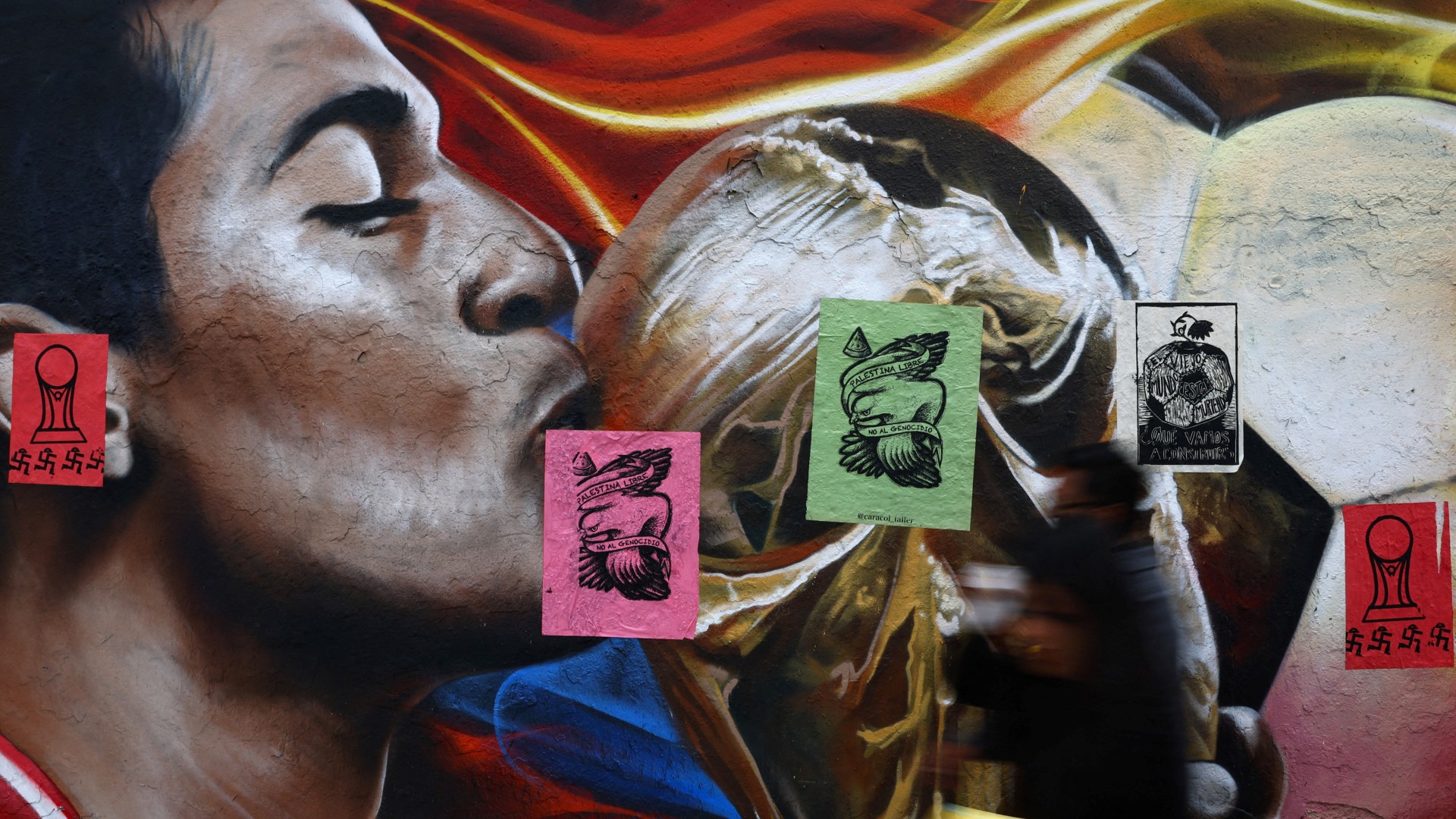
Even before the opening kickoff, political tensions spilled onto the pitch. Thousands of protesters gathered at Mexico City’s Estadio Ciudad de Mexico ahead of the opening ceremony, drawing attention to the politicized landscape surrounding the event. But the most high-profile controversy has centered on actions by the Trump administration, which has enacted sweeping entry restrictions and targeted vetting that has disrupted teams and officials across the globe. Just days before the tournament began, U.S. border officials barred entry to Somali referee Omar Artan, one of 52 officials selected to officiate matches, who was stopped during a so-called “routine inspection” at Miami International Airport despite holding a valid U.S. visa. Artan, who would have made history as the first Somali referee at a men’s World Cup and was named 2025 Confederation of African Football Referee of the Year, was held for 11 hours of intensive questioning where he provided all required FIFA and supporting documentation before being detained and deported back to Somalia via Istanbul. The U.S. currently enforces a near-total travel ban on Somalia.
Artan’s exclusion is not an isolated case. Iran, which is also under a full Trump-era travel ban, requested that all of its team’s matches held on U.S. soil be relocated to Mexico amid heightened security tensions tied to the U.S.-Israeli campaign against Iran. The request was initially rejected, before officials eventually allowed Iran to base its team in Mexico – but imposed a punishing requirement that the entire squad enter and exit the U.S. on the same day as each of their fixtures, eliminating any chance for proper pre-match acclimatization and preparation. Multiple members of Iran’s support staff were also denied visas entirely. U.S. officials publicly stated the restrictions were intended to prevent Iran from “abusing this system to sneak terrorists into the United States under false pretences.”
Teams from other nations that fall under U.S. travel restrictions have also faced heightened, discriminatory security measures. Senegal’s national team underwent extensive baggage inspections directly on the airport tarmac upon arrival, while the Uzbek squad was greeted at their U.S. training facility by drug-sniffing dogs and mandatory security screenings. Senegal is subject to a partial U.S. travel ban. An Iraqi player was detained at Chicago’s O’Hare International Airport, and the Iraqi team’s official photographer was barred from entering the country entirely.
On the eve of the tournament opening, U.S. President Donald Trump – who has previously been awarded the FIFA Peace Prize – made a stunning announcement that the U.S. would launch military strikes against Iran and invade its territory, amplifying global security fears just as the tournament got underway. When asked about the ongoing visa disputes impacting World Cup participants, Trump only stated that the cases were under review, adding “We’re working on it very closely to make sure the right people come into our country.”
Beyond political and visa chaos, the 2026 tournament has been marred by exorbitant ticket pricing that has priced out all but the wealthiest fans, a crisis amplified by the introduction of “dynamic pricing” for the first time in World Cup history. The new model allows ticket platform algorithms to adjust prices in real time based on consumer demand, pushing costs to unprecedented levels. As of the tournament’s opening day, the cheapest available ticket for the U.S.’s opening match in Los Angeles stood at $1,183, while the next U.S.-based fixture between Qatar and Switzerland carries a minimum entry price of roughly $614. Even for a lower-demand Group Stage match between Haiti and Scotland in Massachusetts, the cheapest available seat costs just under $650. A high-profile clash between top-ranked Brazil and Morocco in New Jersey will see fans pay a minimum of $1,633 just to attend.
Unlike past World Cups held in South Africa, Brazil, Russia and Qatar – which offered subsidized ticket rates for local residents – the U.S. has implemented no federal program to make tickets affordable for average fans. While prices in the U.S. are the highest across the three host nations, even opening match tickets in Mexico during the second round of sales in April 2026 ranged from $3,000 to $10,000, according to CNN reporting. Minor price cuts have emerged in the days leading up to kickoff, but volatile price fluctuations have left costs far out of reach for most casual fans. Leading U.S. sports outlet The Athletic has labeled the 2026 ticket pricing structure an outright “rip-off.”
Visa restrictions have created additional layers of barriers for international fans hoping to attend. The U.S. already maintains one of the strictest visa application regimes in the world, requiring visitors from Global South nations to disclose extensive financial records, full employment histories, next-of-kin details, attend mandatory in-person interviews and pay hundreds of dollars in application fees just to be considered. The Trump administration has added a new requirement for extensive social media vetting of all non-immigrant visa applicants, ostensibly to screen for national security threats, but critics argue the process is used to exclude applicants with political views that conflict with the administration’s agenda.
Unlike the 2018 World Cup in Russia and the 2022 tournament in Qatar, both of which implemented simplified special entry processes for ticket holders, the U.S. has created new hurdles that disproportionately impact fans from lower-income countries. In December 2025, Trump added 39 nations to the U.S. travel ban, including four participating World Cup nations: Haiti and Iran were placed under full entry bans, while Senegal and Ivory Coast face partial restrictions. The administration also imposed a mandatory visa bond scheme requiring travelers from 50 nations to pay deposits ranging from $5,000 to $15,000 to the State Department before receiving a visa, though the rule was partially rolled back in mid-May to exempt ticket holders and team staff from participating nations including Algeria, Cape Verde, Ivory Coast, Senegal and Tunisia.
Advocates and rights groups have criticized FIFA for failing to push back against these discriminatory restrictions, arguing the global governing body has effectively legitimized the U.S.’s policies. Even FIFA’s much-promoted “once-in-a-lifetime 2026 World Cup Final experience” package, which includes tickets and accommodation, is only open to legal residents of 16 countries – explicitly excluding residents of co-host Mexico from entering.
Andrew Giuliani, executive director of the White House Task Force on the 2026 FIFA World Cup, defended the administration’s policies in December 2025, telling reporters “I’ve known the president for 25 years. The president does not rule out anything that will help make American citizens safer.”
Tensions extend far beyond entry restrictions, with rights groups warning that even fans and officials with valid visas face risks of detention, invasive questioning and aggressive immigration enforcement during their stay. The issue gained attention after a father of two was arrested by U.S. Immigration and Customs Enforcement (ICE) during a FIFA Club World Cup match in New Jersey in July 2025. In late April 2026, the American Civil Liberties Union (ACLU) issued an official national travel advisory warning foreign visitors of the risks of entering the U.S., including arbitrary detention and deportation, invasive social media screening, racial profiling, suppression of free speech, widespread surveillance, and even the risk of inhumane treatment or death in U.S. detention facilities.
The ACLU has also raised concerns about the rights of people already residing in the U.S., particularly those protesting the Trump administration’s immigration policies. In late May, workers at Inglewood, California’s SoFi Stadium – which will host multiple World Cup matches – publicly demanded that ICE have no involvement in the tournament. Workers raised alarms that FIFA may be sharing personal data of staff and attendees with ICE and foreign intelligence agencies. “We cannot celebrate the World Cup while workers, tourists, immigrant families, and local communities are made to feel unsafe. Los Angeles should be a city of welcome – not fear,” Yolanda Fierro, a SoFi Stadium worker and member of Unite Here Local 11 trade union, said in a statement.
Activists stress they are not calling for a boycott of the tournament, but rather for all visitors to prepare for the risks they may face. “It is a call for precaution – for awareness of risks, for preparation, and for safety planning,” explained Jamil Dakwar, director of the ACLU’s human rights program.