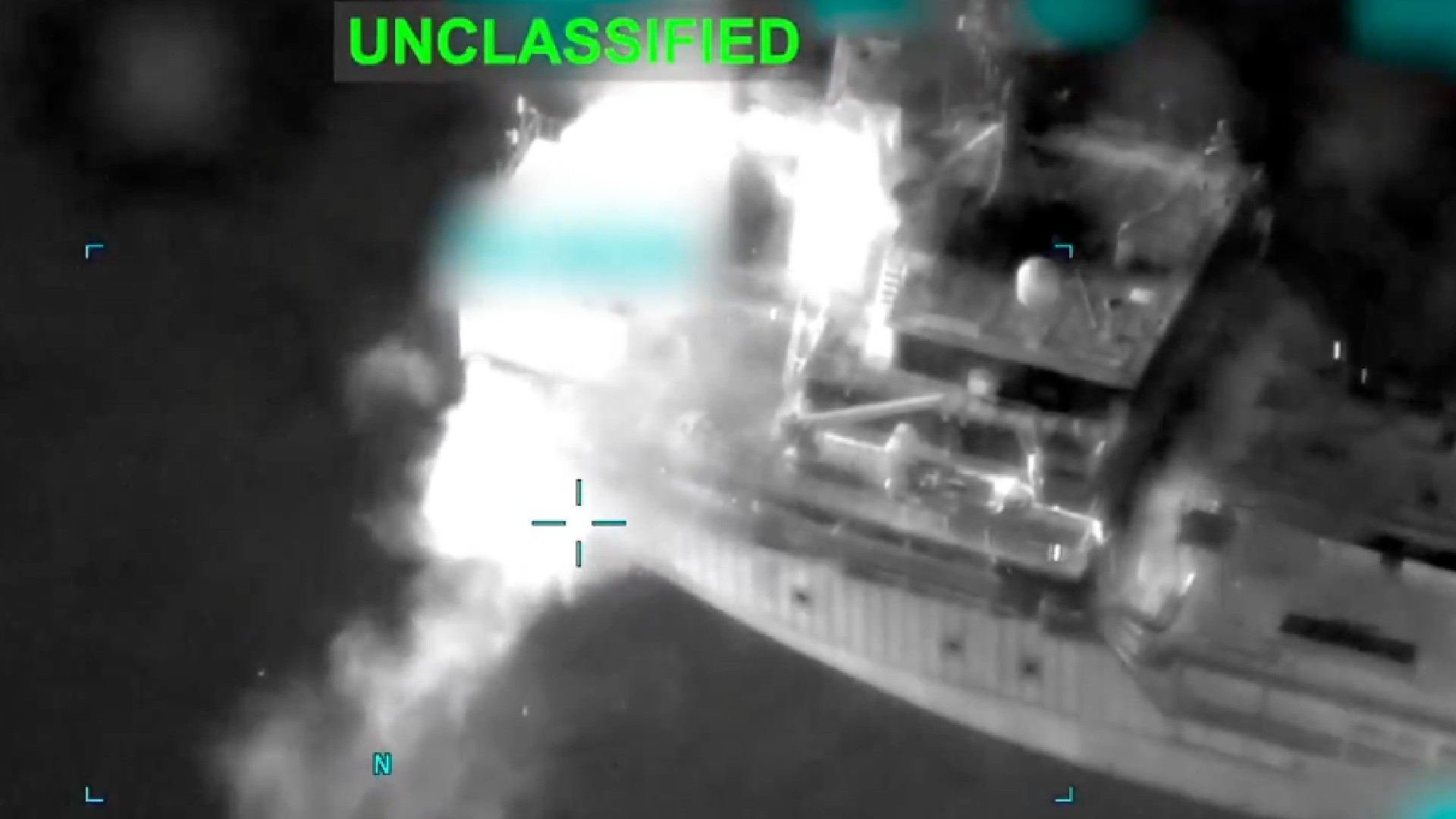
In a sharp escalation of tensions between the United States and Iran that has sent ripples across global maritime security, three Indian crew members have been confirmed dead following a U.S. military strike on a Palau-flagged oil tanker in the Gulf of Oman, India’s federal shipping minister announced Thursday.
The attack on the MT Settebello unfolded late Tuesday, after U.S. Central Command (Centcom) accused the vessel of repeatedly ignoring instructions from American forces while violating Washington’s ongoing blockade on Iranian ports by carrying Iranian crude oil. Of the 24 Indian nationals on board the tanker, 21 crew members have been pulled to safety, but three initially reported missing were confirmed dead after search teams recovered and identified their remains, said Union Minister Sarbananda Sonowal.
Calling the deaths a devastating loss for India’s broader maritime community, Sonowal confirmed that the Modi administration is extending full support to the bereaved families of the deceased. “I have directed officials to prioritize immediate repatriation of the rescued crew and the swift return of the mortal remains of the deceased so their final rites can be carried out,” the minister added. In direct response to the fatal strike, New Delhi summoned the deputy chief of the U.S. mission in India to register its objection.
This attack marks the third U.S. strike on commercial vessels off the Omani coast in less than a week, as Washington ramps up enforcement of its blockade of Iranian maritime trade. Just one day before the strike on the MT Settebello, U.S. forces targeted another Palau-flagged tanker with an Indian crew, the Marivex, in the same region, also citing non-compliance with U.S. instructions. All 24 crew members of that vessel were rescued by Omani military forces, and all Indian personnel were confirmed unharmed. On Thursday, India confirmed a third suspected U.S. strike hit the asphalt tanker Jalveer off Oman’s coast; the Royal Navy of Oman is coordinating the evacuation of all crew to the port of Shinas, with no reports of Indian casualties as of Thursday evening.
The surge in U.S. maritime operations comes against a backdrop of rapidly escalating cross-border hostilities between Washington and Tehran, which reignited earlier this week following the downing of a U.S. military helicopter near the Strait of Hormuz—a critical global chokepoint through which 20 percent of the world’s crude oil and 20 percent of its liquefied natural gas transit daily. Since the outbreak of the latest conflict in late February, Iran has effectively closed the Strait of Hormuz, prompting the U.S. to impose a full naval blockade on Iranian ports that launched on April 13. Centcom reported Wednesday that since the blockade began, U.S. forces have disabled eight non-compliant vessels, redirected 134 compliant ships, and allowed 42 vessels carrying humanitarian aid to pass through the restricted area.
In the wake of the helicopter downing, U.S. President Donald Trump launched new strikes on Iranian military infrastructure across the country overnight Wednesday into Thursday, with Iranian media reporting explosions in key areas including Bandar Abbas, Qeshm, and Minab near the Strait of Hormuz, as well as multiple locations near Tehran. Iranian media reported at least three people were wounded in Tehran province. Trump defended the strikes Wednesday, accusing Tehran of dragging out ceasefire negotiations and claiming Iran had “played us for suckers,” saying the country “will have to pay the price.”
Iran’s foreign ministry issued a sharp condemnation of the U.S. strikes Thursday, saying the attacks had rendered the nearly two-month-old ceasefire “practically meaningless” and holding Washington fully responsible for any “extremely serious consequences” of the escalation. The Islamic Revolutionary Guard Corps (IRGC) retaliated within hours, launching strikes on U.S.-linked military targets in Bahrain, Kuwait, and Jordan, extending the cycle of violence across the Middle East.