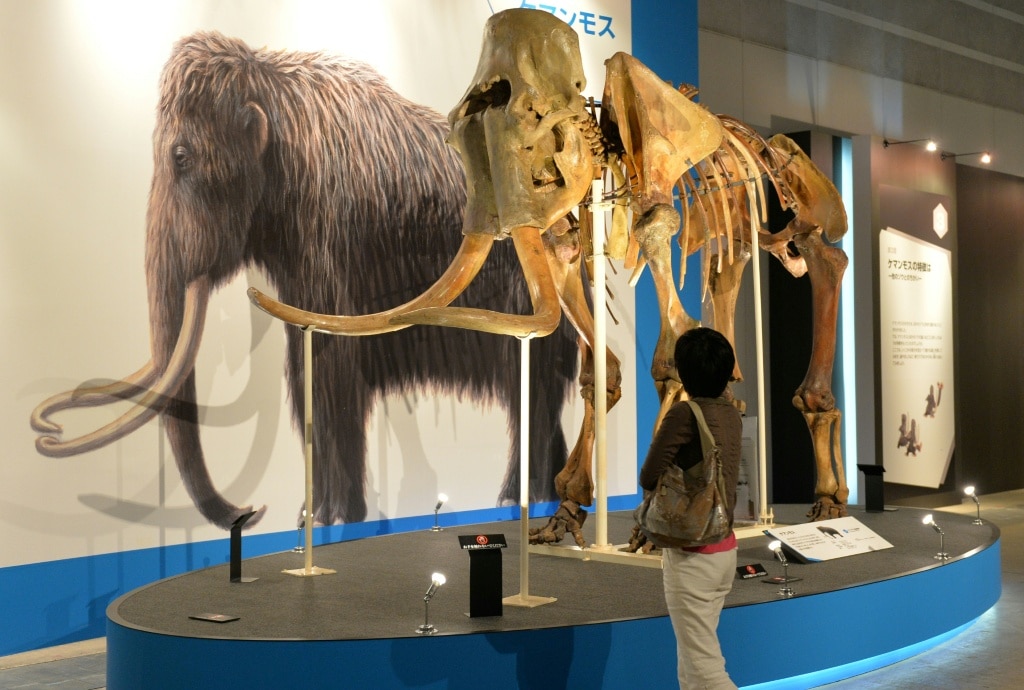
A remarkable scientific discovery has emerged from the frozen permafrost of Canada’s remote Yukon Territory, where researchers have recovered an unprecedented collection of ancient DNA—including genetic material from the extinct woolly mammoth—trapped within thousands of years of frozen arctic ground squirrel feces.
Lead study author Tyler Murchie, a paleogenomics researcher at Canada’s McMaster University, notes that while sifting through fossilized squirrel excrement may seem far less glamorous than unearthing a full mammoth tusk, the wealth of genetic data recovered from these sealed burrows offers an extraordinary, underappreciated window into Earth’s ancient ecosystems. The recovered DNA ranges in age from 3,000 to 700,000 years old, providing a continuous timeline of environmental change stretching back hundreds of millennia.
Beyond woolly mammoth DNA, the team uncovered genetic material from a wide range of ancient species, including gray wolves, ancient bison, prehistoric horses, a now-extinct North American cheetah, and hundreds of distinct plant species. The discovery came as a surprise: researchers initially set out only to study the arctic ground squirrel’s modern microbiome, instead stumbling upon a stunningly diverse cache of ancient organisms.
Arctic ground squirrels have unintentionally acted as natural archivists for hundreds of thousands of years, Murchie explained. The species hibernates for roughly eight months out of every year, so during their short active period, they forage aggressively, gathering and stashing every kind of organic material—from seeds, nuts and leaves to small bones and fragments of fur—within deep underground burrows. Over millennia, shifting permafrost levels permanently sealed off many of these abandoned burrows in Yukon, creating ideal, sub-zero natural time capsules that preserved genetic material far better than many other fossil sources. In one burrow, researchers even found a perfectly preserved frozen squirrel that entered hibernation thousands of years ago and never woke, Murchie described.
Using advanced genomic sequencing, the research team successfully reconstructed 18 full mitochondrial genomes from the recovered DNA fragments, including six from woolly mammoths that lived during distinct geological eras. The process of assembling these fragmented ancient sequences works like putting together a jigsaw puzzle, Murchie noted, with computational tools matching overlapping fragments to build complete genetic blueprints.
The find comes as Dallas-based biotech firm Colossal Biosciences has garnered global attention for its stated goal of “de-extincting” the woolly mammoth, which disappeared from the Earth roughly 4,000 years ago. Many independent experts have expressed skepticism about the project, arguing that any resulting animal would be little more than a genetically modified Asian elephant with superficial mammoth traits, not a true resurrected mammoth. Murchie, who has no affiliation with Colossal, confirmed that all genetic data from the new study will be released publicly for any researcher or project to use, though he added the existing cache of already-sequenced mammoth genomes means the new data will likely be a small addition to existing resources.
Published in the peer-reviewed journal Nature Communications, the study opens up an entirely new avenue for recovering ancient DNA from permafrost regions. The research team is already working on a follow-up study that will detail what the new genetic material reveals about woolly mammoth evolution and adaptation to changing Arctic climates, though Murchie would not share details ahead of publication, only calling the preliminary findings “super cool.” Reflecting on the discovery, Murchie emphasized that the extraordinary insights gained from what began as fossilized squirrel feces highlight how unexpected sources can rewrite our understanding of prehistoric life.