Armenia’s 2026 parliamentary election has delivered a decisive mandate for Prime Minister Nikol Pashinyan and his centrist Civil Contract Party, cementing the country’s trajectory toward deeper integration with the West even as traditional ally Russia wields economic pressure to alter its course. The final vote count released by Armenia’s electoral commission confirmed Civil Contract won 49.8% of the popular vote, a clear lead that will give the party a dominant majority in the national assembly. Trailing far behind were the pro-Russian Strong Armenia Alliance at 23.2%, the also pro-Russia Armenia Alliance at 9.9%, and conservative Prosperous Armenia with just 4% of the vote, with most of the 19 competing parties and blocs failing to clear the threshold for parliamentary representation. Overall voter turnout hit 59%, in line with pre-election projections.
This vote marked the first general election Armenia has held since its 2023 crushing military defeat to neighboring Azerbaijan over the disputed Nagorno-Karabakh region, a conflict that reshaped the country’s domestic political landscape and foreign policy priorities. Widely framed as a de facto referendum on Armenia’s geopolitical alignment, the election outcome is set to shape the small South Caucasus nation’s ties with both Moscow and Western capitals for years to come.
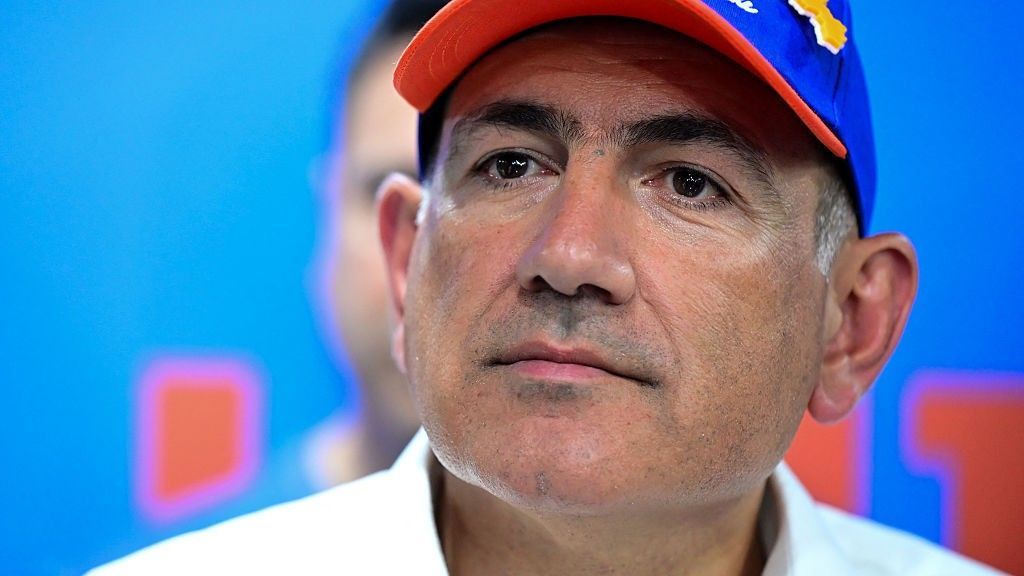
Pashinyan, who first rose to power in 2018 on a wave of mass anti-establishment protests against former leader Serzh Sargysan, declared victory early Monday morning, as preliminary results pointed to his party’s clear win. In his victory address, Pashinyan framed the outcome as a popular mandate for cross-border cooperation and regional stability. “Armenian people voted for peace, regional prosperity and cooperation,” he told supporters. He also clarified that while his administration would continue advancing its pro-Western rapprochement agenda, Armenia would remain an active member of the Russian-led Eurasian Economic Union (EAEU), the customs bloc that has long delivered tangible economic benefits to the country.
The result has drawn swift reaction from across the globe, with European Union leadership and France among the first Western powers to extend congratulations, praising both the democratic conduct of the vote and Armenia’s ongoing efforts to deepen ties with European institutions. U.S. President Donald Trump has also previously endorsed Pashinyan’s accelerated peace talks with Azerbaijan, brokered through U.S. mediation.
What makes this victory particularly notable is that it comes despite a marked decline in Pashinyan’s domestic approval ratings in recent years. Public opinion polling puts his current support at roughly 30%, down from 54% in the 2021 election. The erosion of popularity is largely tied to the fallout of the 2023 Nagorno-Karabakh conflict, which ended with Azerbaijan retaking full control of the mountainous enclave that had been home to 100,000 ethnic Armenians. Pashinyan’s critics across the political spectrum have refused to forgive his diplomatic concessions to Azerbaijan to advance peace, including his refusal to advocate aggressively for the release of former Nagorno-Karabakh leaders imprisoned in Baku. Even with the victory, the ongoing peace process with Azerbaijan remains deeply divisive among Armenians, with one recent poll showing 44% support and 41% opposition to the proposed framework.
In the lead-up to the vote, Russian leadership made clear its opposition to Pashinyan’s pro-Western shift, repeatedly pressuring the Armenian government to clarify its geopolitical alignment. In late May, Russian President Vladimir Putin called for an immediate public referendum on whether Armenia would pivot to European integration or remain within the Russian-led EAEU, pointing out the steep economic costs of a Western shift. Last month, Putin explicitly warned Armenia that moving closer to the West would carry the same kind of crisis that followed Ukraine’s own efforts to pursue EU accession, highlighting that Russia currently supplies Armenia with natural gas at $177.50 per 1,000 cubic meters, a heavily discounted rate far below the European market price of over $600 per 1,000 cubic meters. In the final two weeks before election day, Moscow ramped up economic pressure further by banning exports of key Armenian goods including flowers, cognac, mineral water, and fresh produce, a move widely seen as an attempt to sway voter sentiment against Pashinyan.
Pashinyan has spent the last several years deliberately steering Armenia away from Moscow’s sphere of influence: his administration has passed formal legislation to launch the EU accession process, hosted a high-profile summit of EU leaders and Ukrainian President Volodymyr Zelensky in Yerevan earlier this year, and advanced U.S.-brokered peace talks with Azerbaijan. Despite these steps, European integration remains a long-term goal: Armenia has not yet been granted EU candidate status, and full membership is still years, if not decades, away. For now, the election result confirms that a majority of Armenian voters back Pashinyan’s balancing act: deepening ties with the West while maintaining existing economic and political arrangements within Russian-led blocs.