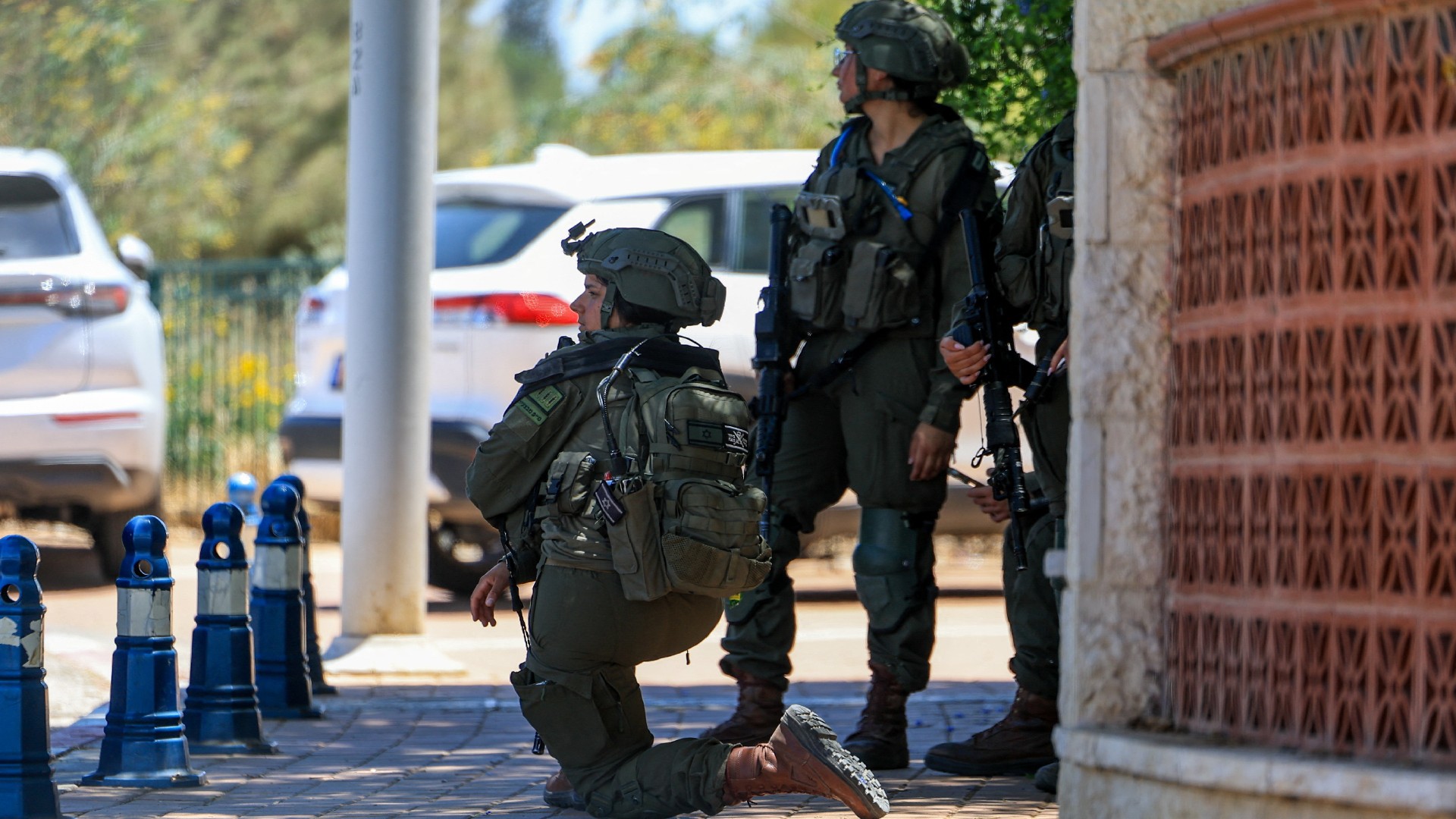
A string of coordinated shooting incidents in central Israel has left one civilian dead and five others injured, triggering a large-scale manhunt, military deployments across the occupied West Bank, and sharp political rhetoric from both Israeli and Palestinian factions, official sources confirmed Sunday. The violence unfolded across three separate locations close to the West Bank city of Qalqilya, according to initial reports from Israeli law enforcement and emergency response teams. The fatality was identified as a 35-year-old Israeli national, while the wounded include multiple civilians with injuries ranging from moderate to life-threatening. One man in his 40s was rushed to a nearby hospital in critical condition, medical officials confirmed. Two additional victims were treated at a gas station adjacent to the Israeli town of Kochav Yair, with one suffering serious harm, while a fifth and sixth casualty were recorded near Tzur Yitzhak, another central Israeli settlement. In an official statement released shortly after the attacks began, Israeli police noted that large security detachments remained deployed across the incident sites, with active searches ongoing, and issued a public appeal for residents to maintain heightened vigilance amid ongoing uncertainty. Early official accounts from the Israeli military indicated that forces had killed one suspect – a Palestinian citizen of Israel from the central Israeli city of Tayibe – while a second possible attacker was wounded and escaped the initial dragnet. However, police later revised this account, confirming that only a single shooter was involved in the attacks, and that the gunman was shot dead by security forces after a widespread manhunt. Investigators have since recovered the weapon used in the assault: a makeshift “Carlo” submachine gun, a commonly improvised variant of the Carl Gustav that is frequently used by Palestinian armed groups. In the wake of the violence, Israeli military chief of staff Eyal Zamir issued new operational directives for expanded activities across the occupied West Bank. Israeli military forces subsequently moved to surround multiple Palestinian villages and sealed off a key nearby West Bank border crossing, tightening restrictions on movement in the area. Israeli Prime Minister Benjamin Netanyahu confirmed that he had convened a top-level security assessment meeting and was closely monitoring developments related to what he described as the “deadly shooting attack.” Far-right Israeli National Security Minister Itamar Ben Gvir drew immediate controversy with a hardline public statement posted to the social platform X, calling for the execution of any attacker taken alive. “If the terrorist is caught alive he will be executed. This is the law and we will demand its implementation,” Ben Gvir wrote. “Jewish blood is not in vain. Whoever murders a Jew will see the hanging rope.” The armed Palestinian group Hamas quickly claimed the attacks as a legitimate response to ongoing Israeli actions in the region, framing the violence as a reaction to Israeli aggression against Gaza, what the group described as ongoing “crimes of Judaisation,” extrajudicial killings of Palestinians, Israeli settlement expansion, military raids, and daily attacks against Palestinian communities in the West Bank and East Jerusalem. “The occupation – no matter how far it goes in its oppression and crimes – will not succeed in stopping the rise of resistance in the valiant West Bank,” the group said in an official public statement. A second major Palestinian armed faction, Palestinian Islamic Jihad, echoed this framing, describing the shooting as a “natural consequence of the criminal policies pursued by the war criminal government of the Zionist entity.” The attack comes amid a months-long surge in violence across Israel and the occupied Palestinian territories, stoking widespread concerns of further escalation ahead.