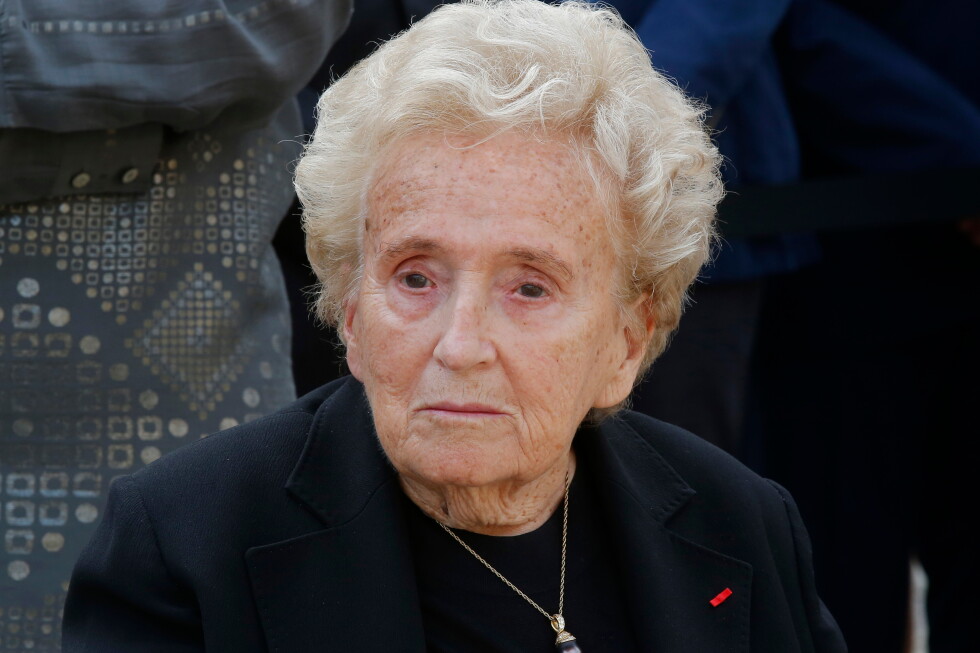
PARIS – Bernadette Chirac, the unflappable, politically sharp former first lady of France who stood beside President Jacques Chirac throughout his 12-year tenure at the Élysée Palace from 1995 to 2007, has passed away at the age of 93. French President Emmanuel Macron confirmed her death on Saturday, noting that he and First Lady Brigitte Macron learned of her passing with “great sadness,” honoring her as a transformative figure in French history whose decades of charity work touched the lives of millions of citizens. “A great lady of the heart has departed,” Macron stated in his official tribute.
For over half a century, Bernadette Chirac was the steady anchor of her husband’s decades-long political ascent, which saw him rise through parliamentary ranks, serve two terms as prime minister, hold 18 years as mayor of Paris, and ultimately claim the French presidency in 1995. Far from being limited to the largely ceremonial role of a presidential spouse, Bernadette built an independent political legacy of her own, earning widespread attention both for her quiet influence over her husband’s administration – and for her dry, unapologetic handling of his well-documented reputation as a womanizer, a topic she would later address with unusual candor.
In 1998, when swarmed by photographers in the rural department of Corrèze amid rumors that Jacques Chirac had been unreachable the night of Princess Diana’s death because he was with a famous actress, Bernadette stepped out of her car and delivered a characteristically sharp quip: “Calm down. I’m not Claudia Cardinale. Or Lollobrigida.” The moment encapsulated the quick wit and unshakable poise that would define her public image for decades.
To much of the French public, she was long known for her iconic, almost institutional public persona: perfectly coiffed blond hair, a structured handbag slung over her arm, an upright posture in every official photograph, paired with tailored Chanel suits, dark sunglasses, a distinct nasal tone, and biting, memorable judgments. But this popular caricature never captured the full scope of her ambition or skill: beneath the polished exterior was a relentless worker and shrewd political operator, one of the only spouses of French presidents to build an independent base of political power entirely her own.
Born Bernadette Thérèse Marie Chodron de Courcel in Paris on May 18, 1933, she came from a privileged, devout Catholic family with deep roots in French public life: her paternal lineage included soldiers, industrialists, and diplomats, and one of her uncles served as an aide to Charles de Gaulle during wartime London. The turning point of her life came during her studies at the elite Sciences Po university in Paris, where she met Jacques Chirac, a charming, politically ambitious young man whose hunger for power would shape their shared life for decades.
The couple married in March 1956, and their 63-year union was, in Bernadette’s own words, a lifelong lesson in endurance. While Jacques was famous for his easy warmth, charisma, and instinctive connection with voter crowds, political observers noted Bernadette’s strengths were far different: she was disciplined, socially formidable, devout, exacting, and often unforgettably witty. Catholic philosopher Jean Guitton once called her “the last queen of France,” a label she did little to push back against.
Her husband’s well-known reputation as a womanizer was an open secret in French political circles, and after years of heartache, Bernadette chose to address it with characteristic dry humor. “At first, it was hard. I was very heartbroken, and then I got used to it,” she shared in a television documentary years later. “I told myself that was how things were and that I had to accept it with as much dignity as possible.”
When she was sent to manage her husband’s rural political stronghold in Corrèze while he pursued power in Paris, she far exceeded expectations of merely maintaining the seat. She was elected municipal councilor of the small town of Sarran in 1971, won a seat as a general councilor for Corrèze in 1979, and held that position until 2015, building deep grassroots loyalty over four decades.
Her influence grew exponentially after Jacques Chirac won the presidency in 1995. While the role of first lady in France holds no formal constitutional power, Bernadette turned her position at the Élysée into a space where her approval carried serious political weight. She was known for being unwaveringly loyal to allies, unforgiving to rivals, and deeply attuned to the unspoken dynamics of political life – understanding that electoral success depends as much on personal debts, grudges, and alliances as it does on speeches and opinion polls. In doing so, she carved out a space for legitimate female authority within a heavily male-dominated political culture that had long refused to share power, quietly refusing to be reduced to nothing more than “the wife of” the president. By 2023, her legacy and persona were prominent enough to inspire a major commercial film: the comedy *Bernadette*, focused on her years at the Élysée, starred legendary French actress Catherine Deneuve in the title role.
Bernadette kept her deepest personal grief largely private from the public eye. The Chiracs’ elder daughter, Laurence, developed severe anorexia after contracting meningitis as a teenager, survived multiple suicide attempts, never fully recovered her health, and died in 2016 at the age of 58. This devastating personal experience led Bernadette to the charity work that would eventually redefine her public image. In 1994, she took leadership of a medical charity that collected loose change to support children receiving care in French hospitals. Over the next 25 years, she transformed the organization and became the public face of pediatric hospital care, endearing herself to millions of French families who had previously seen her as aloof. She led the charity until 2019, when she handed over leadership to Brigitte Macron, becoming honorary president of the organization.
Long before her retirement from public life, Bernadette had firmly established herself as a political force in her own right. “My husband no longer does politics, but I do,” she told reporters after Jacques Chirac left the presidency in 2007. She famously gave Dominique de Villepin, an Élysée official she distrusted, the cutting nickname “Nero,” yet was also widely reported to have helped broker the reconciliation between her husband and Nicolas Sarkozy, the former protégé who had betrayed Jacques Chirac politically to claim the presidency. Her 2001 memoir *Conversation*, co-written with journalist Patrick de Carolis, sold hundreds of thousands of copies and introduced the French public to a far more frank, funny, and independent woman than many had previously assumed.
After Jacques Chirac left the Élysée, his health declined rapidly and he withdrew from public life, but Bernadette retained her sharp voice and wit well into old age. When asked by reporters how her husband was doing, according to French media, she delivered a characteristically dry one-liner: “He keeps the dog.”
Eventually, age and cumulative grief pulled her out of public view. When Jacques Chirac died in 2019, she was too frail to take part in the large public farewell attended by French and international leaders honoring his legacy. On Saturday, the Élysée Palace announced that President Macron would invite the French public to pay tribute to Bernadette Chirac in a public space opposite the presidential palace.