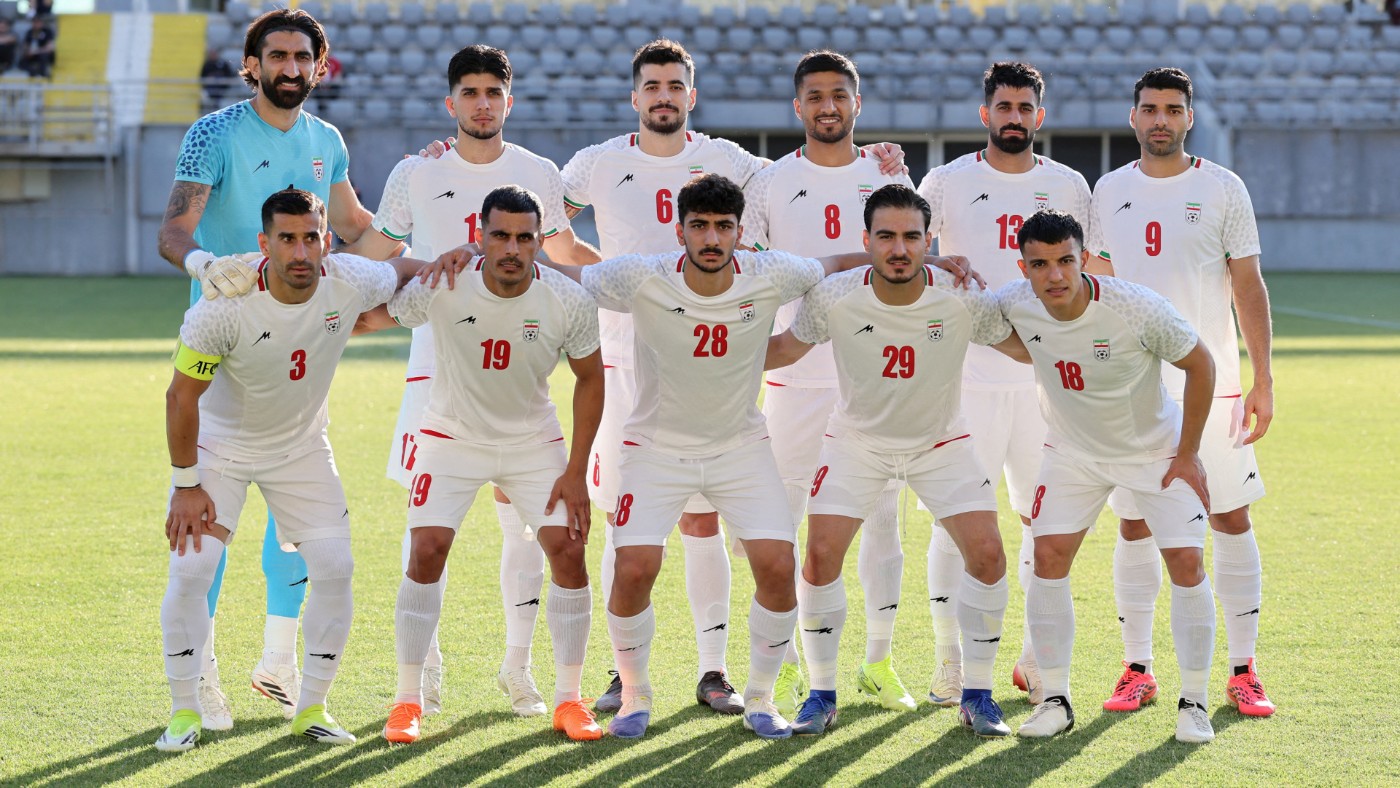
Amid heightened geopolitical friction between Washington and Tehran following the outbreak of cross-border conflict in late February, a key logistical disruption has hit Iran’s 2026 FIFA World Cup campaign: multiple senior administrative members of the Iranian delegation have been blocked from obtaining entry visas to the United States, Iranian state-aligned media confirmed Saturday.
While Iranian national team players have successfully secured visas to compete in the group-stage matches hosted across North America, senior support personnel have been excluded from the approval process, senior U.S. officials have confirmed. The 2026 World Cup, a co-hosted tournament between the U.S., Mexico, and Canada, kicks off its group stage Thursday, with Iran scheduled to play three matches on U.S. soil: an opening fixture against New Zealand in Los Angeles on 16 June, followed by matchups against Belgium in Los Angeles and Egypt in Seattle.
Confusion around the delegation’s visa status had swirled for days: Iran’s ambassador to Mexico, Abolfazl Pasandideh, initially stated Thursday that no members of the delegation had received visas, but a White House official clarified to Reuters Friday that all players had in fact been granted entry approval.
Semi-official Iranian news outlet Tasnim has named the three high-ranking staff denied visas: Mehdi Kharati, the delegation’s executive director; Hedayat Mombini, secretary general of the Iranian Football Federation; and Mohsen Motamedkia, the team’s media director. According to Tasnim, the staff denied U.S. visas will initially travel with the full squad to Mexico, where diplomatic teams will continue working to resolve the entry issue ahead of the team’s first U.S.-based match.
The visa dispute has already forced major last-minute changes to Iran’s tournament preparations. Facing entry uncertainty and growing domestic pressure to limit the team’s time in U.S. territory, Iranian officials negotiated a late shift of the squad’s pre-tournament training base from Arizona in the U.S. to Tijuana, a Mexican border city. The full Iranian squad is scheduled to arrive in Tijuana Sunday.
Pasandideh noted that Washington has never issued a formal public statement barring the entire Iranian team from entering the U.S. for the tournament, but U.S. Secretary of State Marco Rubio publicly confirmed Tuesday to congressional lawmakers that the U.S. would reject entry for any Iranian delegation members tied to the Islamic Revolutionary Guard Corps (IRGC), a U.S.-designated foreign terrorist organization. This is not the first such restriction: Mehdi Taj, the current president of the Iranian Football Federation and a former IRGC commander, was already denied entry to the U.S. for the World Cup tournament draw held in Washington last December.
Despite the diplomatic friction, Pasandideh framed Iran’s decision to compete in the tournament, including playing matches on U.S. soil, as a deliberate gesture of peaceful intent. Speaking through a Spanish interpreter at the Iranian embassy in Mexico City, he stated, “Iran’s participation in the World Cup – even on the soil of what is seen as its enemy – shows that Iran seeks peace.”
The visa disruption comes against a backdrop of open conflict between the U.S., Israel, and Iran that began in late February, which has thrown Iran’s participation in the global tournament into widespread doubt. While diplomatic talks between Washington and Tehran remain ongoing, both sides have continued military strikes against enemy targets in the region, keeping tensions at a sustained high level.