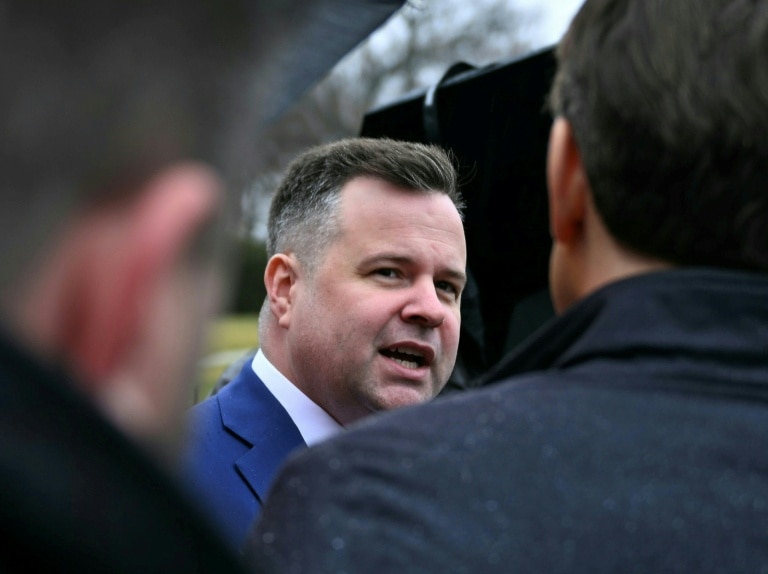
A new political firestorm has erupted in Washington after former President and current U.S. President Donald Trump publicly confirmed Friday that he is pushing his newly tapped acting Director of National Intelligence, Bill Pulte, to dismiss large numbers of employees across the U.S. intelligence community, amplifying already fierce criticism over the appointment of a Trump loyalist with zero prior professional intelligence experience to the top national security role.
Pulte, who currently leads the U.S. Federal Housing Finance Agency, was tapped by Trump this Tuesday to fill the acting national intelligence director post, following the departure of Tulsi Gabbard, who stepped down citing the need to care for her ailing husband. The 45th president has made no secret of his plans for the role, telling reporters traveling with him aboard Air Force One that he would not object to widespread staff cuts under Pulte’s leadership, claiming the Office of the Director of National Intelligence has been overstaffed for decades.
Trump first outlined his downsizing agenda in an interview with *The Wall Street Journal*, repeating his long-held belief that the 18-agency U.S. intelligence community is bloated with political holdovers from the Barack Obama and Joe Biden administrations who do not align with his policy and political priorities. “I’d like to see it smaller. I think there are a lot of people in there that shouldn’t be there,” Trump told the outlet. Speaking to reporters Friday, he doubled down on that framing: “If he cut, I wouldn’t mind that… the number of employees in Pulte’s office had been ‘way too high for way too long.’”
Critics warn that Trump’s push for cuts creates a dangerous opening for him to reshape the nonpartisan intelligence community along political lines, particularly given Pulte’s well-documented history of leveraging his government position to target Trump’s political rivals. As head of the FHFA, Pulte has used access to confidential mortgage records to assist investigations into high-profile Trump adversaries, including Federal Reserve Governor Lisa Cook, New York Democratic Attorney General Letitia James, and Senate Democratic Intelligence Committee Chair Adam Schiff.
Democrats have been unified in their condemnation of Pulte’s appointment, pointing both to his lack of relevant intelligence experience and his track record of politicizing federal agencies to target political opponents. Even within his own party, the appointment has widened growing rifts between Trump and congressional Republicans, many of whom are already anxious about poll numbers ahead of November’s midterm elections.
The fallout spilled into legislative action Friday, when Senate lawmakers blocked a bipartisan bill to renew a key foreign surveillance authority in direct protest of Pulte’s appointment. Democrats argued that given Pulte’s history of politicization, they could not support expanding U.S. surveillance powers without ironclad guarantees that intelligence gathering would not be weaponized for political purposes. The legislative collapse upended months of bipartisan negotiations on the top national security priority.
Trump has sought to de-escalate the backlash by framing Pulte’s appointment as a temporary stopgap, noting Friday that he has already interviewed five candidates for the permanent national intelligence director role. But even that framing raised new alarms: Trump told *The Wall Street Journal* that Pulte’s temporary status actually gives him more latitude to overhaul the intelligence community. “You’re less shackled… It sort of gives you more power, you know, for a somewhat limited period of time,” Trump said.
Beyond staff cuts, Trump has also made clear he expects Pulte to continue a political project that falls entirely outside the official mandate of the Director of National Intelligence: investigating baseless claims that the 2020 presidential election was rigged against him, a falsehood he has repeated since his election loss in 2021. Gabbard, Pulte’s predecessor, was also tapped by Trump to lead this inquiry despite the intelligence community having no official role in overseeing domestic U.S. elections.