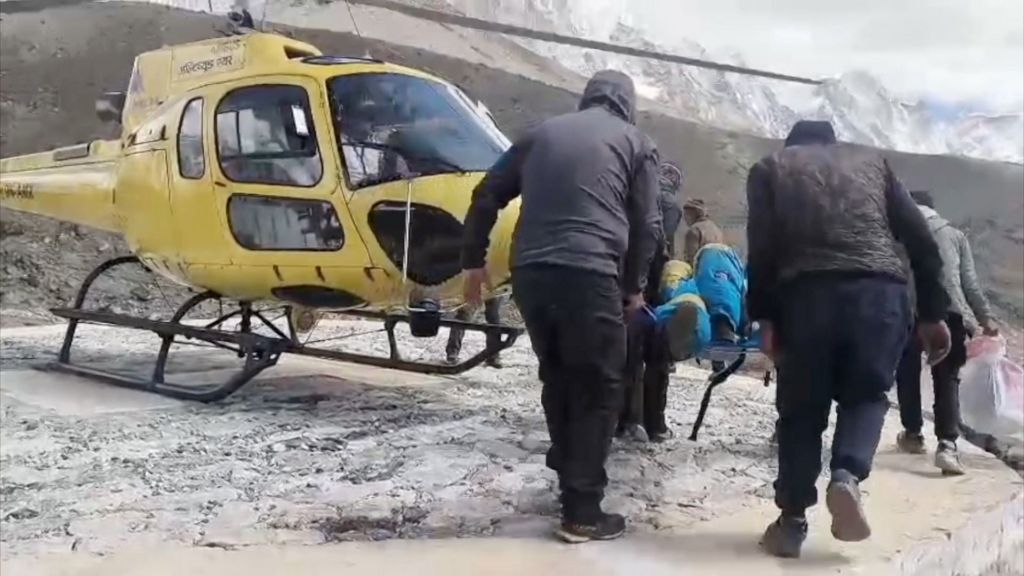
A high-stakes mountain rescue operation on the world’s highest peak has concluded successfully, after a professional mountain guide spent six grueling days stranded in the deadly altitude of Mount Everest. The dramatic sequence of events that led to the guide’s entrapment and eventual safe extraction has been reconstructed through on-the-ground reporting by the BBC’s South Asia correspondent Rajini Vaidyanathan.
Everest’s notoriously unpredictable weather and unforgiving terrain have long turned climbing expeditions into life-or-death tests, and this incident is no exception. Details of exactly what left the guide cut off from other climbers and descending teams have emerged gradually, with harsh wind chills, low visibility and sudden ice movement reported to have blocked his planned route off the mountain early last week. Left without a clear path to descend and unable to call for immediate help due to communication disruptions at extreme altitude, the guide was forced to hunker down in a exposed high-elevation campsite, surviving on limited emergency rations as rescue teams coordinated their response from base camp.
Mountain rescue operations on Everest are among the most challenging in the world, requiring careful coordination between local Sherpa teams, expedition organizers, and air support units that can only operate in narrow windows of clear weather. Multiple days of poor visibility pushed the rescue effort back, extending the guide’s stranding to six full days, raising serious concerns among rescuers and expedition officials that he would not survive the exposure to sub-zero temperatures and oxygen deprivation at more than 8,000 meters above sea level.
In the end, a break in the weather allowed a specialized rescue team to reach the stranded guide, pull him to safety and transport him to lower elevation for medical evaluation. As of the latest update, the guide is reported to be in stable condition, receiving care for mild frostbite and altitude sickness.
The incident has once again drawn attention to the persistent risks mountaineers and professional guides face every climbing season on Everest, even as safety technologies and expedition protocols continue to improve. Climbing officials have noted that the successful rescue stands as a testament to the skill and courage of the Nepalese rescue teams that operate in some of the harshest conditions on Earth.