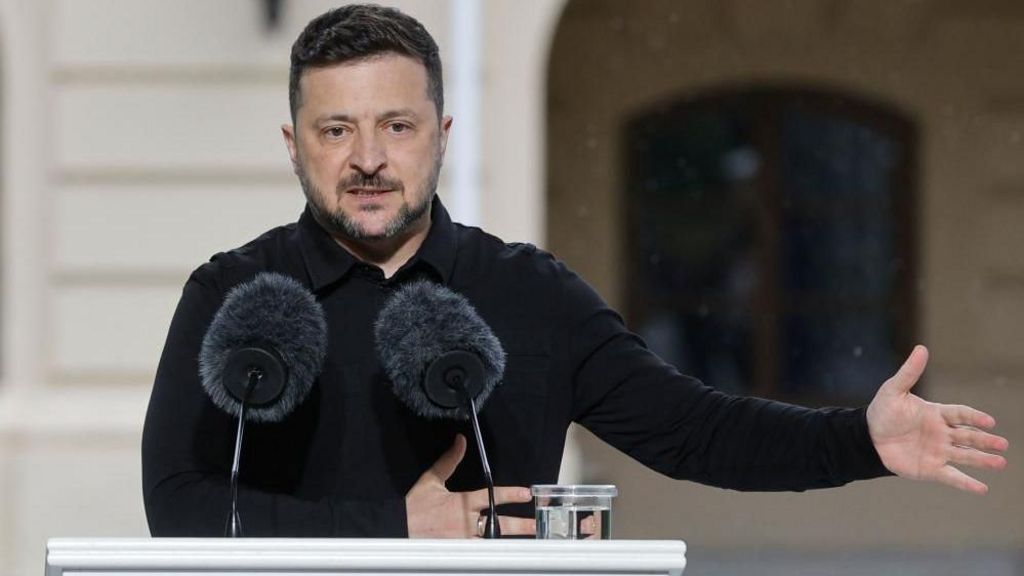
More than three years into Russia’s full-scale invasion of Ukraine, Ukrainian President Volodymyr Zelensky has made a new public push for direct negotiations with Russian leader Vladimir Putin, issuing an 1,800-word open letter calling for an immediate, full ceasefire during talks and a face-to-face meeting hosted by a neutral third country such as Switzerland or Turkey.
In the letter, Zelensky argues that waiting for the United States to shift its foreign policy focus back to Eastern Europe — amid Washington’s current preoccupation with the Iran conflict — is a reckless mistake that costs unnecessary lives. He emphasized that a lasting peace can only be forged through direct dialogue between Kyiv and Moscow, rather than through delayed, third-party mediated talks that have repeatedly collapsed over the past months. Previous negotiation rounds hosted in Geneva, Abu Dhabi and Istanbul have ended without progress, and ceasefire talks have been stalled since the outbreak of hostilities in Iran.
Addressing Putin directly, Zelensky acknowledged that after the widespread destruction Russia’s invasion has brought to Ukraine, he has little sympathy for the hardships facing Russian troops. But he stressed that every Ukrainian death inflicted by the ongoing conflict is a devastating loss for his country, and noted that ordinary Russian citizens are already grappling with the burdens of war: repeated Ukrainian drone and missile strikes, growing fuel shortages, and spiking domestic prices. “Do not be afraid to take the path out of this war. That is the main thing that is required of you now,” Zelensky implored.
The letter landed on the same day that Putin was addressing international journalists on the sidelines of the major annual St. Petersburg International Economic Forum. A day before the forum, Kyiv launched a drone strike on the outskirts of St. Petersburg, which Zelensky referenced in the letter as a symbolic “visit” to the Russian leader. Separate attacks the same day in Russian-occupied Crimea left four people dead, according to Russian-backed local authorities, who blamed Kyiv for the strike. Ukraine confirmed it targeted a key fuel depot in the regional capital Simferopol.
The Kremlin confirmed Thursday that it had received Zelensky’s letter and that Putin would receive a full briefing on its contents. Speaking to reporters before the letter’s contents were formally delivered to him, Putin said he remained “certainly prepared and willing to reach an agreement with Ukraine,” but added that any deal would require significant compromises from both sides. The Russian leader immediately cast doubt on the prospects of a meeting, however, questioning whether Zelensky qualifies as a legitimate representative of Ukraine, a matter he said required further legal analysis. Putin also reaffirmed Russia’s long-stated goal of seizing full control of the Donbas region, suggesting the European Union could pressure Kyiv to concede the territory as part of any peace deal. In his letter, Zelensky pushed back directly on this claim, telling Putin “You will not capture” the Donetsk region, a core part of the Donbas.
The proposal quickly drew a response from former U.S. President Donald Trump, who praised the move toward talks. “I think it would be great if they met. They should. Get it done,” Trump told reporters Thursday, adding that he believed U.S. mediation had been instrumental in creating an opening for direct dialogue. When asked what compromises each side would need to make to reach a deal, Trump declined to share specifics but said he expected both parties would make the necessary concessions to end the fighting. Earlier Thursday, Russian Foreign Minister Sergei Lavrov attempted to frame the conflict through a U.S. political lens, claiming that “Biden’s war has become Trump’s war” and noting that Washington’s policy on Ukraine remains aligned with its European NATO allies.
Prior to Zelensky’s proposal, Putin had already ruled out a full ceasefire during any negotiation period, creating an immediate sticking point for the new peace push. The conflict, which began with Russia’s full-scale invasion in February 2022, has killed hundreds of thousands of people on both sides and left large swathes of eastern and southern Ukraine in ruins.