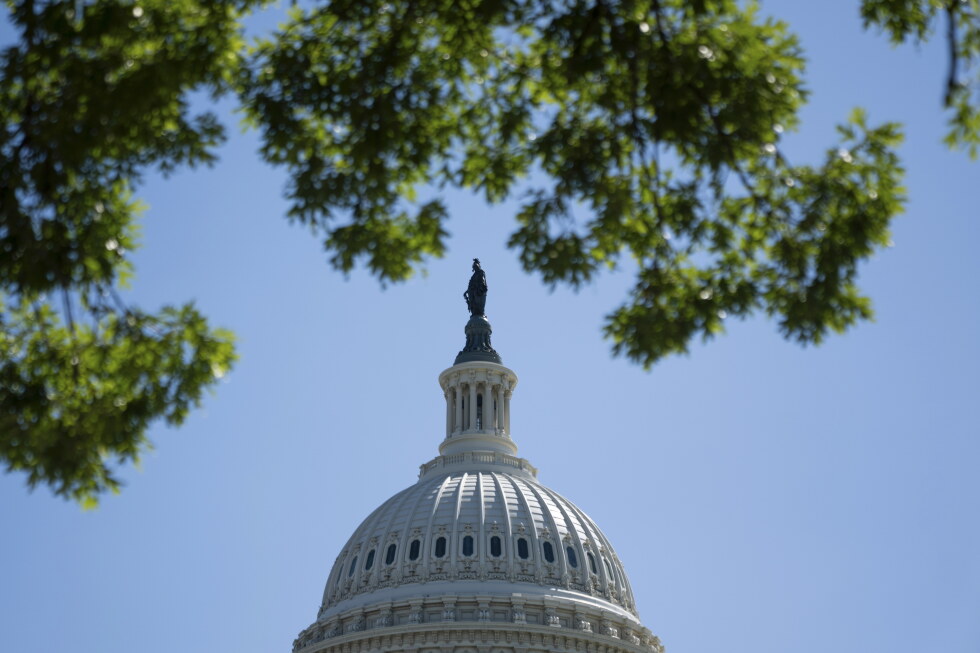
The U.S. House of Representatives is moving forward toward a final vote on landmark legislation that would deliver new military and reconstruction support to Ukraine while imposing harsh new sanctions on core sectors of the Russian economy, a push that comes in open defiance of top Republican leaders who argue the measure will derail ongoing negotiations aimed at securing a more robust, comprehensive aid package.
Drafted and sponsored by House Foreign Affairs Committee ranking member Gregory Meeks, a New York Democrat, the legislation would codify U.S. backing for Kyiv by allocating more than $1 billion in direct security and rebuilding assistance. It also sets aside an additional $8 billion in defense support for Ukraine through a loan-based funding structure.
This upcoming vote marks the second high-profile break between rank-and-file House members and former President Donald Trump on foreign policy in just a single week. It comes exactly 24 hours after the House passed a historic war powers resolution that aims to end unauthorized U.S. military engagement against Iran, a move that directly contradicted the administration’s policy priorities.
The bill reached the floor thanks to a rarely used but increasingly deployed legislative tactic known as a discharge petition, which allows a simple majority of 218 House members to bypass stalled committee processes and party leadership opposition to force a floor vote. During this congressional session, the discharge petition tool has already been successfully used to advance bills demanding the public release of sealed federal documents related to the late Jeffrey Epstein, as well as a measure to extend Affordable Care Act health insurance subsidies to millions of Americans — though the subsidy extension ultimately failed to advance in the Senate.
An initial procedural test vote held Wednesday evening saw supporters clear the key hurdle to advance the bill by a vote margin of 218 to 204. Breaking with their party’s leadership, six Republican lawmakers joined an independent and every sitting Democratic representative in backing the measure’s progression.
Meeks emphasized the symbolic and practical importance of the House’s action, saying the vote is critical to reassuring the Ukrainian people that the United States will not abandon their fight against Russian invasion. “The people of Ukraine need to know that the United States of America is not going turn its back on them, that we will stand with them against Russia,” Meeks said. “We can’t let them down.”
Supporters of the measure say its passage in the House is designed to send a clear bipartisan message and apply public pressure on the Senate to take up the legislation. Even so, they acknowledge the bill is unlikely to advance in the upper chamber without an explicit public endorsement from Trump. “It’s probably not going to get 60 votes in the Senate, but it’s going to hopefully force the Senate to address the issue,” said Republican Rep. Brian Fitzpatrick of Pennsylvania, one of the GOP lawmakers who signed the discharge petition and backed the procedural vote. “It’s going to send a great message to the soldiers of Ukraine.”
Fitzpatrick added that the vote also sends a clear signal to Russian President Vladimir Putin that U.S. lawmakers remain committed to Ukraine’s defense. “It sends a message that we do have a pulse here, that we do care about Ukraine and that we are going to utilize our authority to help them,” he said.
As the war enters its fifth year following Russia’s full-scale invasion, congressional supporters of additional Ukraine aid have faced growing difficulties moving new funding packages through the legislative process. To date, the U.S. has allocated roughly $195 billion in total emergency support for the Ukraine conflict, according to the latest quarterly inspector general report for Operation Atlantic Resolve. Approximately one quarter of that total has gone toward replenishing U.S. military weapons stockpiles that were drawn down to supply Kyiv’s forces. The last major standalone Ukraine aid legislation was passed back in April 2024, with only small incremental allocations included in annual federal spending bills since that time.
Top House Republican leaders have mounted a concerted push to convince their caucus to reject the legislation. House Majority Leader Steve Scalise of Louisiana noted that ongoing good-faith negotiations between congressional leadership and the White House are already underway to craft a larger Ukraine aid package, calling those discussions inherently complicated. “I think they are going to yield positive results, but you set that back if you pass legislation that doesn’t go as far as the negotiations are going,” Scalise argued.
More than four years into the full-scale invasion, the war remains deadlocked with no diplomatic breakthrough in sight. Both Russian and Ukrainian forces have stepped up long-range missile strikes on key infrastructure and military targets in recent days in an attempt to gain strategic leverage. U.S.-led peace negotiations have collapsed after failing to make progress on core core territorial and security demands, with Washington’s foreign policy focus shifting in recent weeks to rising tensions with Iran. While Ukrainian President Volodymyr Zelenskyy has accepted the unconditional ceasefire proposal put forward by Trump, Russian President Putin has refused to agree to the terms.
In the Senate, efforts to advance a separate Ukraine-related measure centered on imposing sweeping tariffs and secondary sanctions on nations that purchase Russian oil, natural gas, uranium and other key export commodities that fund Moscow’s war effort have stalled, with the legislation remaining stuck in procedural limbo for weeks.