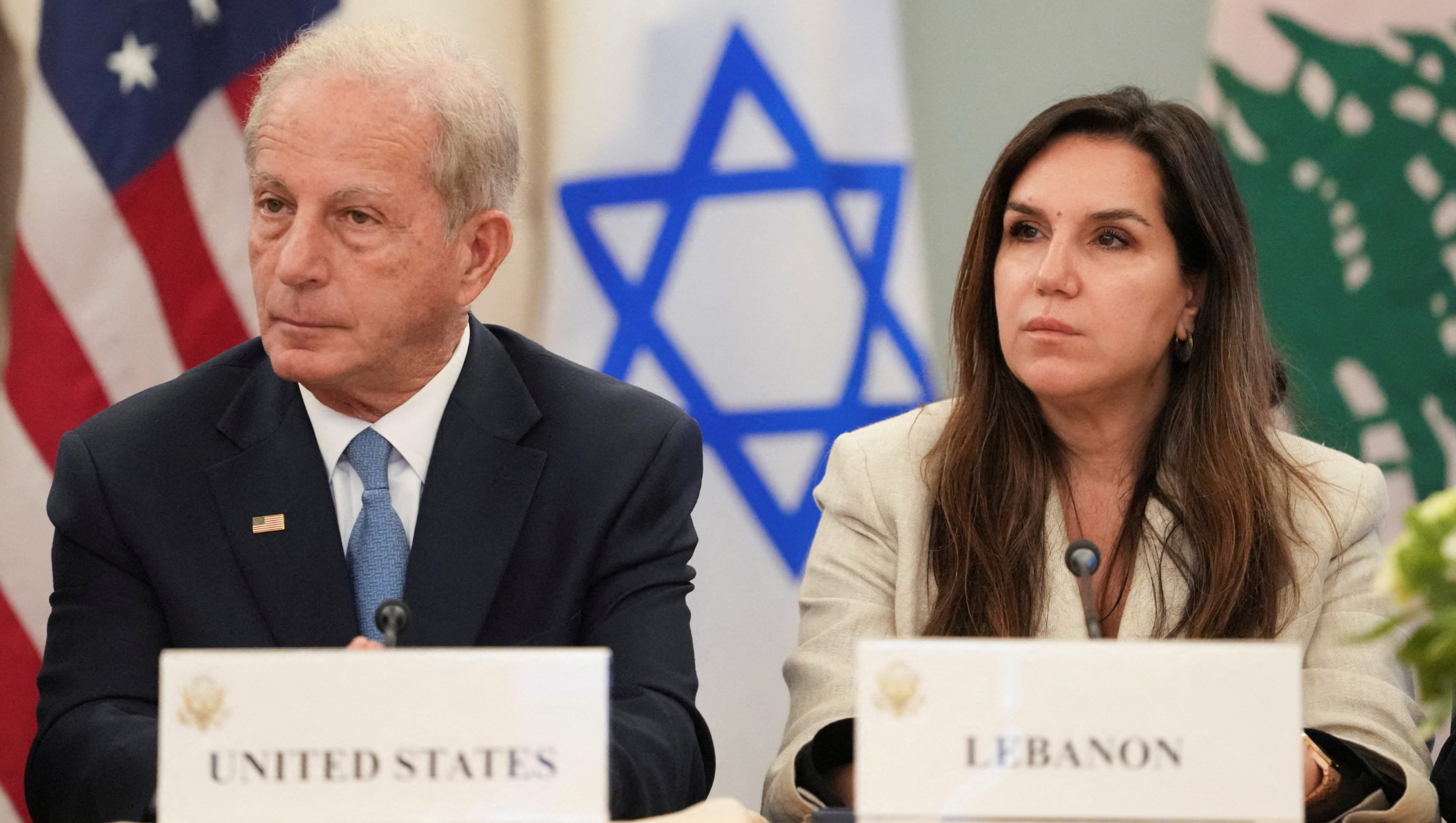
After four rounds of US-mediated direct negotiations between Israeli and Lebanese delegations in Washington, a US-backed draft plan for a ceasefire between the two nations has emerged, but its path to implementation remains deeply uncertain, with multiple Lebanese stakeholders warning critical pieces are still missing and key regional players stand opposed.
The two days of talks concluded with a preliminary declaration that lays out a framework for a ceasefire and the establishment of pilot security zones in southern Lebanon. Under the proposed arrangement, the Lebanese Armed Forces would take sole control of these designated areas, barring all non-state armed groups from operating within their borders. The pilot zones are framed as an initial testing ground for a wider security arrangement that could be expanded across the region if successful.
However, a senior Lebanese official close to President Joseph Aoun told Middle East Eye that the draft proposal lacks any clear, binding implementation mechanism, and its entire fate now rests on whether Hezbollah, the powerful non-state armed group that holds significant sway in southern Lebanon, will give its approval. What is more, the official confirmed that neither Hezbollah nor Nabih Berri – Lebanon’s long-serving Parliament Speaker, a key Hezbollah ally and established intermediary between the group and Washington – were privy to the full details of negotiations as they progressed. Once the draft text was finalized, President Aoun circulated it to both Hezbollah and Berri to gather feedback before communicating Lebanon’s final position to US negotiators.
The senior official described the closed-door negotiations as grueling, noting that the Lebanese delegation threatened to walk out and suspend talks after Israeli negotiators pushed back against demands for a full, immediate ceasefire. It was this deadlock that led US mediators to put forward the pilot zone concept as a compromise middle ground to break the impasse.
Another sticking point emerged during the talks when the US delegation insisted on including language condemning what it called “Iran’s attacks on countries in the region”. Lebanese negotiators viewed the repeated push for this language as a deliberate attempt to decouple the Israel-Lebanon peace track from ongoing US-Iran negotiations. Iran has listed a full end to Israeli strikes on Lebanon as a core condition for its own ceasefire talks with Washington, and just days prior, Tehran suspended negotiations in response to Israeli threats to bomb central Beirut.
The situation on the ground in southern Lebanon has continued to deteriorate despite a nominal ceasefire declared on 17 April. Since that truce took effect, Israel has steadily expanded its military presence across the region, through territorial occupation, repeated air strikes, and mandatory evacuation orders for local residents. Roughly one-fifth of Lebanon’s total territory is now under direct or indirect Israeli control, a footprint that extends far beyond the initial buffer zone Israel declared when the truce was announced. Notably, the new US-backed proposal makes no mention of requiring an Israeli troop withdrawal or ending ongoing Israeli military operations in southern Lebanon, and Israeli Defense Minister Israel Katz confirmed Thursday that Israeli forces would “for the time being, continue its fire and operations on the ground”. Katz added that Israel would keep working to dismantle Hezbollah’s infrastructure in the region and retained US-backed “freedom of action” to strike targets in Beirut in response to any attacks on Israeli territory.
Hezbollah officials say they were not surprised by the outcome of the Washington talks. A source familiar with the group’s position told Middle East Eye that Hezbollah opposed direct negotiations between the Lebanese state and Israel from the start, predicting it would produce a framework that ran counter to the group’s core interests. “From the first statement issued after the first joint meeting that initiated the direct negotiations path, we knew this is where the Lebanese state intended to go,” the source said. “That is why we were against this track from the start.”
Hezbollah secretary-general Naim Qassem has since formally rejected the outcome of the talks, calling direct negotiations with Israel “shameful” for Lebanon and dismissing any attempts to tie a ceasefire and Israeli withdrawal to the group’s disarmament. Qassem stressed that any credible ceasefire must cover all of southern Lebanon, where Israel has seized a self-declared security zone, and argued that Israeli security in northern towns would never be achieved as long as Lebanese villages remain under attack, unsafe, and destroyed. “Towns in northern Israel would not be secure as long as our villages are unsafe, bombed, destroyed, and our people are being killed,” Qassem said. For Hezbollah, any discussion of the group’s weapons must only take place after a full stop to all Israeli attacks across Lebanon and a complete withdrawal of Israeli troops from all occupied Lebanese territory – a position that directly clashes with the US framework, which centers on restricting Hezbollah’s military presence and activity south of the Litani River as a core condition for the ceasefire.
Criticism of the proposal has also come from other Lebanese officials not affiliated with Hezbollah. One senior Lebanese official not involved in the negotiations described the proposal’s wording as deeply ambiguous, saying it remains unclear whether the ceasefire and security arrangements would take effect simultaneously or sequentially. The official also called out a section of the draft that endorses US Secretary of State Marco Rubio’s claim that Hezbollah is “an enemy of Lebanon” in addition to being an enemy of Israel and the United States, calling the paragraph embarrassing for Lebanon even if it only reflects a US position.
The dispute highlights the narrow, high-stakes path facing the Lebanese government. The presidency has framed the proposal as a last chance to secure a broad ceasefire, but Hezbollah views it as an attempt to achieve through diplomacy what Israel failed to win through military force. It also exposes a core contradiction at the heart of the US-led process: Washington is pushing for a formal state-to-state agreement between Lebanon and Israel, but the most powerful military actor on the Lebanese side – Hezbollah – has been excluded from the negotiations entirely.
Israeli and Lebanese delegations are scheduled to reconvene later this month for further talks on political and security arrangements. Even so, Lebanese officials openly acknowledge that without Hezbollah’s backing, the proposal is at risk of remaining nothing more than a non-binding diplomatic framework with no viable path to implementation.