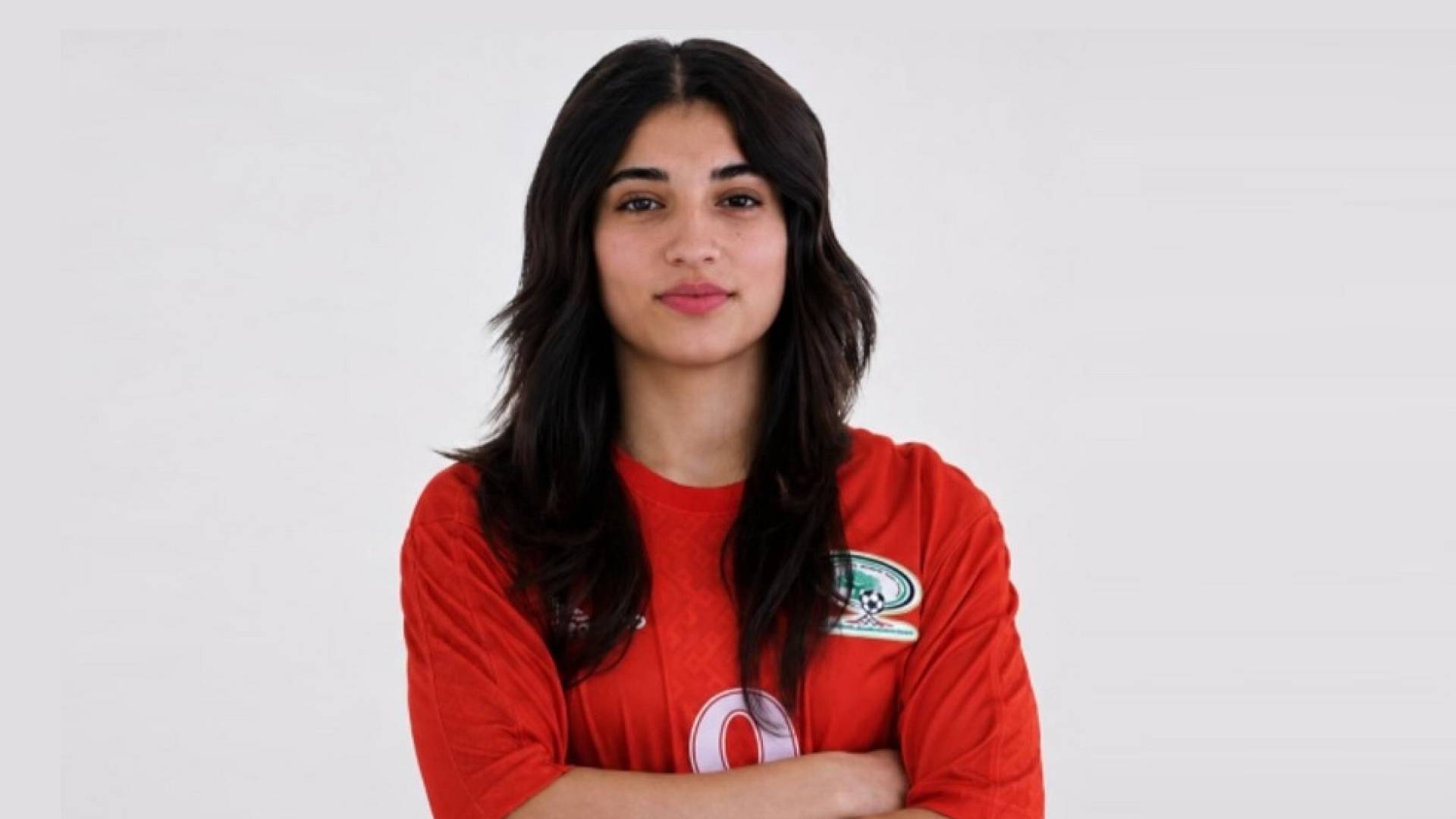
Before the first light of day filtered across the occupied West Bank, the sharp, sudden sound of pounding echoed through the entrance of Ahmed Safi’s apartment building in the town of Birzeit, north of Ramallah. When the 48-year-old Palestinian father jolted awake, he watched as Israeli soldiers streamed through the halls of his building, and assumed the incursion targeted another resident. He could never have guessed the operation would end with his own 20-year-old daughter, Sama – a psychology undergraduate at Birzeit University – in handcuffs.
“We were stunned, completely shocked,” Safi told reporters from Middle East Eye in an interview. “We never had any indication this raid was meant for her.”
Family accounts confirm soldiers entered the residential compound shortly after 2 a.m. on Tuesday, shouting orders in Hebrew as they cleared each floor and made their way to the Safi family’s unit. They demanded identification from Ahmed, his wife, and Sama, before presenting the 20-year-old with a sealed arrest warrant. When the family pressed for details on the allegations against her, commanding officers only offered that they would “learn the reason in court.”
Before moving Sama out of the apartment, soldiers ransacked her personal study and bedroom, seizing her mobile phone, laptop, and multiple personal items. Among the possessions taken were framed photographs of her cousin, Ayser Safi, who was killed by Israeli forces in a separate 2024 incursion. Sama was then led down the stairs of the building, handcuffed behind her back, blindfolded, and loaded into an unmarked Israeli military vehicle.
For the Safi family, the shock of the arrest is compounded by urgent fears over Sama’s chronic medical condition: she lives with Familial Mediterranean Fever (FMF), an inherited autoimmune inflammatory disorder that requires daily, consistent medication to prevent life-threatening complications. Ahmed Safi said he repeatedly attempted to explain his daughter’s health needs to the raiding party, but soldiers refused to let him gather her medication or discuss her condition before taking her into custody.
“Without her daily drugs, she suffers crippling high fevers, intense body pain, and other disabling symptoms,” Safi explained. “This disease triggers spontaneous autoimmune attacks. If she goes without her medication, it can cause permanent liver and kidney damage. We are extremely worried for her right now.”
As of this week, Sama is being held at the Al-Maskubiya interrogation facility in Jerusalem, with her first scheduled court appearance set for next Tuesday. No formal charges against her have been released to the public.
Sama is not alone in this latest wave of detentions: she is one of five Palestinian women taken into Israeli custody in a series of overnight raids this week, three of whom are current Birzeit University students, with one a recent graduate of the institution. Among the detainees are two active players on the Palestinian women’s national football team: 20-year-old Natalie Abu Diya and 20-year-old Rand Halawani. The other two detainees are third-year public administration student Julan Abu Awad and recent graduate Laila Nael Khalil.
Natalie Abu Diya, a second-year media studies student at Birzeit, was taken from her on-campus student housing during what witnesses described as a violent overnight incursion. Her father, Samer Abu Diya, told Middle East Eye that Natalie had represented Palestine in international youth competition as a member of the national under-18 women’s football squad. The family was on a phone call with Natalie until roughly 10:30 p.m. the night of her arrest, when she told them she had 13 class assignments to finish and planned to stay up late to complete the work. By 3:30 a.m., her roommates contacted the family to say Israeli soldiers had broken into her room and taken her into custody.
Natalie was later transferred to Israel’s Ofer Prison, where she has already met with her legal representation. The family says they still have no information about what charges, if any, will be brought against her.
“Natalie is my youngest daughter. She is independent, determined, and exceptionally bright,” Samer Abu Diya said. “I do not doubt her ability to withstand this ordeal, but I am deeply heartbroken by the injustice that is being done to her.”
The second national team player, Rand Halawani, was arrested after Israeli authorities summoned her for questioning in Jerusalem. A military court has extended her detention through Friday, and no further details on charges have been released.
The Palestinian Football Association (PFA) issued a scathing condemnation of the detentions, calling the arrests “unjust” and part of a broader pattern of systematic targeting that has gone unchecked for years.
“Their arrest is not an isolated incident; it is part of a well-documented pattern of systematic targeting of Palestinian athletes, which continues without any form of accountability,” the PFA statement read. “The PFA calls on FIFA, our continental confederations, and the entire global sporting community to move beyond empty statements and take concrete disciplinary action within the framework of international football to address these ongoing violations. The targeting of Palestinian athletes must end. The impunity must end. The double standards must end.”
Julan Abu Awad, the third Birzeit student detained, was arrested during a pre-dawn raid on her family’s home in the West Bank. Her sister, Jenin Abu Awad, said the entire family was left stunned by the incursion.
“We tried to ask why they were taking her, but they just told us we would find out in court, and that she would be detained for a long time,” Jenin told Middle East Eye. “They tore her room apart, searched every inch of it, and turned everything upside down.”
The raid that led to Julan’s arrest came just one week after Israeli forces first raided the family home, interrogating all members, seizing personal items including a bottle of perfume and a pack of cigarettes, but leaving without making any arrests. Julan is currently being held at the Al-Maskubiya interrogation center, and like Sama Safi, she has a pre-existing chronic medical condition that requires regular medication: she experiences severe recurring migraines that can leave her incapacitated for days.
“When she has a migraine, she vomits repeatedly, cannot stand any light, and needs complete silence. She needs strong painkillers and a sedative injection to get through an attack,” Jenin explained. “We are very worried about her health right now.”
These five detentions are part of a much broader, ongoing pattern of daily incursion and arrest across the occupied West Bank. Palestinian prisoner rights organizations estimate that roughly 9,000 Palestinians are currently held in Israeli prisons, with nearly half of that population detained without formal charges or trial.
Abdullah Zaghari, head of the Palestinian Prisoners’ Club, a prominent advocacy group, said in an interview that Israeli forces have seen a sharp uptick in the detention of Palestinian girls and women in recent months, with a particular focus on university students and former political prisoners. Most of these arrests are carried out under the broad allegation of “incitement,” often tied to nothing more than social media posts expressing opposition to the Israeli occupation or solidarity with other Palestinian communities.
Zaghari warned that detained Palestinian women face severe risks inside Israeli prisons, including documented abuse, systemic medical negligence, and prolonged solitary confinement. “The number of arrests of male and female university students has skyrocketed under this pretext, which has no basis in international law whatsoever,” Zaghari said. “These arrests are part of ongoing acts of revenge against the Palestinian people by the occupation.”
Data from the Palestinian Prisoners’ Club shows that the total number of Palestinian women held in Israeli facilities has risen to 89 as of this week. That population includes three minor girls, three pregnant women, and two women living with cancer. Most are held in Israel’s Damon Prison, while dozens more are still being held in temporary interrogation and detention facilities. At least 19 of the 89 detained women are held under administrative detention, a policy that allows Israeli authorities to imprison individuals without charge or trial, with detention terms renewable indefinitely.