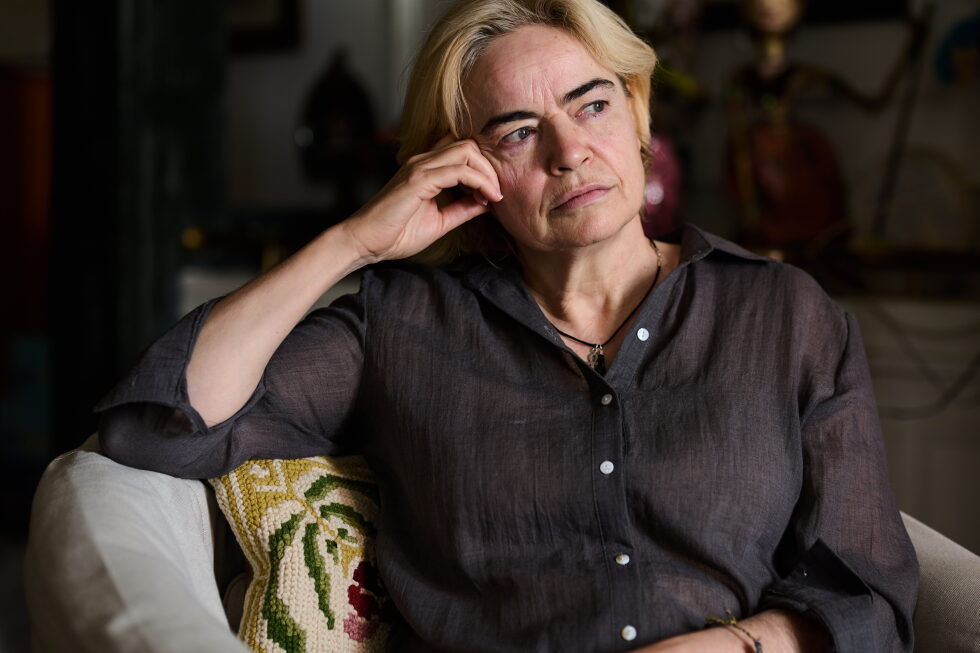
MADRID – More than half a century after she endured repeated sexual abuse at the hands of a Marist priest as an 8-year-old catechism student in Valladolid, northern Spain, Paula Alonso-Pimentel is finally pushing for accountability. Decades of buried trauma, followed by years of unmet demands for justice, have led her to this moment: a new joint reparations program between the Spanish government and the country’s Catholic bishops that aims to address long-unpunished abuse cases involving deceased or statute-barred perpetrators. For a nation that has lagged far behind other Western countries in confronting the clerical abuse crisis entrenched within its once-dominant Catholic institutions, this launch marks an unprecedented new chapter in a decades-long reckoning.
Spain’s journey to this reparations framework began in 2018, when leading national newspaper El País published a searchable public database of alleged clergy sexual abuse cases, pulling back the curtain on a crisis the Catholic Church had hidden for generations. As public outrage mounted, Spain’s Parliament tasked the national ombudsman with conducting a full independent investigation. The resulting 2023 report, an 800-page exhaustive assessment, delivered a damning conclusion: based on a representative survey of 8,000 adults, the report estimated hundreds of thousands of people across Spain had experienced sexual abuse at the hands of Catholic clergy over the course of decades. The Spanish Bishops Conference immediately pushed back against the estimate, releasing its own internal count that documented just 728 identified abusive priests since 1945. Church leaders noted that 60% of those accused abusers were already deceased, and most of the alleged crimes occurred before 1990, placing them far outside the window for criminal prosecution.
In 2024, the Spanish government threatened to mandate church-backed compensation, arguing the Church had consistently minimized the scope of the crisis. The bishops responded by launching their own unilateral victim assistance program, which critics quickly dismissed as toothless: run entirely by the Church, it lacked independent oversight, making it impossible to ensure fair outcomes for survivors. For many victims including Alonso-Pimentel, the idea of seeking compensation from the same institution that enabled and covered up their abuse was unacceptable. “You can’t be a judge and a jury in your own case,” Alonso-Pimentel put it, a sentiment shared by hundreds of other survivors who avoided the Church’s in-house process.
The new joint reparations program, approved by both the bishops conference and the government months ahead of Pope Leo XIV’s upcoming visit to Spain, was designed to address that core criticism. Under the new framework, claims are first reviewed by an independent panel of experts convened by the national ombudsman, which proposes a package of compensation that may include symbolic recognition, psychological support, or financial payouts. The Church then reviews the proposal, and if no agreement can be reached, the case moves to a joint committee with representation from the Church, the ombudsman’s office, and victim advocacy groups. If the committee deadlocks, the ombudsman – an independent state official – retains final say over payout decisions, a landmark shift that gives government, not Church leaders, the final word on compensation. Survivors have exactly one year to submit claims, and as of the latest update, 420 people have already filed applications.
For the Vatican, the program aligns with Pope Leo XIV’s recent public commitments to addressing clerical abuse. In his first encyclical, Leo wrote that listening to abuse survivors requires explicit acknowledgment of harm and delivery of “just reparation.” Josetxo Vera, communications director for the Spanish Bishops Conference, framed the new program as a natural expansion of the Church’s ongoing work to address past harm, while emphasizing that the bishops do not view the crisis as systemic within the Spanish Church. “We believe that, indeed, human nature is flawed, that it has a propensity for evil, and that it needs a great deal of reconciliation and forgiveness,” Vera said. “But I can’t say that it’s a systemic issue. We are part of this society. We share some of its virtues, and we also share some of its vices and crimes.” The conference has already paid out roughly 2 million euros ($2.3 million) to survivors through its earlier internal program, and leaders say they recognize why many survivors were uncomfortable engaging directly with the Church.
Even with these reforms, the program faces widespread criticism from survivors and advocacy groups, who warn it retains critical structural weaknesses. A core point of contention is the one-year application window, which many argue is too short for survivors who have spent decades hiding their trauma to come forward. Critics also note the program lacks a standardized compensation matrix that ties payout amounts to the severity of abuse, meaning outcomes could be inconsistent across cases. Most alarmingly for opponents, the program is not legally binding, leaving no formal recourse for survivors who disagree with final decisions.
Anne Barrett Doyle, co-director of Bishop Accountability, a U.S.-based nonprofit that tracks global clerical abuse cases and institutional cover-ups, called the new protocol “quite fragile.” “It has a very short time frame. It has no matrix to establish minimum awards for various categories of injuries,” she noted. “So will it be fair? Will it be consistent?”
Those doubts are echoed by Spanish survivor activist Miguel Hurtado, who has spoken publicly about his own abuse at the hands of a monk at the iconic Montserrat Abbey, a historic Benedictine monastery outside Barcelona. As a 16-year-old Boy Scout in a group led by monk Andreu Soler more than 20 years ago, Hurtado says he was molested by Soler. He says the monastery immediately pressured his parents to not report the abuse to law enforcement, and decades later, after an independent 2019 report acknowledged Soler had abused multiple victims over decades, the monastery still refused to accept formal responsibility for compensation, arguing all claims were time-barred under criminal and civil law. Hurtado says he is disappointed that Pope Leo XIV will still visit the Montserrat Abbey during his trip, despite his detailed submission of the allegations to Vatican and church authorities. Like many other survivors, he fears the new reparations program will ultimately fail to deliver meaningful justice. “The problem is that it’s built on sand,” Hurtado said.
For her part, Alonso-Pimentel shares that skepticism, but remains cautiously hopeful that the new independent model will deliver the accountability she has chased for 50 years. She declined to participate in the Church’s earlier internal program, distrustful of an institution that enabled her abuse and ignored her claims for decades. When she reached out to the Marist order in Valladolid after Pope Francis’ 2019 global summit on clerical abuse, all she received was the name of her abuser, with no further accountability. Now, she says she will file her claim under the new program no matter what, but is waiting to see if the process lives up to its promises. “It must cost them, the Church,” she said. “It must cost them because this cannot come for free. It cannot be that they can continue doing it without paying a huge price.”