Decades after they were sent from South Korea to Denmark for international adoption, eight people born in South Korea are taking legal action against the Danish state, demanding officials acknowledge their role in facilitating unlawful adoptions and hiding the truth of the adoptees’ biological origins.
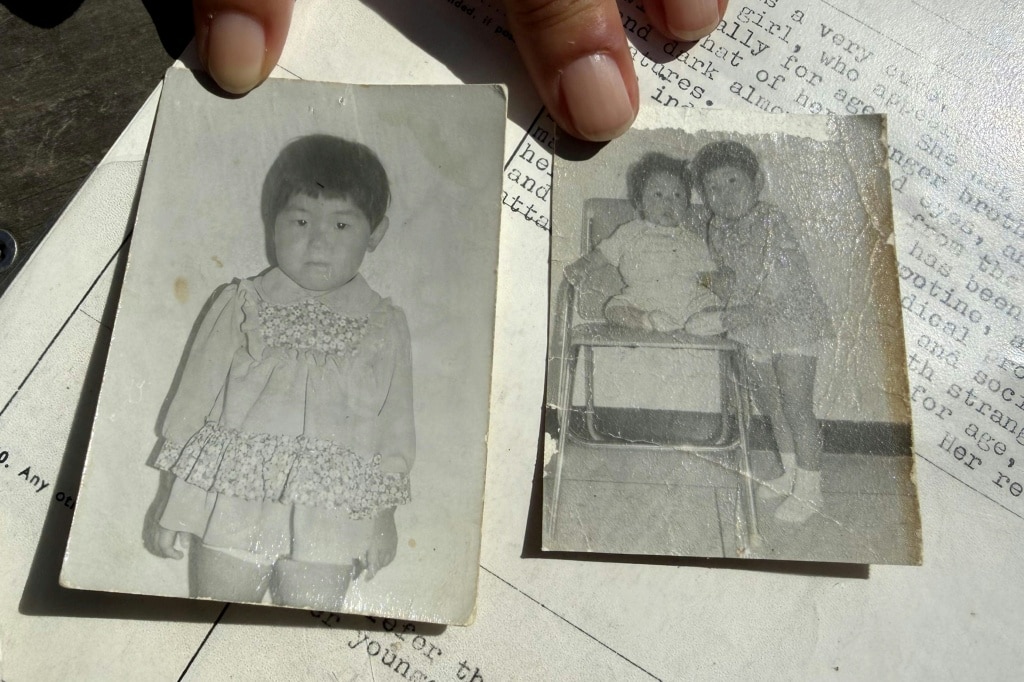
One of the plaintiffs, Sofie Randel, was just three years old when she arrived in Denmark alongside her younger brother in 1977, a time when South Korea was ruled by an authoritarian government. A talkative, energetic young girl, Randel spoke fluent Korean upon her arrival, and her adoptive father recorded her voice on a cassette tape that remained stored and forgotten for more than 40 years. It was only in 2023 that Randel shared the long-forgotten recording with a journalist who had been documenting her search for her biological roots.
Through piecing together the childhood memories Randel shared on the tape and conducting cross-border research in South Korea, the pair uncovered a reality that directly contradicted the story written on Randel’s official Danish adoption paperwork. For decades, Randel believed she and her brother had been abandoned on a public street, left with only their names and ages pinned to their clothing. The truth, however, was far different: their biological mother had voluntarily placed them in a South Korean orphanage only temporarily, while her family worked to overcome severe financial hardship.
Instead of holding the children until their family could reclaim them, the siblings were sent to Denmark for adoption as part of a decades-long, state-sanctioned program that sent tens of thousands of South Korean children to adoptive families across the globe. What is more, Randel and her brother discovered that three of their older biological siblings had spent 45 years searching for them, never giving up hope of a reunion. The siblings finally met for the first time in South Korea in 2023, a moment Randel called life-changing. ‘They were looking for us for 45 years,’ 52-year-old Randel told Agence France-Presse, wiping away tears. ‘We had no idea anyone was even searching for us.’ Randel argues that Danish authorities intentionally perpetuated the false abandoned story to cover up the unlawful origins of her adoption.
Official data from a South Korean government inquiry confirms that between 1955 and 1999, more than 140,000 South Korean children were sent abroad for international adoption. In October 2025, the South Korean government issued its first formal public apology for these state-backed unethical practices, acknowledging that widespread, unjust human rights violations had taken place throughout the program.
Between 1970 and 1989 alone, 7,220 South Korean children were adopted by Danish families. Almost every single one was told they were homeless street orphans, but subsequent investigations have proven this narrative was almost always false. Multiple inquiries have confirmed that the vast majority of children placed in South Korean orphanages during this period were sent for international adoption without the full informed consent of their biological families. A 2024 report from Denmark’s own National Social Appeals Board confirmed that Danish state-run adoption agencies were aware that their South Korean counterparts regularly altered children’s official identities and backgrounds to facilitate adoptions. Danish media reports have also revealed that these Danish agencies paid roughly 54 million kroner, equal to around $8.4 million today, to speed up and facilitate these cross-border adoptions.
Peter Moller, who leads an advocacy organization for South Korean adoptees in Denmark that is not involved in the current lawsuit, says he has been shocked by the contrast between the two countries’ responses to the scandal. ‘As a Dane, I grew up believing that Denmark always stood for what is right, and that South Korea, as a former dictatorship, was the one responsible for the wrongdoing,’ Moller explained. ‘But Korea had the courage to face what it did straight on, while Denmark prefers to sweep everything under the rug.’
Sidse Koch Jorgensen, a 53-year-old physiotherapist and one of the eight plaintiffs, says she is furious at the continued lack of accountability from Danish officials. ‘It is a fundamental human right to know your own identity, and to have the chance to connect with your biological family,’ Jorgensen said. For years, the false information on her adoption papers blocked her from tracking down her family, but her decades-long search, which began with her first trip to South Korea in 2013, finally neared a breakthrough when she got an unexpected email just one month before her trip: her biological father had been found. ‘It was a total shock,’ she recalled. When she met her father during her trip, she learned the real story of her separation from her family: when her father was out of the country, her mother had sent her to a temporary care camp without his knowledge or consent, but rather than holding her there, camp officials sent her directly to Denmark for adoption.
Jorgensen says she wants the Danish government to take ownership for its decades of neglect. ‘Danish authorities were supposed to verify every detail of these adoptions, to investigate any red flags, and they failed completely,’ she said. Each of the eight plaintiffs is seeking 250,000 kroner ($38,800) in personal damages from the Danish state. When contacted by AFP for comment on the lawsuit, Denmark’s Ministry of Social Affairs declined to make any public statement. Denmark halted all new international adoptions in 2024 after widespread evidence of systemic abuse and unethical practices in cross-border adoption programs came to light.