One hundred years after the birth of one of Hollywood’s most enduring legends, Los Angeles’ entertainment hub is launching a month-long series of tributes to honor Marilyn Monroe, the platinum-haired star whose short life and decades-long cultural legacy continue to captivate global audiences.
Centennial events officially kicked off Monday at the iconic TCL Chinese Theatre, the historic Hollywood landmark where Monroe’s hand and footprints have been preserved in cement alongside those of Jane Russell, her co-star in the 1953 classic *Gentlemen Prefer Blondes*. Fans will gather at the site to serenade the late star with “Happy Birthday” — a deliberate nod to Monroe’s legendary sultry performance of the song for President John F. Kennedy in 1962, just months before her death. Organizers have placed 100 roses and a commemorative cake at the location, a spot that draws millions of tourists each year and stands as a defining landmark of Hollywood’s golden age.
Pre-empting the official opening, the Academy Museum of Motion Pictures launched its major retrospective *Marilyon Monroe: Hollywood Icon* on Sunday, a blockbuster exhibition that explores both the star’s trailblazing film career and the tragic personal story that cut her life far too short. Monroe, who rocketed to global fame in the 1950s, died of a drug overdose at her Los Angeles Brentwood home in August 1962 at just 36 years old.
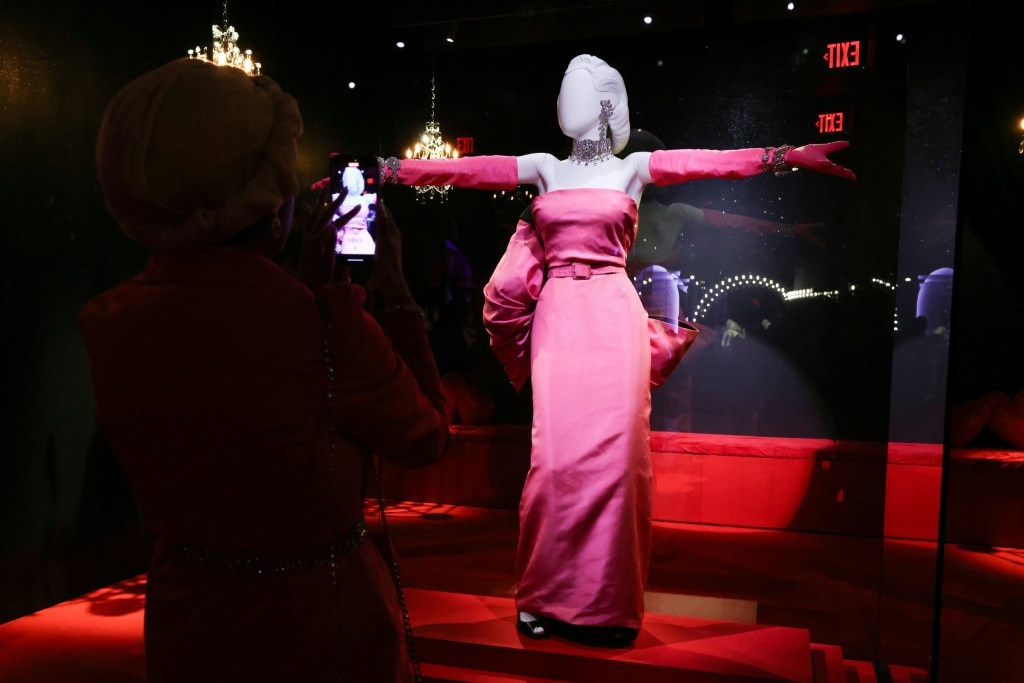
Throughout June, the Academy Museum will host special screenings of Monroe’s most acclaimed performances, pulling titles from her extensive filmography that span the breadth of her career. The lineup includes her breakout supporting turn in 1950’s *The Asphalt Jungle*, her star-making leading role in 1953’s *Niagara*, the timeless comedy *The Seven Year Itch* (1955), the critically adored *Some Like It Hot* (1959), and her final completed film, 1961’s *The Misfits*. The exhibition, which will run through February 2027, features hundreds of original personal and professional items, many of which have never been displayed publicly. Among the centerpieces is the iconic pink gown Monroe wore for her legendary performance of “Diamonds Are a Girl’s Best Friend” in *Gentlemen Prefer Blondes*.
Later this week, on June 4, Julien’s Auctions will host a dedicated “100 Years of Marilyn” sale, featuring nearly 200 pieces of rare Monroe memorabilia up for auction. Highlights of the collection include never-before-published candid photographs of the star, an annotated script from her final, unfinished production *Something’s Got to Give*, and deeply personal items ranging from handwritten dessert recipes to a tube of her favorite Elizabeth Arden lipstick.
Born Norma Jeane Mortenson in Los Angeles on June 1, 1926, Monroe’s early life was marked by instability. She spent her childhood bouncing between foster homes and orphanages after her mother was institutionalized, and married for the first time at just 16 years old. Her first introduction to the entertainment industry came in 1944, while she worked in a Los Angeles factory supporting World War II production efforts. A military photographer visiting the plant to shoot photos of women war workers spotted her, kicking off a rapid transition into modeling.
Within months, she made the decision that would change entertainment history: she divorced her first husband and dyed her natural brown hair to the iconic platinum blonde shade that would become her trademark. She earned her first studio contract with 20th Century Fox, and by the age of 30 had cemented her status as a global household name and defining sex symbol of the 20th century.
Far from just a on-screen star, Monroe was a trailblazer behind the scenes of Hollywood’s old studio system. She defied studio expectations to found her own independent production company, trained at New York’s prestigious Actors Studio to refine her craft, and openly pushed back against exploitative studio practices. In the 1950s, while still under contract with 20th Century Fox, she refused the lead role in the musical adaptation *The Girl in Pink Tights*, arguing the script was mediocre and her pay — one-third that of co-star Frank Sinatra — was unfair. Decades before the #MeToo movement exposed systemic exploitation of women in entertainment, Monroe publicly spoke out against the predatory “wolves” in Hollywood who targeted young female talent, making her a cultural proto-feminist icon long before the term entered mainstream discourse.