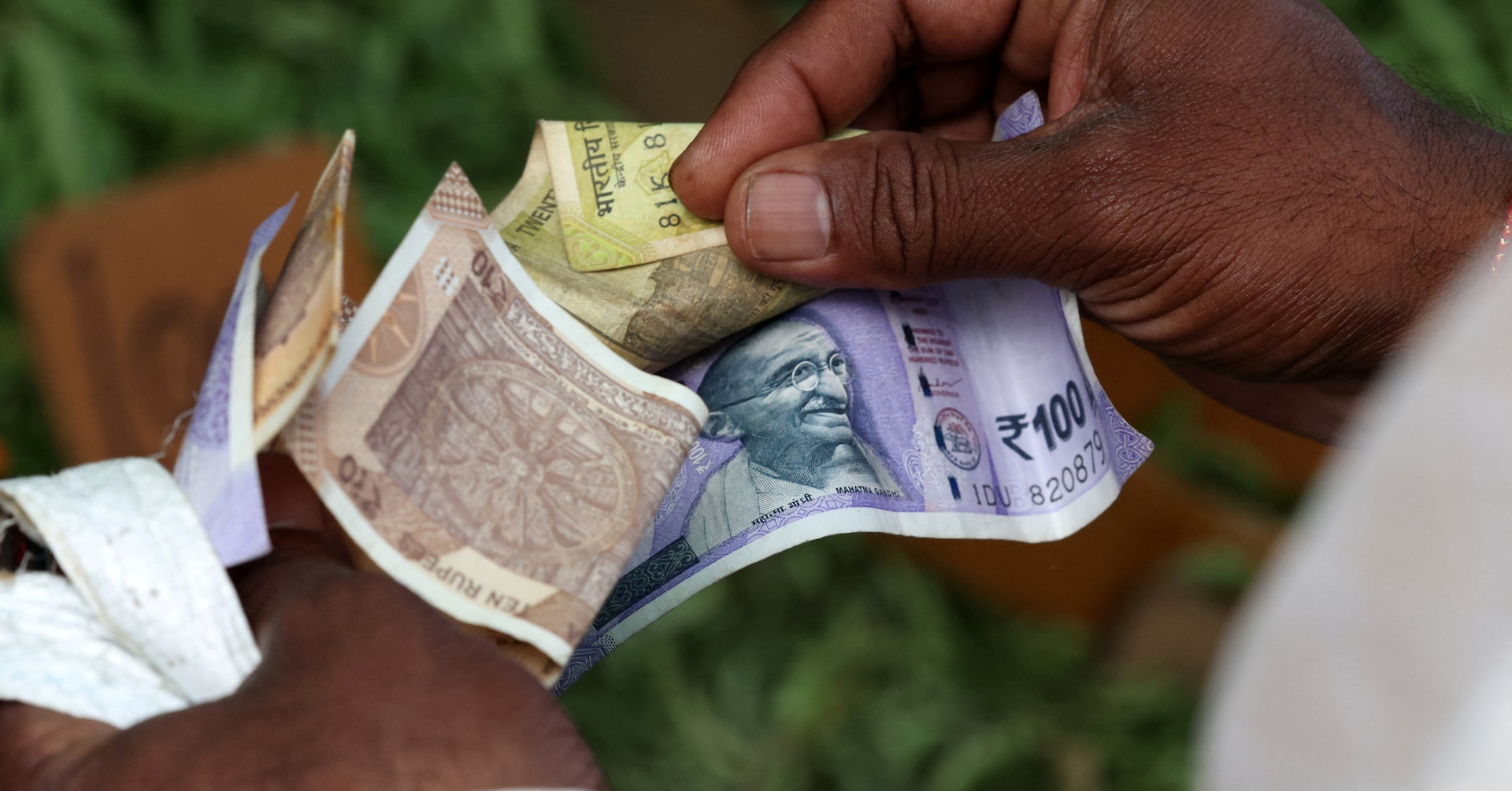
The Indian rupee experienced a decline on Thursday, September 18, 2025, mirroring the downward trend of other Asian currencies. This movement followed the U.S. Federal Reserve’s anticipated interest rate cut and its cautious approach to further easing of benchmark borrowing costs. The rupee closed at 88.13 against the U.S. dollar, marking a 0.36% drop for the day. Meanwhile, Asian currencies saw declines ranging from 0.1% to 0.6%. The U.S. dollar index, which measures the dollar against a basket of major currencies, dipped slightly to 96.9 but remained above a 3.5-year low reached immediately after the Fed’s policy announcement. HSBC analysts noted that the Fed’s stance, while consistent with market expectations, leaned more towards hawkishness than dovishness. Traders predict that the rupee will exhibit two-way price action in the near term, influenced by broader dollar movements, with support near 88.45 and resistance around 87.75-87.80. A Reuters poll revealed that investors have increased short positions on the Indian rupee and the Indonesian rupiah, driven by concerns over central bank rate cuts in Indonesia and U.S. tariffs impacting India. Bearish bets on the rupee have surged to their highest level since early February. In a positive development, India’s Chief Economic Adviser V. Anantha Nageshwaran hinted that the U.S. might soon eliminate the punitive tariff on Indian goods and reduce the reciprocal tariff from 25% to 10-15%. India’s benchmark equity indexes, the BSE Sensex and Nifty 50, each rose nearly 0.4%, while the yield on the benchmark 10-year bond increased by 4 basis points to 6.51%. Tight rupee liquidity, caused by income tax outflows, led to higher daily funding costs, prompting banks to turn to the foreign exchange swap market. The swap rate between Wednesday and Thursday peaked at 0.50 paisa, indicating a rupee interest rate of over 6%, as banks sought funds at elevated costs.