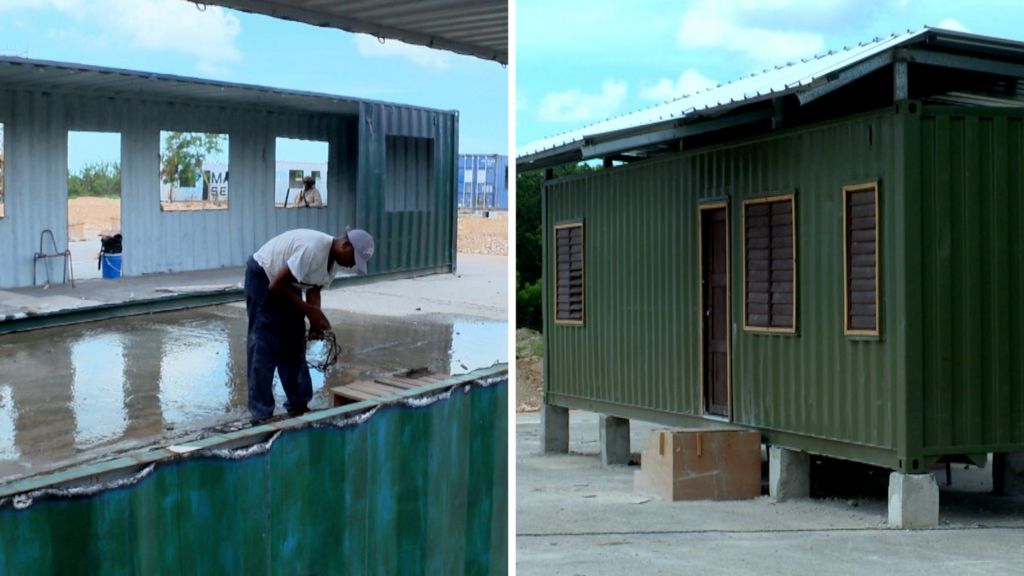
Across Cuba, a worsening national housing crisis has pushed policymakers and communities to test unconventional, low-cost solutions to shelter thousands of unhoused and inadequately housed residents. One of the most striking pilot projects is unfolding in Barrio Toledo, where hundreds of decommissioned steel shipping containers are being transformed into livable, permanent family homes, according to on-the-ground reporting from BBC correspondent Will Grant.
Unlike corrugated metal temporary shelters that have been used in crisis response elsewhere, these converted units are being built out as full-scale two-bedroom residences. Each container is retrofitted to include a fully functional cooking space, a private bathroom with plumbing access, and a small exterior patio that gives residents outdoor room for gardening, relaxation, or family gatherings. As of the latest on-site visit, at least 700 containers are already in various stages of conversion in Barrio Toledo alone, marking one of the largest implementations of this affordable housing model in Latin America.
The initiative comes as Cuba has grappled with a decades-long housing deficit, exacerbated by decades of economic constraints, aging existing housing stock, and slow construction of new affordable units. Shipping container conversion offers a unique workaround: the steel structures are readily available through regional trade networks, require far less construction material than traditional concrete homes, and can be completed in a fraction of the time. For low-income families waiting years for public housing assistance, the project offers a faster path to stable, secure home ownership than conventional government housing programs.
While the model is still being evaluated for long-term durability in Cuba’s tropical climate, early community feedback has been positive, with many families already moving into their completed container homes and reporting improved quality of life. Local officials are now monitoring the project’s outcomes to assess whether it can be scaled up to other neighborhoods across the country to address the persistent national housing gap.