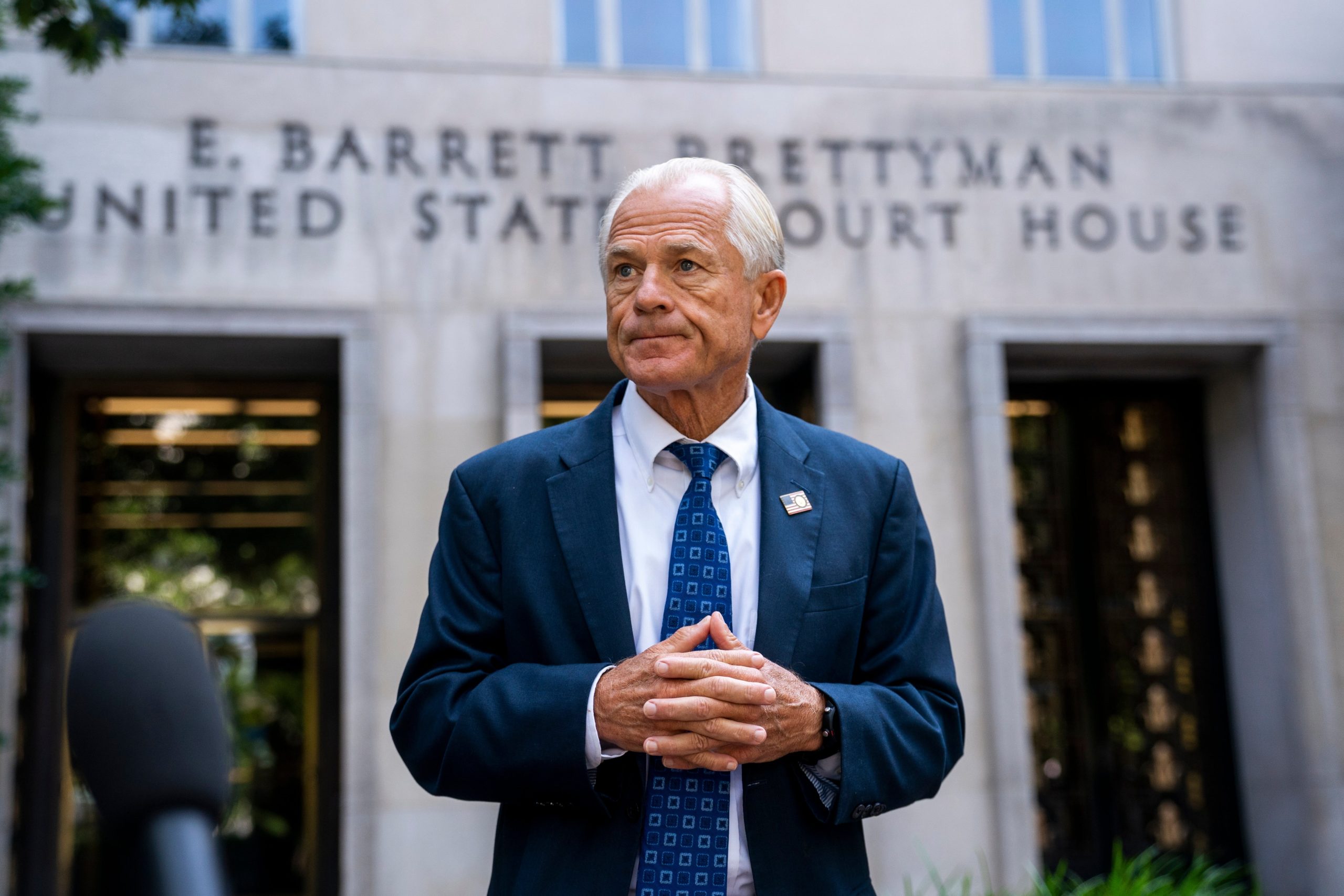
A groundbreaking ProPublica investigation has uncovered direct White House involvement in pushing through a $620 million Pentagon loan to a small North Carolina rare earth magnet startup connected to Donald Trump Jr., raising serious new questions about cronyism and ethical conflicts within the second Trump administration. When the historic loan was announced one year ago, top defense officials, company leaders, and representatives for the president’s eldest son moved quickly to dismiss public and congressional suspicions of political favoritism. Trump Jr.’s spokesperson stated he had no role in securing the deal, the Pentagon publicly insisted he did not influence the funding decision, and Vulcan Elements’ founder claimed the company received no preferential treatment because of its high-profile ties. But new interviews with multiple anonymous Pentagon officials and a review of internal Defense Department documents obtained by ProPublica tell a different story: the multi-hundred-million-dollar loan request for Vulcan was directly initiated by Peter Navarro, a senior White House trade advisor with close personal ties to Trump Jr.
According to one senior Pentagon official who was not cleared to speak publicly about the internal process, of the dozens of companies competing for Pentagon funding under the critical minerals initiative at the time, the Vulcan deal was the only one directly pushed forward by a top White House presidential aide. Two insiders involved in processing the loan confirmed that after receiving the request from the White House, defense leadership ordered staff to accelerate the review and approval process at an unprecedented pace. To meet the rushed timeline, Pentagon teams worked consecutive late nights, skipping downtime to push the massive loan through in just a matter of weeks, a stark departure from the months-long standard vetting process for comparable funding deals. One source directly involved summed up the internal directive: “The call came from the White House: We have to get this done.”
This revelation marks the first time that a federal agency contract or funding award under the second Trump administration has been directly tied to intentional White House intervention, adding fuel to longstanding allegations that the administration has directed government benefits to companies tied to the Trump family’s personal business interests. The loan itself was framed as part of a critical national security initiative to reduce U.S. dependence on China’s dominant grip on the global rare earth supply chain, a sector that underpins everything from commercial semiconductors to advanced military systems including Tomahawk missile guidance systems and F-35 fighter jet engines.
Roughly three months before the Pentagon made the loan public, Trump Jr.’s venture capital firm, 1789 Capital, acquired an undisclosed stake in Vulcan, a two-year-old startup founded by a Harvard Business School student that had raised less than $10 million in total private funding ahead of the deal. Following the loan announcement, Vulcan’s estimated valuation surged tenfold from roughly $200 million to $2 billion, delivering an immediate windfall to its early investors including 1789 Capital. The investigation also revealed that a second company tied to Trump Jr. — Florida-based drone parts manufacturer Unusual Machines, where he holds a board advisory role and millions in personal equity — is also currently under review for Pentagon funding, following a 2025 defense contract for the firm that already sparked cronyism allegations.
Navarro, who served as Trump’s trade advisor during his first term and has built an extremely close personal relationship with Trump Jr. in recent years, has not responded to multiple requests for comment from ProPublica. Trump Jr. has previously stated he does not discuss his portfolio investments with administration officials and never spoke with Navarro about the Vulcan deal, claiming he had no knowledge of how the funding was approved. 1789 Capital has also denied any role in securing the loan. The White House issued a blanket defense of the process, stating in a formal statement that the administration “is working in the best interest of the American people,” adding that the entire team “is working together and with private industry to secure America’s critical mineral supply chain at Trump speed.” The Pentagon has repeatedly denied that political connections or outside affiliations play any role in its funding decisions.
The national security context for the loan is broadly supported by policymakers across the aisle: China currently controls nearly all global processing capacity for rare earth elements, a position it has already used to restrict exports to pressure geopolitical rivals, leaving U.S. military supply chains potentially vulnerable. The Office of Strategic Capital, the Pentagon unit that approved the Vulcan loan, was originally created under the Biden administration to support private-sector development of domestic rare earth capacity, with an initial $1 billion in lending authority. After taking office for a second term, the Trump administration dramatically expanded the office’s authority to $200 billion in total lending, overhauled its operating structure, and replaced the original slow, open application process with a model that relies heavily on the personal networks of new leadership drawn from Wall Street to source deals.
The Vulcan loan has drawn intense bipartisan criticism from ethics experts and congressional Democrats. Richard Painter, former chief White House ethics lawyer under the George W. Bush administration, called the intervention a clear abuse of power. “This is our money they’re spending,” Painter said. “This is corruption we pay for.” A group of Senate Democrats has demanded the Pentagon release a full accounting of Vulcan’s selection process, warning that the Trump family’s conflicts of interest could be “resulting in a waste of taxpayer dollars and a threat to national security.” The Pentagon’s response to the request did not address how Vulcan was selected, only addressing conflict of interest protocols for its own employees, not the president’s family. House Democrats attempted to subpoena Trump Jr. to testify about the deal earlier this year, but the effort was blocked by Republican lawmakers.
For other companies seeking funding from the revamped Office of Strategic Capital, the incident has reinforced a widespread perception that access depends on personal connections to the Trump circle rather than open competition. Brodie Sutherland, CEO of Nevada-based tungsten miner Patriot Critical Minerals, told ProPublica his firm hired a lobbyist with existing ties to the office to secure a meeting, adding, “Whether you need someone on the inside track to get it across the line I don’t know. We’re hopeful you don’t need to be chums with Trump Jr. to get a project across.” Defense Department records show Patriot Critical Minerals was already rejected for a loan, though the agency did not provide a reason for the denial. Sutherland said he still holds out hope for future funding.