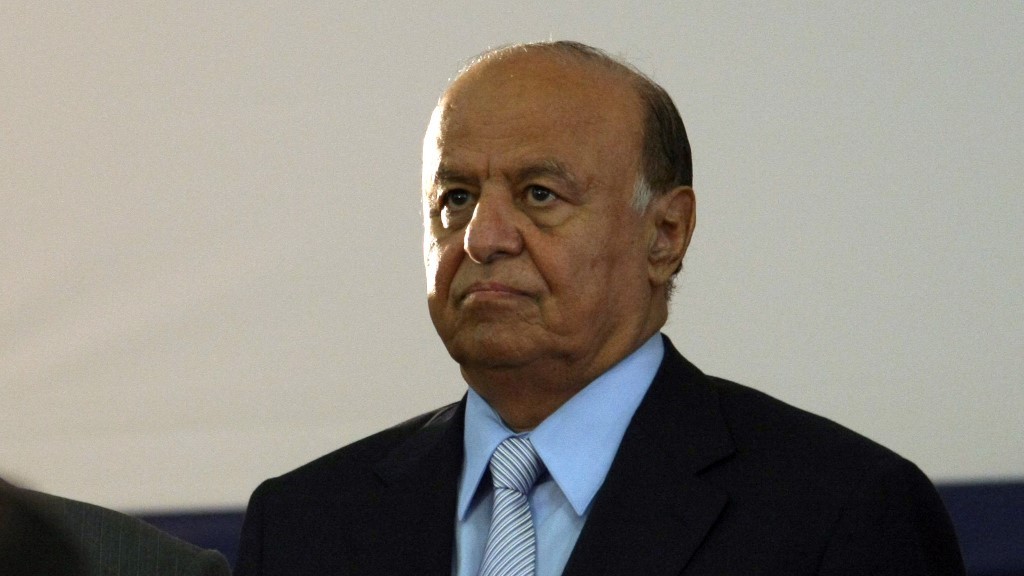
Veteran Yemeni political figure Abd Rabbuh Mansour Hadi, who led the country through years of devastating civil conflict as its former president, has passed away at the age of 80 in Riyadh, the capital of his host nation Saudi Arabia. Yemeni presidential sources confirmed to Agence France-Presse that Hadi’s death followed an unexpected acute health incident.
Hadi had lived in Saudi Arabia since 2015, when he was forced to flee Yemen after Houthi fighters seized control of large swathes of territory, including the capital Sanaa, and advanced on his government’s stronghold. The long-running Yemeni conflict pits the Saudi-backed Hadi-era government against the Iran-aligned Houthi movement, which has controlled northern Yemen’s most populous regions since 2014. Hadi formally resigned from the presidency in 2022, transferring executive authority to a newly formed Presidential Leadership Council tasked with overseeing peace negotiations and wartime governance. Multiple regional reports indicate that after stepping down, Hadi remained confined to his Riyadh residence in what amounted to de facto house arrest for the final two years of his life.
Born in 1944 in Abyan Governorate, in what was then the British-protected South Yemen, Hadi built a decades-long career spanning military and political office across both of Yemen’s pre-unification states. He held senior posts in the Marxist-Leninist People’s Democratic Republic of Yemen (South Yemen) and the northern Yemen Arab Republic before the two states unified in 1990. Following the 1994 Yemeni civil war, Hadi was appointed vice president, serving under longtime leader Ali Abdullah Saleh for 18 years. He assumed the presidency in 2012, after mass Arab Spring uprisings forced Saleh to step down after 33 years in power.
Escalating political tensions between Hadi’s administration and the Ansar Allah movement, more widely known as the Houthis, ultimately boiled over into full-scale conflict in 2014. The Houthis quickly captured Sanaa, prompting Hadi’s escape into exile and leading to a Saudi-led military intervention that began in March 2015. By the time Hadi left office in 2022, the nearly eight-year conflict he oversaw had killed more than 370,000 people, according to United Nations estimates, and pushed Yemen into what the UN describes as the world’s worst humanitarian crisis.
Regional media reports confirm Hadi will be laid to rest in Riyadh on Friday. Former Yemeni Foreign Minister Abdulmalik al-Mekhlafi, who served in Hadi’s cabinet, publicly offered his condolences on the social media platform X, arguing that the former president had been treated unfairly throughout his public life. “I believe that the man was not given his due justice as he deserved, neither during his period of rule nor even before it, as an image was formed around him in the media that was often far from his true reality,” al-Mekhlafi wrote, extending prayers to Hadi’s family and the Yemeni people.
As of Thursday, the Houthi movement has not released an official statement on Hadi’s death. However, one senior Houthi spokesperson has publicly noted that Hadi’s death occurred in what he described as “mysterious circumstances,” leaving lingering questions about the circumstances of his passing among political observers.