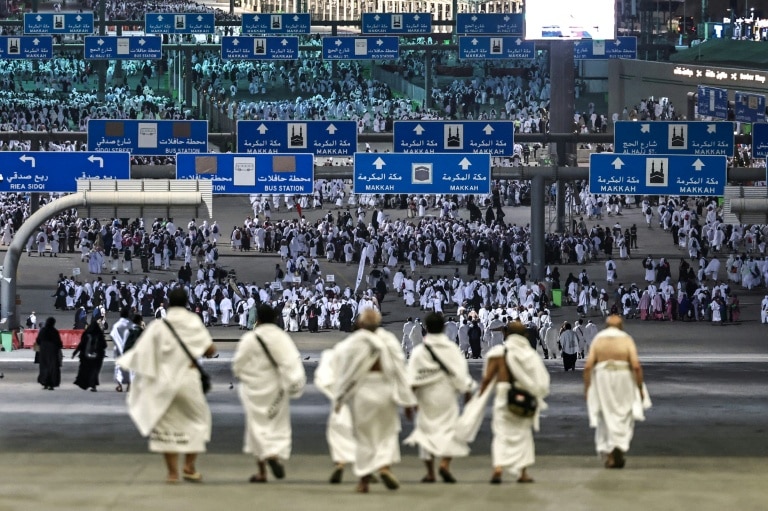
The largest Islamic religious gathering of the year reached its dramatic climax on Wednesday, as more than 1.7 million Muslim pilgrims gathered in Saudi Arabia’s Mina Valley to carry out the symbolic “stoning of the devil” — the final core ritual of the annual Hajj pilgrimage.
From the first light of dawn, throngs of faithful from across the globe moved through designated routes in the valley, located just southeast of Islam’s holiest city Mecca, to hurl small collected pebbles at large concrete pillars that stand in for Satan. This centuries-old practice reenacts a foundational moment in Islamic tradition: when the Prophet Abraham encountered Satan at three separate sites, where the devil attempted to tempt him into disobeying God’s command to sacrifice his son Ishmael. Abraham’s rejection of temptation, marked by driving the devil away with stones, is remembered and recreated by pilgrims each year.
For able-bodied Muslims with the financial means to travel, completing the Hajj at least once in a lifetime is one of the five central pillars of Islam. This year’s gathering, which brings together believers from every corner of the world, has unfolded against a challenging backdrop of dual pressures: extreme seasonal heat and simmering regional conflict.
For the third consecutive year, the holiest festival in Islam has been overshadowed by geopolitical unrest across the Middle East. This year, the shadow comes from the ongoing US-Israeli standoff with Iran that has drawn in Gulf nations. A fragile ceasefire has been in place since April 8, largely halting active hostilities, but diplomatic efforts to negotiate a permanent end to the conflict have yet to produce a conclusive breakthrough.
Compounding the security and diplomatic uncertainty, pilgrims have had to endure extreme high temperatures through the sequence of mostly outdoor rituals that make up the week-long pilgrimage. On Tuesday, one day before the stoning ritual, pilgrims climbed and prayed atop Mount Arafat — the site where the Prophet Muhammad is believed to have delivered his final sermon — where mercury hit 45 degrees Celsius. Following the day of prayer, the faithful spent the night camped under open skies at Muzdalifah, a stretch of desert between Mount Arafat and Mina, where they collected the smooth pebbles they would use for the next day’s stoning.
After completing the climactic stoning ritual on Wednesday, pilgrims will make their return to Mecca to carry out a final circumambulation of the Kaaba, the sacred cuboid structure at the center of the Grand Mosque that is the qibla — the direction all Muslims face when performing daily prayers.
The final day of the Hajj coincides with Eid al-Adha, one of Islam’s major religious holidays that honors Abraham’s willingness to obey God’s command. According to tradition, before Abraham carried out the sacrifice of his son, the angel Gabriel intervened, allowing Abraham to sacrifice a ram in Ishmael’s place. The holiday is traditionally marked by the ritual slaughter of sheep, with a portion of the meat distributed to low-income and needy communities around the world.