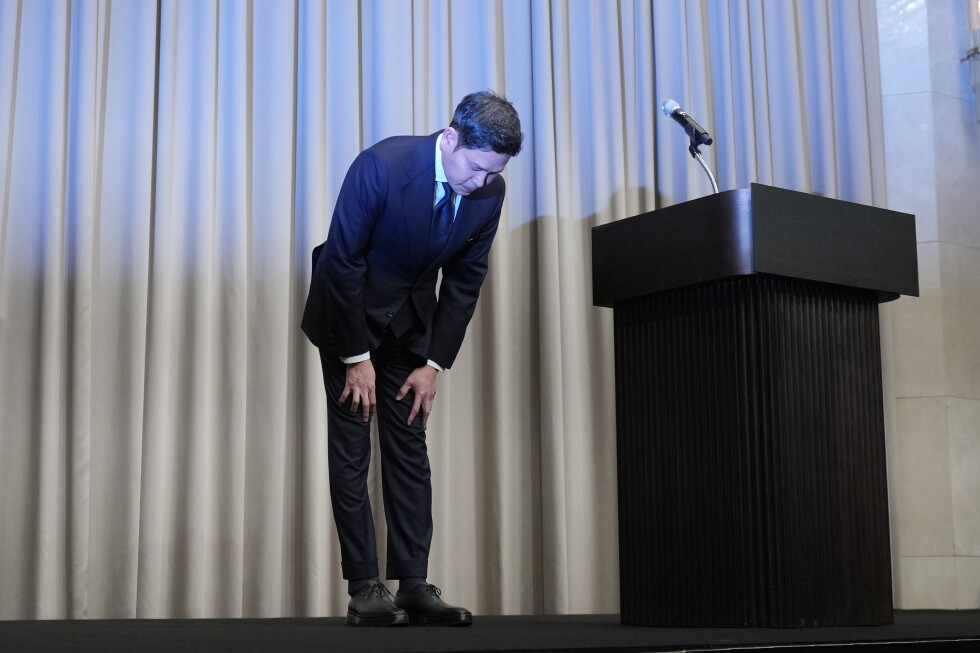
In the wake of widespread national fury over a tone-deaf promotional campaign that many South Koreans view as a deliberate mockery of victims of the 1980 Gwangju pro-democracy military crackdown, Shinsegae Group chairman Chung Yong-jin — the majority stakeholder in Starbucks’ South Korean operation — has issued his second public apology in just two weeks. The Tuesday televised address saw Chung bow three times, openly begging forgiveness from both the bereaved families of activists killed under the country’s former military dictatorship and the South Korean public at large.
The controversy ignited when Starbucks Korea launched a marketing push for its extra-large “tank” branded tumblers, scheduling the promotion for May 18 — the annual anniversary of the 1980 Gwangju Democratic Uprising. That historic pro-democracy protest was brutally crushed by military forces deployed by the authoritarian government, which used tanks, attack helicopters, and live fire to suppress the movement, leaving hundreds dead or injured. The campaign compounded the insult with the slogan “Thwack it on the table!” — a phrase widely recognized as a reference to the infamous 1987 police cover-up of the torture death of student activist Park Jong-chol, where officers falsely claimed Park collapsed and died after investigators “hit the desk with a thwack” during interrogation.
Public backlash was immediate and overwhelming. Within hours of the promotion going live, Shinsegae pulled the campaign and terminated the contract of Starbucks Korea’s chief executive. South Korean police have also launched a formal criminal investigation, prompted by formal complaints filed by Gwangju victim families. A growing national movement has called for widespread boycotts of Starbucks locations across the country, drawing condemnation from top South Korean government officials. Interior and Safety Minister Yoon Ho-jung announced that Starbucks products would no longer be purchased or used for any official government events, labeling the chain’s actions “anti-historical behavior.” South Korean President Lee Jae Myung further amplified the criticism in a post on X last week, calling the campaign “inhumane and disgraceful behavior by cheap profiteers who deny the values of the South Korean community, basic human rights and democracy.”
During his address, Chung acknowledged the profound pain and anger the misjudged campaign had caused across the country, stating, “I take it very seriously the fact that many people felt deep pain and anger because of Starbucks Korea’s inappropriate marketing campaign.” He also urged the public not to direct frustration at frontline Starbucks store employees, emphasizing that full responsibility rests solely with corporate leadership. As of Tuesday, no major disruptive incidents at retail locations had been reported.
Chung first issued a formal apology on May 19, where he acknowledged the campaign had caused “deep pain to the victims and bereaved families of the May 18 Democratization Movement as well as to the public.” Senior Shinsegae executive Jeon Sangjin told reporters this week that the company’s week-long internal review has not yet found conclusive proof that Starbucks Korea marketing staff intended to mock the pro-democracy movement, an accusation the employees involved have repeatedly denied. However, Jeon confirmed that a number of employees refused management demands to hand over their personal smartphones for internal investigation. The company says it will wait for the results of the official police inquiry, and any employee found to have intentionally ridiculed the Gwangju victims will face immediate termination.
To contextualize the deep national sensitivity around the May 18 anniversary: the 1980 Gwangju crackdown took place just months after General Chun Doo-hwan seized control of the country in a 1979 military coup. Official South Korean government records place the confirmed death toll from the crackdown at roughly 200, but pro-democracy activists and Gwangju victim advocates have long maintained that the actual number of people killed was far higher. Chun’s authoritarian regime also imprisoned tens of thousands of political dissidents under the guise of rooting out “social evils.” The widespread public anger over Chun’s dictatorship ultimately culminated in mass nationwide pro-democracy protests in 1987, forcing the regime to approve a constitutional revision that established direct presidential elections — a turning point widely recognized as the foundation of South Korea’s modern democratic system.