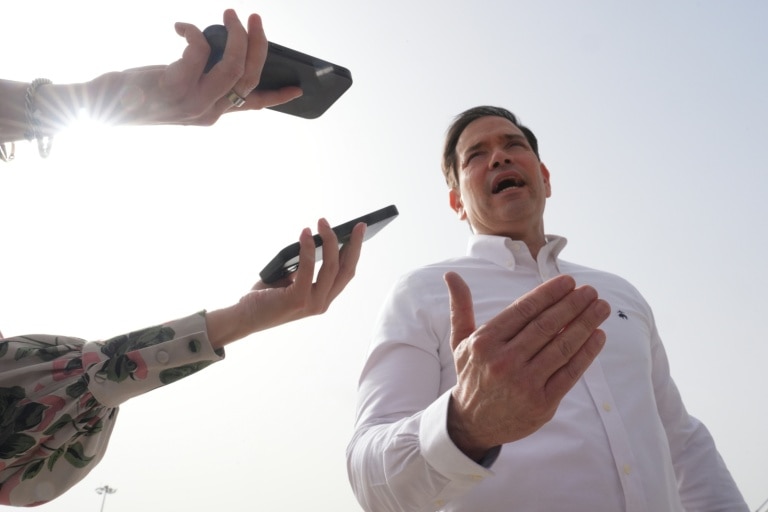
A pivotal gathering of the Quadrilateral Security Dialogue, widely known as the Quad, is set to convene in New Delhi on Tuesday, where US Secretary of State Marco Rubio will push to revitalize the four-nation security bloc grouping the United States, India, Australia, and Japan. The meeting comes at a moment of deep uncertainty: growing tensions within the alliance over the recent US-Israeli attack on Iran and lingering questions about the long-term reliability of US commitment to the partnership, which Beijing has long viewed with deep suspicion.
The summit gathering comes just 10 days after US President Donald Trump completed a warm state visit to Beijing, where he praised the idea of a US-China “G2” partnership. That framing has sparked unease among Quad members, many of whom view China’s rising regional influence as a core strategic threat, and fear a direct US-China grand bargain could leave their interests sidelined.
For Rubio, who is making his first visit to India as Secretary of State, reviving the Quad is a personal priority. Within hours of his inauguration last year, he held a symbolic first meeting with Quad foreign ministers in Washington, and the group convened again in the US capital in July 2025. But a planned full leaders’ summit last year never materialized, after Trump refused to commit to traveling to New Delhi for the event — a sharp break from his predecessor Joe Biden, who had repeatedly insisted Quad leaders’ summits were a permanent fixture of US Indo-Pacific strategy.
Rubio’s core goal in New Delhi is to lay the necessary groundwork to finally bring Trump to a Quad leaders’ gathering. In an interview with India Today, he emphasized that the alliance needs tangible progress to deliver results, not just symbolic meetings. “We want to make sure we do the work necessary and position it so, when they do meet, they’ll have very specific deliverables and things that actually they can announce,” Rubio said.
One key area of consensus the bloc is looking to build out is cooperation on securing critical mineral supplies. The Trump administration has grown increasingly alarmed by China’s dominant market position in the rare earths and critical minerals that underpin the global high-tech and renewable energy sectors, and collaboration on supply chain resilience marks a rare area where the administration has embraced traditional alliance-building diplomacy. The bloc is also set to expand cooperation on maritime security, an issue of particular urgency for Japan, which has repeatedly pushed back against China’s assertive territorial claims in the Indo-Pacific’s contested waterways.
But the alliance remains fractured by deep divisions over the recent US-Israeli military campaign against Iran, launched in late February after Tehran took control of the Strait of Hormuz in response to escalating pressure. The attack sent global oil prices soaring, hitting energy import-dependent Japan and India particularly hard. Beyond economic fallout, the Trump administration’s decision to launch the strike without consulting allied governments has left deep resentment: no US ally other than Israel has fully backed the operation, prompting Trump to publicly question the reliability of US partners.
Australian Prime Minister Anthony Albanese has taken the most sympathetic stance among Quad leaders, noting shared global concerns over Iran’s disputed nuclear program, but he has refused to contribute military or logistical support to the war effort. That partial backing was not enough for Trump, who has publicly stated he is “not happy with Australia.” For Japan and India, both of which have long maintained constructive diplomatic and economic ties with Iran, the situation is even more fraught. While the two countries grudgingly complied with US sanctions banning all imports of Iranian oil, they have rejected calls to fully back the military campaign.
Ahead of Tuesday’s full Quad meeting, Japanese Foreign Minister Toshimitsu Motegi met with his Indian counterpart Subrahmanyam Jaishankar on Monday, where he framed the gathering as a critical response to a shifting global order. “The world is faced with the most significant structural change in the post-World War II era, driven by a shift in the balance of power and the intensification of conflict and confrontation,” Motegi said, adding that it was vital for the bloc to address the “increasingly severe” global security environment.
Jaishankar, for his part, sought to downplay widespread concerns that the Trump administration’s outreach to Beijing has eroded US commitment to the Quad. He noted that Trump was a strong backer of the alliance during his first presidential term, pushing back against narratives that US interest in the bloc is waning.
First conceived by former Japanese Prime Minister Shinzo Abe, the Quad was founded on the idea that four like-minded Indo-Pacific democracies could align to counter growing Chinese influence. Under President Joe Biden, the alliance expanded its mandate far beyond security cooperation, adding work on disaster response, global public health, and supply chain resilience as core priorities. Now, as Rubio works to put the partnership back on track after months of stalled progress, the question remains whether the bloc can overcome internal divisions over Iran and persistent uncertainty about US commitment to deliver on its ambitious goals.