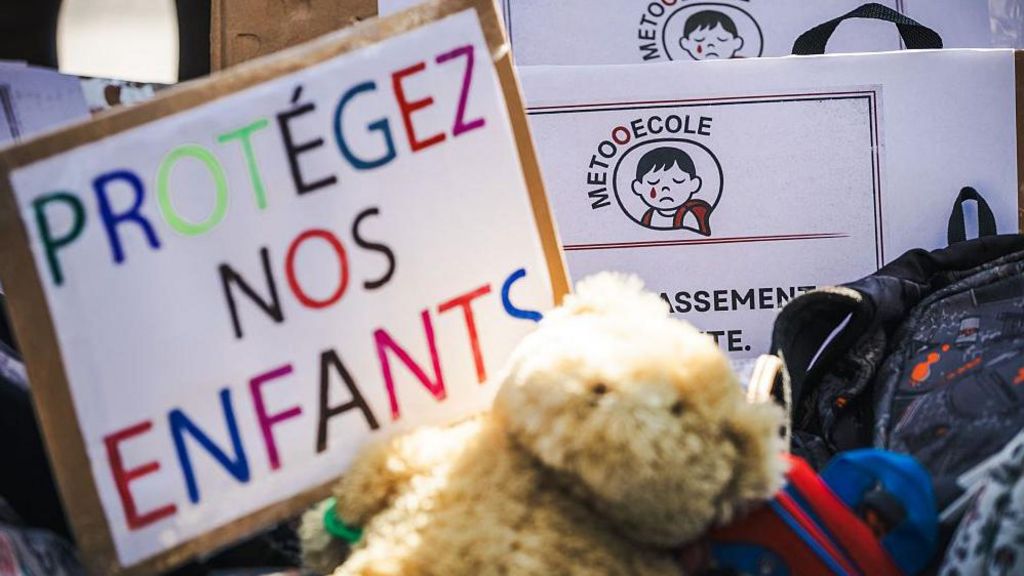
A landmark sexual abuse trial is set to open Tuesday in Paris, marking the highest-profile legal proceeding in a year-long crisis that has thrown the French capital’s early childhood education system into chaos and sparked widespread parental fury. The defendant, a part-time after-school aide known locally as an animateur, stands accused of sexual misconduct against five young students at Alphonse Baudin Junior School in Paris’ 11th arrondissement.
The case is just the first of multiple upcoming legal actions tied to a sprawling investigation into abuse allegations involving non-teaching child care staff across the city. Three additional trials are scheduled to begin over the summer, with a verdict expected in a fourth case heard earlier this month, and investigators have confirmed ongoing inquiries at nearly 100 Parisian crèches, kindergartens and primary schools. The allegations range from inappropriate verbal behavior and physical aggression to severe sexual abuse of young children. As recently as last week, police carried out a coordinated raid on three schools in the 7th arrondissement, detaining 16 people and filing formal sexual misconduct charges against three.
For parents across Paris, the crisis has shattered trust in the city’s child care system. Many have openly criticized Paris City Hall, which directly employs the roughly 15,000 animateurs working across city schools, for dismissing early complaints and failing to address systemic vulnerabilities. One parent, speaking to the BBC, shared the harrowing experience that led his family to uncover the allegations in the upcoming trial. Back in April 2025, after another parent reported their child had been assaulted, he and his wife questioned their four-year-old daughter. When asked if the defendant had touched her, the girl confirmed he had given her inappropriate cuddles, then demonstrated the contact by stroking her own back in an unusual, disturbing manner — a revelation that confirmed the parents’ worst fears.
Advocacy groups say the root of the crisis lies in deeply flawed hiring and training practices for animateurs, who are responsible for supervising children during lunch breaks and after-school programs, where they lead recreational, arts and sports activities. Elisabeth Guthmann, co-founder of SOS-Périscolaire, an advocacy group founded in 2021 to push for safer after-school care, explained that poor pay and lax hiring standards have created a high-risk system. Most roles require only a basic child care certification to be hired, and pressure to fill vacancies is often so intense that even this minimal requirement is frequently set aside. Guthmann cited one alarming example at a 16th arrondissement primary school, where four animateurs allegedly organized a child fight club, forcing pupils to brawl while other children stood by cheering.
The crisis has also exposed deep divisions between parents demanding accountability and the animateurs themselves, many of whom say they now face unfair, widespread suspicion that has turned into professional discrimination. Last week, dozens of aides staged a strike to demand better working conditions and fair treatment amid the wave of allegations. Union representative Carla Bonnet argued that while serious abuse claims must be investigated, not all parental reports are well-founded, and city leaders have abandoned neutrality in favor of rushing to action. Rémi, a working after-school assistant, told reporters that “Working with children today, at the drop of a hat you can be accused of absolutely anything,” adding that city officials have failed to support staff amid the panic.
Newly elected Paris Mayor Emmanuel Grégoire has moved quickly to address public anger, announcing a sweeping overhaul of the hiring and oversight system backed by a €20 million investment in training and monitoring. Under new rules, any animateur facing a formal abuse complaint will be automatically suspended pending investigation, and nearly 80 aides have already been suspended since the start of 2026. Grégoire Ensel, a representative of national parental advocacy group FCPE, said the crisis was entirely predictable: “When you have a system in which workers aren’t properly paid or trained or monitored, and where there’s no money or proper procedures for raising the alert, it’s not surprising that things get out of control.”
While the scandal has been concentrated in Paris, child protection activists warn that identical systemic weaknesses exist in school systems across France, raising fears that the scope of abuse could be far broader than currently known. For affected families, the trial opening this week represents a long-awaited step toward accountability, even as many continue to demand deeper change to protect children.