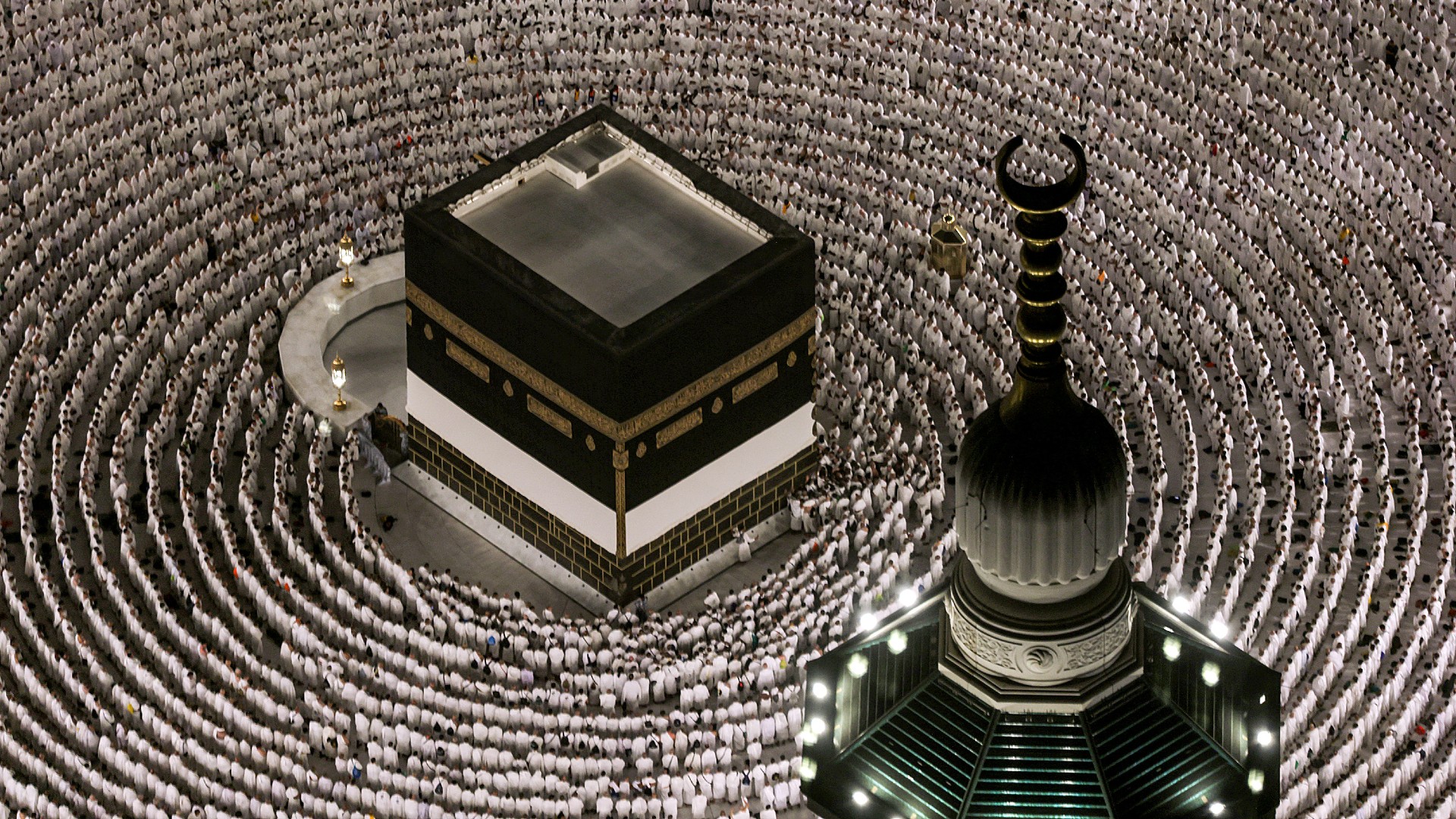
Every year, Saudi Arabia welcomes millions of Muslim believers from every corner of the globe for Hajj, the sacred annual Islamic pilgrimage that stands as one of the five pillars of the faith. For 2026, organizers project more than 1.8 million participants from 188 different nations will travel to the Kingdom’s holy sites, with official rites of the pilgrimage set to kick off on May 25. The multi-day ritual culminates in Eid al-Adha, one of Islam’s most important global celebrations, which this year begins on May 27 and runs through May 29, marking a time of joy and reflection for Muslims worldwide, whether they are completing the pilgrimage in person or marking the occasion at home.
As a core religious obligation, Hajj is required of all adult Muslims who are physically healthy, mentally sound, and financially able to make the journey. At its core, the pilgrimage centers on two foundational ideals: deep spiritual connection and radical unity among all believers. Regardless of nationality, wealth, or social status, all pilgrims follow the exact same rites, gathered in a shared spirit of equality before God. To uphold this ethos, pilgrims maintain a state of ritual purity and simplicity throughout the journey, reflected in their clothing. Men wear two seamless pieces of plain white cloth, while women are encouraged to choose simple, unadorned garments, with no required specific color.
The formal journey begins before pilgrims even reach the sacred boundaries of Mecca, known as the Miqat. Before entering this zone, pilgrims enter ihram, the sacred state of ritual purity, by stating their clear intention to perform Hajj — a rite called niyah in Arabic. After entering Mecca in a state of ihram, most pilgrims complete an initial circumambulation, called Tawaf, walking seven times counterclockwise around the Kaaba, the ancient black stone structure that is the holiest site in Islam. Next comes the sa’i, a ritual walk between the nearby hills of Safa and Marwa, both located within the grounds of Mecca’s Grand Mosque.
From Mecca, pilgrims travel together in a mass movement to Mina, a vast purpose-built tent city that stretches across the desert outside Mecca. Saudi authorities have prepared more than 100,000 climate-controlled tents and temporary shelters to accommodate the massive influx of pilgrims for their stay. Pilgrims spend much of their time in Mina in quiet prayer and reflection, before departing at dawn the next day for the most pivotal stop on the pilgrimage: Mount Arafat, also called Jabal al-Rahma, or the Mount of Mercy.
The day spent at Mount Arafat is the climax of the entire Hajj, regarded as a day of profound forgiveness. Believers gather to repent for their past sins, and Islamic tradition holds that a sincere day of repentance on Mount Arafat leads to full forgiveness of all prior sins. Even Muslims who cannot make the journey to Hajj mark this day with prayer, fasting, and supplication in their home communities.
After sunset on the day of Arafat, pilgrims travel roughly 9 kilometers to the open area of Muzdalifa, where they spend the night under the open sky in quiet devotion. While in Muzdalifa, they collect 49 small pebbles that will be used for the symbolic rituals that come in the following days of the pilgrimage. Before dawn the next morning, they depart Muzdalifa and return to Mina to begin the rite of rami, the symbolic stoning of the devil. On the third day of Hajj, pilgrims throw seven of their collected pebbles at the largest of three stone pillars called the Jamarat. This ritual commemorates the story of the Prophet Ibrahim, when the devil attempted to tempt him to disobey God’s command to sacrifice his son, and Ibrahim drove the devil away with stones.
In past decades, overcrowding at the Jamarat site led to deadly stampedes and crushes that killed hundreds of pilgrims. In response, Saudi authorities have undertaken major infrastructure overhauls in recent years, widening walkways, redesigning access routes, and adding modern crowd management systems to improve safety for all participants.
After completing the first stoning ritual, pilgrims mark the first day of Eid al-Adha, the Feast of the Sacrifice, the second of Islam’s two major annual religious holidays, celebrated by Muslims across the globe. In remembrance of Prophet Ibrahim’s unwavering willingness to obey God’s command, pilgrims complete a ritual animal sacrifice — often arranging for the sacrifice to be carried out on their behalf — and distribute a large portion of the meat to low-income and needy communities around the world. After the sacrifice, male pilgrims trim or shave their heads, while women cut a small lock of their hair, symbolizing spiritual renewal.
Many pilgrims then return to Mecca to repeat the Tawaf and sa’i rites before heading back to their camps in Mina. Over the next two days, the fourth and fifth days of the pilgrimage, pilgrims return to the Jamarat site to complete the remaining stoning rites, throwing seven pebbles at each of the three pillars each day. Once their time in Mina concludes, pilgrims return to Mecca one final time to perform the farewell Tawaf, another sevenfold counterclockwise circumambulation of the Kaaba, to mark the official end of their Hajj journey.
The Kaaba, which sits at the center of Mecca’s Grand Mosque, is the direction that all Muslims around the world face for their five daily prayers. Islamic tradition holds that the Kaaba was the first house of worship built on Earth, originally constructed by the Prophet Adam, the first human in Islamic belief, before being reconstructed by the Prophet Ibrahim and his son Ismail centuries later.
While not a required part of the formal Hajj rites, most pilgrims end their once-in-a-lifetime journey with a visit to Medina, Islam’s second holiest city, to pay their respects at the site of the grave of the Prophet Muhammad. For millions of believers, this year’s Hajj represents a lifelong dream of spiritual fulfillment and connection to a global community of faith.