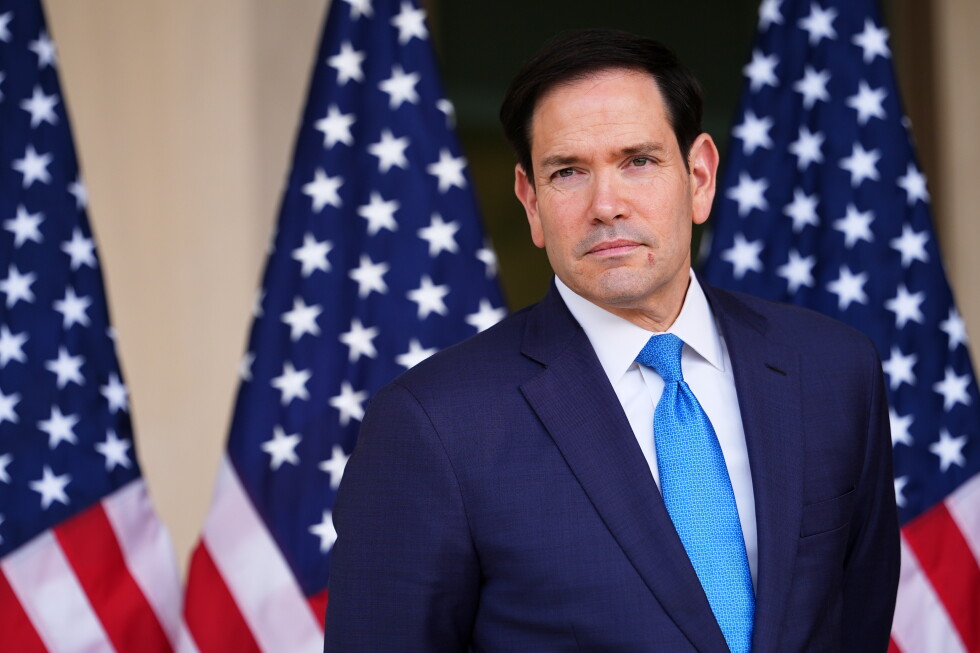
NEW DELHI – U.S. Secretary of State Marco Rubio launched high-stakes diplomatic talks with India’s External Affairs Minister Subrahmanyam Jaishankar on Sunday, launching a push to repair a bilateral relationship that has slumped to its weakest point in more than 20 years. The four-day visit, Rubio’s first official trip to India as Secretary of State, comes as mounting frictions over trade, geopolitical alignment and regional strategy have opened a notable trust deficit between the two major Indo-Pacific powers.
Rubio arrived in the Indian capital Saturday, just two days ahead of a scheduled multilateral meeting with his foreign minister counterparts from Australia, Japan and India – the four member nations of the Quad, the Indo-Pacific strategic partnership focused on countering Beijing’s growing regional influence. In pre-talk remarks to reporters in New Delhi, Rubio framed India as a non-negotiable foundation of U.S. strategy across the Indo-Pacific, emphasizing that the bilateral bond matters as much as cooperation through the Quad alliance.
His visit itinerary includes stops across multiple Indian cities, as well as a celebratory gala in New Delhi to mark the 250th anniversary of United States independence. But beyond ceremonial events, the core mission of the trip is damage control: bilateral relations have deteriorated sharply over the past 12 months, driven largely by trade tariffs imposed by the Donald Trump administration on a range of key Indian exports, as well as deepening disagreements over India’s energy purchases from Russia and Washington’s growing engagement with Islamabad.
Ashok Malik, a former policy advisor to India’s Ministry of External Affairs and current head of the India chapter of U.S.-based advisory firm The Asia Group, noted that inflammatory rhetoric from Washington over the past year on India’s core security and trade priorities has eroded mutual trust. “Certain misgivings will remain,” Malik said, adding that the visit would count as a success if it merely stabilizes the relationship and halts further downward momentum.
Analysts point to deep structural frictions that predate the current downturn, rooted in the clash between U.S. global strategic ambitions and India’s independent priorities as a rising middle power. India has long maintained close diplomatic and military ties with Russia, and even as it has deepened partnerships with the U.S. in recent decades, lingering strategic distrust – shaped by cultural differences and Cold War-era geopolitical instincts – has persisted.
Despite these long-standing tensions, U.S.-India ties expanded steadily over 20 years to build a broad, robust strategic partnership, anchored in growing shared concern over China’s increasing assertiveness across the Indo-Pacific. That shared concern has become the central driver of diplomatic cooperation through the Quad forum, which has repeatedly called out China’s large-scale military buildup and aggressive territorial claims in the South China Sea. Beijing has in turn framed the Quad as a coordinated attempt to contain China’s economic growth and regional influence, rejecting accusations of aggressive expansion as unfounded.
This visit marks Rubio’s first formal multilateral diplomatic engagement since U.S. President Donald Trump’s second inauguration in January 2025, where he is set to meet with fellow Quad foreign ministers both jointly and in one-on-one sessions. But a cascade of diplomatic and economic disagreements over the past year has dragged bilateral ties to their lowest level in two decades.
One major flashpoint came after a brief military clash between India and Pakistan in 2025, triggered by a April massacre of predominantly Hindu tourists in Indian-administered Kashmir. While India and the U.S. are often framed as ideological allies, Indian Prime Minister Narendra Modi downplayed Trump’s role in brokering the subsequent ceasefire – even as Pakistan openly courted the U.S. president and nominated him for the Nobel Peace Prize for his mediation efforts. That diplomatic snub set the stage for further tensions.
Economic frictions intensified after the Trump administration imposed new tariffs on Indian goods in retaliation for India’s continued purchase of discounted crude oil from Russia, a move that further stretched bilateral trust. When a new conflict between the U.S. and Iran broke out in February 2025, Washington deepened its diplomatic engagement with Pakistan, which positioned itself as a neutral mediator between Washington and Tehran – a shift that stoked significant unease in New Delhi. Trump’s high-profile diplomatic visit to China earlier this year only added to Indian discomfort with the current trajectory of U.S. foreign policy.
Praveen Donthi, senior analyst with the International Crisis Group, explained that long-running structural tensions have long shaped U.S.-India relations, and the Trump administration has simply brought these underlying divides out into the open. “New Delhi’s foreign policy, increasingly colored by its domestic politics, has become more black-and-white in the last decade, as evidenced by its deep discomfort with the U.S.’s ties with Pakistan and its moves toward detente with China,” Donthi noted.
Today, experts frame U.S.-India relations as a study in complexity: the two sides retain core shared strategic interests, particularly around countering Chinese influence, but competing national priorities and a rapidly shifting global geopolitical landscape have created new rifts. For New Delhi, Donthi said, the current approach is likely to be one of strategic patience: India is expected to wait out the remainder of Trump’s term, betting that the long-standing bipartisan U.S. consensus on supporting strong ties with India will outlast his presidency, allowing for a reset once he leaves office.