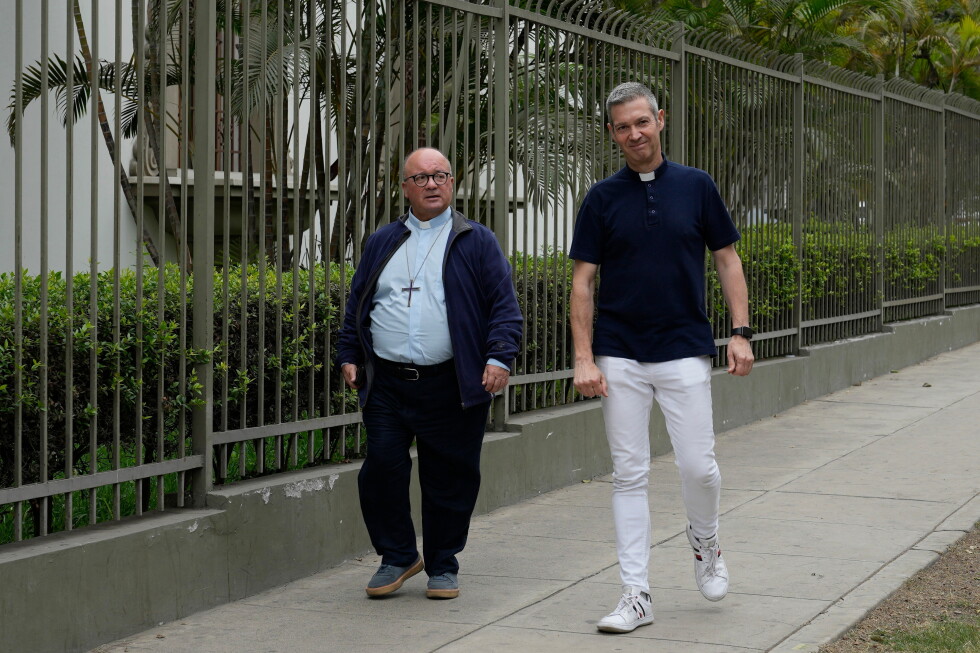
LIMA, Peru – Decades of unaddressed harm and land disputes came to a pivotal moment Saturday, when top Catholic leaders in Peru gathered with Indigenous Tallán people in the northern community of Catacaos to offer a formal, long-delayed apology for land dispossession carried out by the now-disbanded Sodalitium Christianae Vitae.
Founded in 1971 as a conservative counter-movement to the left-leaning liberation theology that spread across Latin America in the 1960s, Sodalitium grew to become one of Peru’s most influential religious societies, boasting roughly 20,000 members across South America and the United States at its peak. But the organization’s reputation collapsed after decades of hidden misconduct came to light, leading to its full dissolution by the late Pope Francis in 2025. A sweeping Vatican investigation uncovered a pattern of severe abuses, including sexual exploitation by the group’s founder Luis Figari, systemic financial mismanagement by senior leadership, and widespread spiritual abuse against members.
Calls for accountability first emerged in 2011, when former Sodalitium members submitted formal abuse allegations against Figari to the Archdiocese of Lima. For years, however, neither local church authorities nor the Holy See took meaningful action. It was not until 2015, when a survivor and an independent journalist published a book detailing the group’s wrongdoings, that pressure for a full investigation became impossible to ignore. After an unsuccessful internal reform attempt, Pope Francis dispatched two of his most trusted investigators – Monsignor Jordi Bertomeu, who led Saturday’s ceremony, and Archbishop Charles Scicluna – to probe the claims. Their final report exposed a troubling culture of “sadistic,” sect-like abuse of power, misappropriation of church funds, and coordinated harassment of whistleblowers and critics.
Saturday’s ceremony marked a long-overdue step toward repairing harm that extends far beyond internal religious abuse, to the displacement of Indigenous and rural communities in Catacaos. Land disputes between the Tallán people and Sodalitium-linked entities stretch back more than 10 years, after companies tied to the group launched legal eviction proceedings to seize thousands of hectares of land held by local farmers, through a series of property transfers that the community has never legally recognized. Dozens of local farmers were charged with criminal usurpation in the wake of the claims, and two community land rights leaders were shot and killed during violent clashes over the eviction efforts.
Addressing a packed congregation of community members and church leaders, Bertomeu, the apostolic commissioner who oversaw Sodalitium’s dissolution, offered an unflinching acknowledgment of the church’s decades-long failure to act. “We are here to ask for your forgiveness in the name of the Church,” he said. “We are late. We should have come 20 years ago, and we are truly sorry. Forgive us, offer us your forgiveness, because we too need it.” Bertomeu also shared a message of solidarity the late Pope Francis sent to the Catacaos community in 2024, which read: “Fight for your lands, I am with you.”
The historic ceremony comes months after the Peruvian Episcopal Conference confirmed that Pope Leo XIV is considering a visit to the South American nation before the end of the year. Tania Pariona, secretary of Peru’s National Human Rights Commission, framed the event as a groundbreaking step for accountability in the country. She noted that the church’s gesture puts it far ahead of Peru’s national government, which she said has repeatedly failed to uphold the land rights of rural and Indigenous communities. Describing Catacaos as a community still “fearful and broken” after decades of conflict, Bertomeu’s apology opens a new chapter in reckoning with the harm caused by one of Latin America’s most influential fallen Catholic organizations.