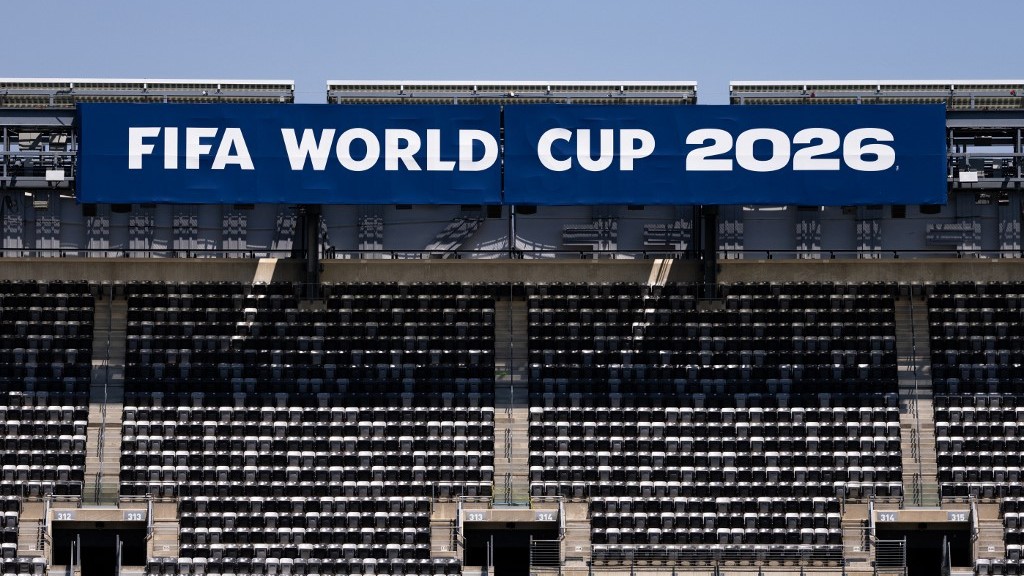
As the most anticipated global celebration of the world’s most beloved sport, the FIFA World Cup has long been framed as a unifying month-long spectacle that transcends national borders. For decades, billions of fans have gathered across living rooms, neighborhood cafes, local pubs, and packed stadiums to cheer on their teams and watch history unfold as the tournament’s most coveted trophy is lifted. But the 2026 edition, set to run from June 11 to July 19 across the United States, Canada, and Mexico, stands apart from all previous tournaments – and not for the better. Billed as the largest World Cup in history, with 48 competing nations and three co-hosts, the 2026 event has been overshadowed from its early planning stages by cripplingly high ticket prices, restrictive border controls, sweeping travel bans, and rising authoritarianism under the current U.S. administration, leaving fans across the globe disheartened and locked out.
Unlike previous single-nation tournaments, the 2026 edition’s spread across three vast North American countries has created fragmentation from the start. Vast distances between host venues eliminate the cohesive geographic and cultural identity that defined past tournaments in South Africa, Brazil, and Qatar, where fans could move between matches without cross-border travel and the event felt rooted in a single shared host community. Still, diehard football fans have historically traveled across continents to support their teams, but 2026 presents barriers unlike any the sport has seen before.
For international fans, journeying to North America begins with exorbitant baseline costs. Transatlantic flights to the U.S. are already long and pricey, with analysts warning costs could spike further amid potential jet fuel shortages linked to the U.S.-Israeli confrontation with Iran. Once inside the U.S., intercity travel between venues almost always requires additional plane or train tickets, and fans hoping to catch matches across all three host nations face even steeper compounding travel and accommodation costs.
Despite these barriers, demand for the tournament remains high. In the first round of ticket sales in late 2025, FIFA received roughly 20 million ticket requests, a number that surged to 500 million requests by January 2026, with the largest volume of international applications coming from fans in Argentina, Brazil, Colombia, England, Germany, Portugal, and Spain. But affordability remains out of reach for all but the most wealthy fans, a stark contrast to past tournaments that offered subsidized ticket rates for local residents. There is no comparable federal subsidized ticketing program for 2026, and prices across all three host nations are at historic highs. During the second round of sales in April 2026, CNN reported opening match tickets in Mexico ranged from $3,000 to $10,000. Even with minor price drops in recent weeks driven by cooling resale market demand, the tournament remains completely unaffordable for even the most loyal local fans.
“I know dozens of people who have travelled to World Cups around the world, or even to the Olympics in Paris, but very few people I know have bought tickets for this one,” Jennifer Muller, a board member of Cloud 9, the supporters group for Gotham Football Club based in New York-New Jersey, told Middle East Eye. Multiple reports from across the U.S. echo this sentiment: one Atlanta sports retail owner noted local fans were purchasing tickets that cost as much as a monthly mortgage payment.
In response to mounting criticism, FIFA rolled out a small batch of $60 entry-tier tickets for all participating national team fans in December 2025, but analysts dismiss the move as a hollow publicity stunt, with only a few hundred discounted tickets allocated per match. New York City recently announced a similar gesture: 1,000 $50 tickets for local residents via lottery for matches at the 82,500-seat MetLife Stadium, which will host eight matches including the July 19 final. This works out to just 125 discounted seats per non-final match – roughly 0.15% of the stadium’s total capacity – a move that critics say only highlights the extent of predatory price gouging.
Match tickets are only the first expense. Transportation costs have also reached absurd levels: the Associated Press reports train fares from New York City to MetLife Stadium have jumped to 12 times the standard rate. “I live 12 miles from the MetLife Stadium. Even if tickets fell into my lap, I have no idea how I would get to the stadium without spending over $100 for a 12-mile trip,” Muller added. Even traditional free public viewing events have been monetized: multiple U.S. cities initially converted popular fan parks into paid ticketed events, only rolling back entry fees in New York and other locations after widespread backlash, though premium fan park sections still cost $200 to $300 per person.
For millions of fans across Africa, Asia, and the Middle East, the barriers extend far beyond cost. Strict U.S. visa rules, new social media vetting requirements, and sweeping travel bans have made attending the tournament all but impossible for supporters from the Global South. Unlike the 2018 Russian World Cup and 2022 Qatari World Cup, which created streamlined special entry systems for ticket holders, the U.S. has added layers of new hurdles. The Trump administration imposed a full travel ban on Haiti and Iran, and partial bans on Senegal and Ivory Coast – four participating nations that are now effectively locked out of direct U.S. match attendance. When Iran requested its scheduled fixtures be moved to Mexico to avoid these restrictions, the request was denied. The U.S. also mandated a $5,000 to $15,000 visa bond for travelers from 50 countries, though it later exempted ticket holders from participating participating nations following outcry.
Even with the exemption, many fans and official delegations have already been denied entry. Cheikh Tham, a Senegalese community organizer in Atlanta, told Middle East Eye multiple members of the Senegalese Football Federation and the team’s official traveling fan entourage have already been denied U.S. visas. “So now we’re trying to work with the embassy to see how to help us get the ticket cheaper, so at least we can get the flights and go to support the team,” Tham said. The combination of pricing out local fans and blocking Global South supporters has created a tournament defined by exclusion – a reality that directly contradicts FIFA’s core branding of football as a unifying global force.
“Gianni Infantino, the president of Fifa, talks all the time about how this World Cup will net 11 billion dollars for his organisation. I wouldn’t be surprised if, actually, it went more than $11bn,” said Jules Boykoff, author of *Red Card: The 2026 World Cup, Sportswashing, and the FIFA Greed Machine*. “That is more money than any sporting event in the history of the world. The travel restrictions slices mightily against the FIFA slogan that ‘football unites the world.’ This form of exclusion threatens to suck much of the joy from the tournament, given that visiting football fans bring zest and passion to the festivities. These exclusionary practices may well put a serious damper on the fun.”
Critics also point out that this tournament fits a long history of large-scale sporting events being used for sportswashing – the practice of using a major tournament to launder a host’s global image amid widespread human rights violations. While sportswashing is most often associated with non-Western hosts such as Russia and Qatar, Boykoff argues the same dynamic is at play in 2026, with the Trump administration using the tournament to distract from rising authoritarianism and anti-immigrant policy. “That’s not to say that massive human rights problems don’t occur in Russia or Qatar. They’re well documented, so that’s for real, but oftentimes, people do turn a blind eye to the human rights violations in the United States, or they don’t call them human rights violations,” Boykoff noted. He added that the tournament could ultimately have an unexpected upside: “And quite honestly, the World Cup, if it has any positive effects, it could open a lot of people’s eyes to the double standard that we’re talking about here, and start looking at the United States and other so-called democracies with a more critical lens that also takes their human rights problems into consideration.”
Under the Trump administration, the U.S. has seen a sharp rise in anti-immigrant enforcement, including mass immigration raids, expanded detentions, and aggressive deportation campaigns targeting immigrant communities across the country. The administration has refused to issue any guarantee that non-U.S. citizens will be safe from Immigration and Customs Enforcement (ICE) raids inside World Cup stadiums. Andrew Giuliani, executive director of the White House Task Force on the 2026 FIFA World Cup, told reporters in December 2025 that “the president does not rule out anything that will help make American citizens safer. This tense environment mirrors an incident at a 2025 FIFA Club World Cup match in New Jersey, where a father of two was arrested by ICE during the event.
In late April 2026, the American Civil Liberties Union (ACLU) issued an unprecedented travel warning for the tournament, alerting international visitors to the risks of arbitrary detention, deportation, invasive social media screening, racial profiling, free speech suppression, surveillance, and even inhumane treatment or death in U.S. detention facilities. Jamil Dakwar, director of the ACLU’s human rights program, called the warning the first of its kind for a large-scale sporting event in modern U.S. history.
“Over the past year, we have engaged with Fifa and raised these issues and concerns multiple times, particularly around abusive immigration enforcement,” Dakwar told Middle East Eye. “We alerted them to the deteriorating human rights situation under the Trump administration, including illegal and unconstitutional immigration practices where individuals were detained and deported without due process, [and] in some instances, attempts to deport even permanent legal residents in connection to their activism in support of Palestinian rights. The abusive deployment of armed federal forces, including the National Guard, is, in my view, unlike anything we have seen in many decades. It affects not only migrants or asylum seekers, but also bystanders, people observing events, reporters, and even lawful residents.”
Activists are also specifically concerned about restrictions on political speech: after fans widely displayed Palestinian solidarity during the 2022 Qatar World Cup, there are no guarantees that similar displays will be tolerated in the U.S. “We have not been able to get binding assurances from Fifa or the federal government that people attending the World Cup will not be subject to the same kinds of abusive or authoritarian practices, including deadly use of force, profiling, inhumane detention and summary deportation without due process. If this can happen to permanent legal residents and even citizens, then it can certainly happen to visitors coming into the country as well,” Dakwar added.
Beyond visitor rights, the ACLU and local labor groups are also raising concerns about the impact on communities already living in the U.S. Just this week, workers at SoFi Stadium in Inglewood, California, which will host multiple World Cup matches, publicly demanded that ICE have no presence at the tournament and that FIFA stop sharing worker and fan data with ICE and foreign intelligence agencies. “We cannot celebrate the World Cup while workers, tourists, immigrant families, and local communities are made to feel unsafe. Los Angeles should be a city of welcome – not fear,” Yolanda Fierro, a SoFi Stadium worker and member of Unite Here Local 11, said in a statement.
Activists stress they are not calling for a boycott of the tournament, but rather for global fans to take precautions and hold FIFA accountable for enabling the current administration’s policies. “It is a call for precaution – for awareness of risks, for preparation, and for safety planning,” Dakwar said. “More than anything, it is also a signal to Fifa that they need to take responsibility and use their leverage to ensure that this World Cup does not become a space where abusive practices and widespread human rights violations are normalised, and where people are exposed to surveillance, deportation, arrest, detention, or other violations.”
Despite the widespread criticism, inequity, and human rights concerns, the world’s biggest football show will go on. As Boykoff put it: “I believe that we can both appreciate the action on the field and support the worker-athletes on the field, and critique Fifa for the way that it is basically turning the people’s game into a game for plutocrats.”