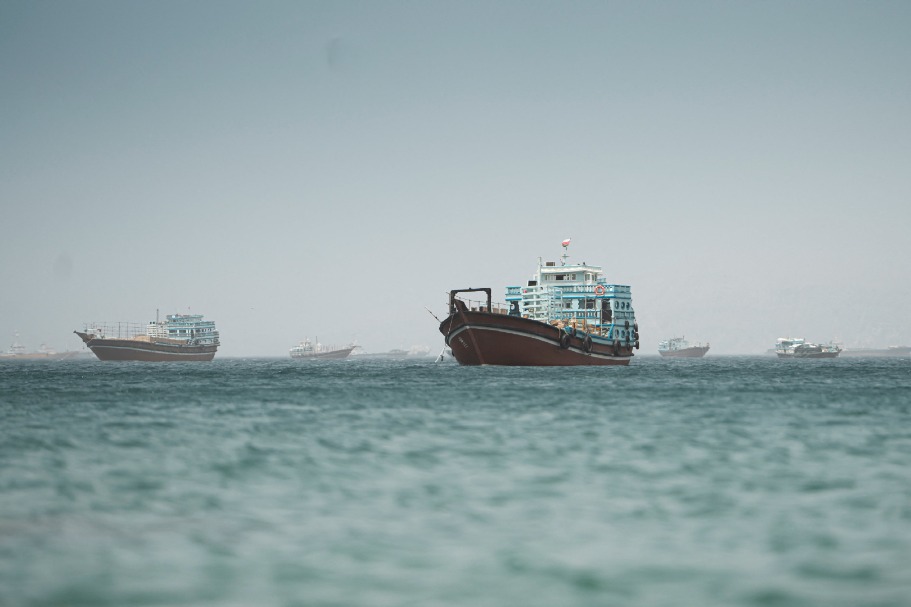
Fragile hopes for a diplomatic end to the months-long Middle East conflict gained new momentum this week, as multiple commercial oil tankers including two Chinese-flagged vessels loaded with a combined 4 million barrels of crude successfully transited the Strait of Hormuz on Wednesday. The movement of these ships, which comes amid a temporary lull in hostilities between the United States and Iran, offered a small but significant signal that de-escalation could be within reach, even as both sides continued to exchange sharp military warnings.
US President Donald Trump said Tuesday that the ongoing conflict, which began on February 28, would conclude “very quickly”, while Vice President JD Vance, who has led recent US negotiating efforts with Iranian officials, told reporters that progress toward a peace agreement was advancing. Just hours before Vance’s comments, Trump revealed he had come within 60 minutes of ordering new airstrikes on Iranian targets, and gave Tehran a 48 to 72-hour window to finalize a deal to end hostilities. Vance, who previously took part in failed negotiations with Iran in Pakistan, added that US forces remain “locked and loaded” to resume large-scale military operations if no agreement is reached.
Despite the optimistic rhetoric from senior US officials, Israel’s public broadcaster Kan reported Wednesday that Washington and Jerusalem have already finalized joint military planning for a potential resumption of combat against Iran, citing an anonymous senior US security official. Iran has responded swiftly to the US threats, with army spokesman Mohammad Akraminia warning that the Islamic Republic will open new military fronts against the US if American forces renew their attacks. Iranian Deputy Foreign Minister Kazem Gharibabadi pushed back against US framing of the deadline, accusing Washington of rebranding naked aggression as an opportunity for peace.
In a provocative announcement early Wednesday, Iranian Foreign Minister Abbas Araghchi claimed that Iranian armed forces had become the first military in the world to shoot down a US F-35 stealth fighter jet, citing what he said was an official US report on combat aircraft losses. “With the hard-won experience and intelligence we have gained from this conflict, any return to war will bring far more surprises for our enemies,” Araghchi wrote on social media.
The conflict has already caused unprecedented disruptions to global energy markets, blocking hundreds of tankers from departing the Persian Gulf and sending oil prices soaring for months. Beyond the two Chinese supertankers — part of a small group of Iraqi crude carriers that have exited the gulf so far this month — South Korean Foreign Minister Cho Hyun confirmed Wednesday that a South Korean-operated tanker carrying 2 million barrels of crude is also transiting the strait in coordination with Iranian authorities. The positive signals of easing tension pulled global oil prices lower this week, with benchmark Brent crude dipping as low as $110.16 per barrel before recovering most of its losses later in the trading day.
Trump has already extended the current truce indefinitely, and has made clear he seeks to withdraw US forces from the conflict, which has emerged as a major political liability: US consumers have faced soaring gasoline prices, and public frustration with the war has grown steadily. On Tuesday, the US Senate advanced a bipartisan war powers resolution that would force Trump to end US military operations unless he secures explicit congressional authorization for the campaign. The vote marked the first time the chamber has ever approved a measure constraining Trump’s war authority, representing a significant bipartisan rebuke of the president’s handling of the conflict. The resolution still needs to pass a majority vote in the House of Representatives before it would reach Trump’s desk for a veto, however, making its final enactment uncertain.
In an update on one of the conflict’s most controversial incidents, US Central Command commander Brad Cooper told a congressional panel this week that an investigation into a deadly attack on an Iranian school that killed roughly 170 people, most of them children, on the first day of the war remains “complex”. Cooper repeated the US military’s unconfirmed claim that the school was located on the site of an Iranian cruise missile base, stopping short of accepting formal responsibility for the civilian deaths. Iranian Foreign Ministry spokesman Esmaeil Baghaei dismissed the claim as a “baseless fabrication”, noting that striking an active school during operating hours amounts to a grave violation of international humanitarian law and an unambiguous war crime.
In a separate regional development, the United Nations Security Council — including Russia — officially condemned an unclaimed drone attack on the United Arab Emirates’ Barakah Nuclear Power Plant this week. Abu Dhabi confirmed the drone originated from Iraqi territory. The unmanned aircraft struck a generator adjacent to the plant, the first operational nuclear power facility in the Arab world, on Sunday, sparking a small fire but causing no injuries or radiation leaks. The UAE Defense Ministry added Tuesday that its air defense systems intercepted and destroyed six drones launched from Iraq over the preceding 48 hours.