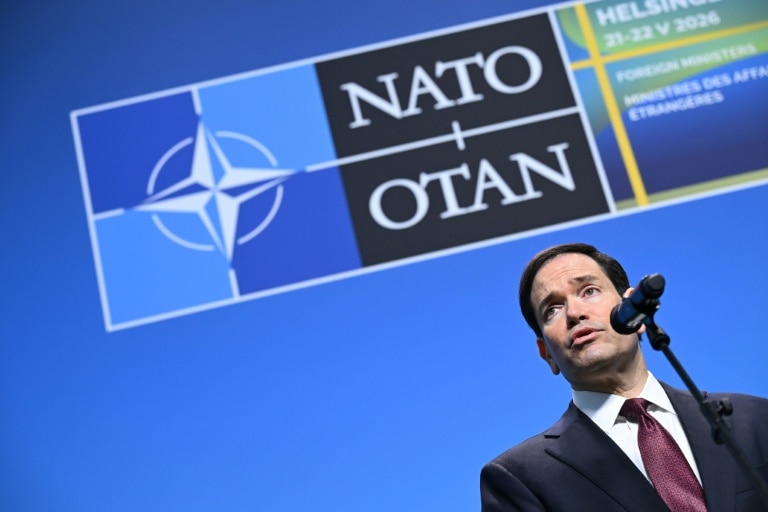
As senior diplomats from across NATO gathered in the southern Swedish city of Helsingborg for a critical pre-summit meeting on Friday, European member states moved quickly to press U.S. Secretary of State Marco Rubio for clear answers on the Trump administration’s rapidly shifting plans for troop deployments across the continent. The talks were framed by a urgent goal: defusing growing tensions with President Donald Trump over Washington’s Iran policy, and smoothing over rifts before the alliance’s high-stakes July leaders’ summit scheduled for Ankara, Turkey.
The confusion that dominated the meeting was sparked by Trump himself. Just as foreign ministers convened, the U.S. president announced he would deploy 5,000 additional troops to Poland, a sudden reversal of an earlier plan that had been scrapped by the White House. While the sudden shift drew public praise from NATO Secretary General Mark Rutte and Poland’s foreign minister, it stoked quiet but widespread concern among allies about a growing lack of strategic coordination between Washington and its European partners.
“It is confusing indeed, and not always easy to navigate,” Swedish Foreign Minister Maria Malmer Stenergard told reporters on the sidelines of the gathering. The latest about-face came only weeks after Trump abruptly announced he would withdraw 5,000 U.S. troops from Germany, amid a high-profile public dispute with German Chancellor Friedrich Merz.
Speaking to his NATO counterparts, Rubio pushed back against suggestions that the troop adjustments were intended to punish European allies, framing the moves as routine strategic planning. “All decisions on force posture are not punitive,” Rubio said. “We constantly need to reexamine our deployments to meet our evolving global security needs.”
Many NATO ministers acknowledged that gradual U.S. force drawdowns in Europe were expected, as Washington reorients its military focus to other global threat hotspots and European allies have pledged to take on greater responsibility for their own territorial defense. But leaders stressed that any changes need to follow a predictable, structured framework to give European governments time to build up their own military capacity. “What is important is that it happens in a structured manner, so that Europe is able to build up when the US reduces its presence,” Norwegian Foreign Minister Espen Barth Eide noted.
The Helsingborg meeting was called specifically to address Trump’s repeated public criticism of European allies over their response to his ongoing conflict with Iran, which has included open threats from the president that he could consider pulling the United States out of the 75-year-old alliance entirely. Diplomats told reporters the core goal of the pre-summit talks was to move past current disagreements and set a unified tone for the Ankara gathering, where allies plan to highlight their progress in meeting increased defense spending pledges they made to Trump last year.
“The president’s views, frankly disappointment, at some of our NATO allies and their response to our operations in the Middle East — they’re well documented — that will have to be addressed,” Rubio told reporters. He added that the upcoming Ankara summit would be “probably one of the more important leaders’ summits in the history of NATO.”
In a bid to ease tensions with Washington, a number of European allies have already repositioned naval vessels closer to the Middle East, with plans to assist security operations in the Strait of Hormuz once the Iran conflict concludes. “Europeans have heard the message,” Rutte affirmed. German Foreign Minister Johann Wadephul also clarified that Berlin does not expect NATO to launch an independent alliance-led military mission in the region.
Trump’s second term in office has already brought a string of unexpected crises for the transatlantic alliance, including a tense standoff last year when the president openly mused about seizing Greenland from Denmark. Now, the ongoing fallout from the Iran war threatens to overshadow the entire Ankara summit, which NATO leaders had hoped would focus on demonstrating progress toward the commitment European allies made last year: increasing collective defense spending to 5% of GDP by 2030. Diplomats confirmed that a wave of major new arms purchases are being finalized in time for the summit, to show Trump that allies are following through on their promises with tangible action.
Beneath the public scramble to accommodate Trump’s demands, there is a growing quiet consensus among European capitals that the bloc must take increasing responsibility for its own security. Led by Germany, which has ramped up military spending dramatically in recent years, European allies are taking a more assertive stance, though current discussions center on integrating greater European leadership into the existing NATO framework rather than building a separate independent defense alliance.
“As the US reevaluates its level of engagement and presence in Europe within the alliance, it is exactly the opportunity… to Europeanise NATO,” French Foreign Minister Jean-Noel Barrot said.
One area where Europe has already begun to take greater independent action is in its long-term support for Ukraine, which remains a core unifying priority for the alliance. Rutte is currently pushing allies to increase commitments to supply weapons to Kyiv, and recently floated a plan that would require all European NATO members and Canada to commit 0.25% of their annual GDP to arms purchases for Ukraine. However, the NATO chief acknowledged that the proposal was quickly rejected by a number of key allies, including major European economies like France, Spain, and Italy, which have already been criticized for contributing less than their fair share to the Ukraine effort.
“What I want to achieve is that the burden is more evenly spread, that there is more burden sharing here,” Rutte said. “At the moment it is only six or seven allies who are doing the heavy lifting.”