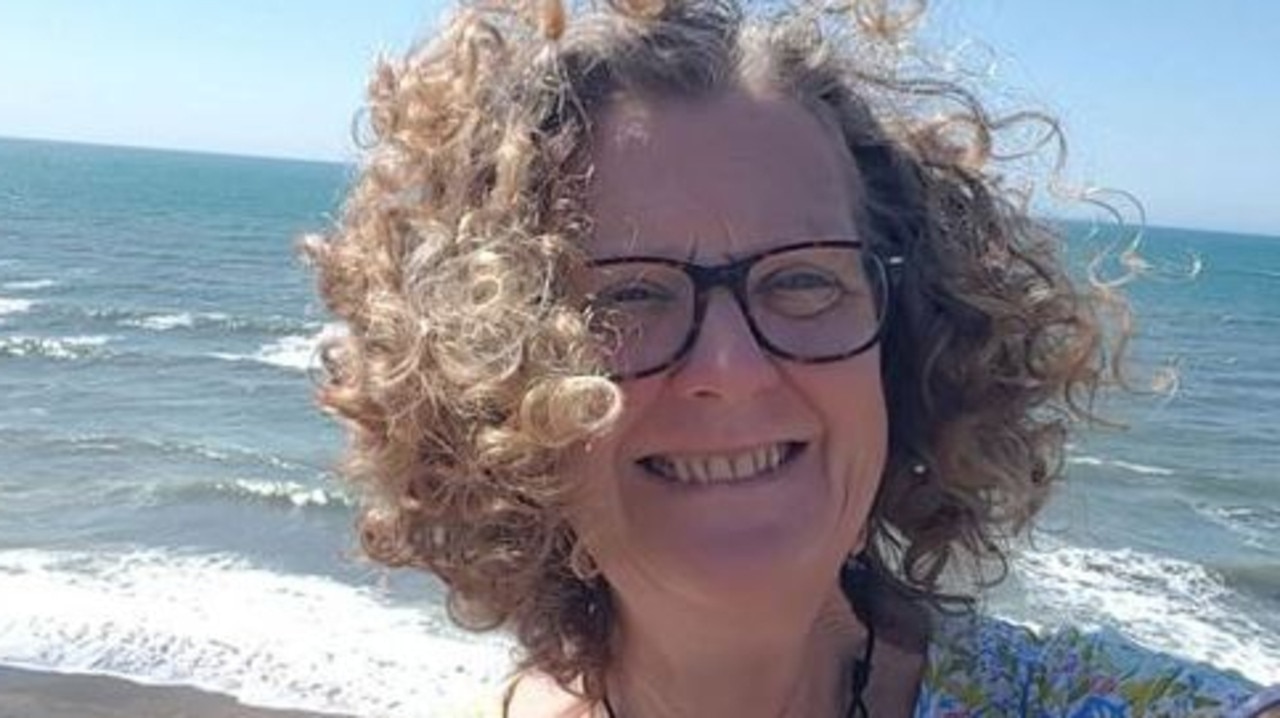
A high-profile murder trial has gotten underway in Victoria’s Supreme Court, where a 62-year-old British national accused of killing his Airbnb host after she rejected his romantic advances has firmly maintained his innocence, framing her 2023 death in a devastating house fire as an unforeseen tragedy rather than intentional murder.
The defendant, Timothy Loosemore, entered a formal not guilty plea to one count of murder for the death of 60-year-old Maree Vermont, who died at her rural property in Goldie, a small community roughly 60 kilometers north of Melbourne, on August 5, 2023.
Court documents and opening statements outline how the pair first crossed paths earlier that year, when Loosemore – who was undertaking a cross-country cycling trip across Australia – booked a spare room in Vermont’s home through the popular short-term rental platform Airbnb. After their initial stay, Loosemore returned to reside on the property, trading labor on Vermont’s 16-hectare plot for accommodation and meals.
On the night of August 5, emergency responders were called to Vermont’s property after reports of a raging inferno. Vermont’s body was recovered from the burned-out home, and Loosemore was promptly charged with murder, with prosecutors alleging he killed Vermont before intentionally starting the fire to cover up the crime.
In his opening address to the jury on Thursday, Crown prosecutor Mark Gibson laid out the prosecution’s core narrative: the killing was driven by “anger and frustration” after Loosemore was unable to accept that Vermont had rejected his desire for a romantic relationship. Gibson told jurors that Vermont had been clear about her boundaries, making her lack of interest in a relationship with Loosemore known to him, her friends, and her family. “This case in large part is about four things; rejection, ego, perverse anger and a house called the Stone House,” Gibson said. Due to the extensive damage the blaze inflicted on Vermont’s remains, coroners have been unable to formally determine an exact cause of death, a detail the prosecution has framed as a direct result of the defendant’s alleged attempt to destroy evidence.
Responding to the prosecution’s opening the following day, defence barrister Christopher Farrington did not dispute that a devastating, terrible tragedy had taken place, but pushed back hard against the claim that the incident amounted to murder. “Mr Loosemore did not assault Maree Vermont, Mr Loosemore did not kill Maree Vermont and Mr Loosemore did not burn down her house,” Farrington told the jury.
Farrington argued that the evidence presented over the course of the trial would raise significant, reasonable questions about both the cause of Vermont’s death and the origin of the fire, noting that multiple plausible alternative explanations exist for how the blaze ignited. He added that the prosecution’s narrative of a murder motive rooted in unrequited love is unsupported by evidence, and that the available proof cannot meet the legal standard required to prove Loosemore intended to harm Vermont.
“The defence simply does not accept that proposition” of a murder motive built on rejected romantic advances, Farrington said.
Prosecutors have cited key physical evidence they say links Loosemore to the crime: scratch marks on his right cheek and blood stains found on his clothing in the aftermath of the fire. The trial, which is being closely watched in Victorian legal circles, is ongoing, with further testimony and evidence expected to be presented in the coming days.