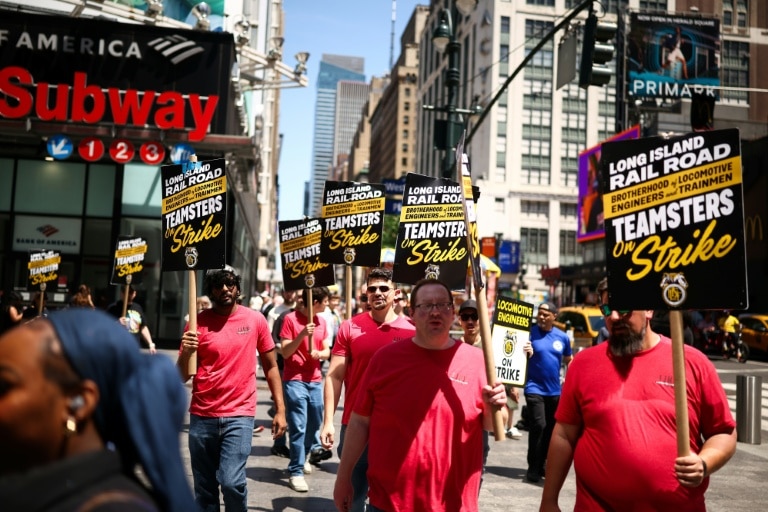
In a landmark decision that will reshape global discourse around workers’ rights, the United Nations’ highest judicial body has delivered a groundbreaking ruling Thursday confirming that the right to strike falls under the protection of a foundational 1948 treaty from the International Labour Organisation (ILO). Labor rights advocates say the judgment carries far-reaching implications for labor relations across every region of the world.
The International Court of Justice (ICJ) was tasked with issuing an advisory opinion to resolve a decades-long dispute: whether ILO Convention 87, a landmark agreement that guarantees workers’ organizations the right to manage their activities and administration with full autonomy, implicitly enshrines the right to strike as a core protected labor right.
In a formal statement from the bench, ICJ President Yuji Iwasawa confirmed that the full court had reached a clear consensus: “the right to strike of workers and their organisations is protected” under the text of the 1948 convention. Despite the landmark finding, judges emphasized that the non-binding opinion does not establish additional procedural or substantive rules governing strike action. Iwasawa noted that the ruling “does not entail any determination on the precise content, scope or conditions for the exercise of that right,” leaving room for national regulatory frameworks to retain their existing structures.
What began as a technical legal question of interpreting a 77-year-old international agreement erupted into a fierce public battle between global labor union coalitions and international employer associations, with oral arguments held before the ICJ in October 2024.
On the union side, legal representatives for the International Trade Union Confederation (ITUC) argued that the autonomy guarantees written into Convention 87 inherently extend to cover the right to industrial action. Harold Koh, ITUC’s lead counsel, told the court that the outcome extended far beyond abstract legal debate, noting “It will affect the real rights of tens of millions of working people around the world.”
Koh warned that a ruling against recognizing the right to strike would have triggered a global rollback of labor protections, saying companies and national employer groups would systematically challenge existing strike protections in countries with weak civil society, pliant judiciaries, and restricted press freedom, one jurisdiction at a time.
Employer representatives pushed back forcefully against the union arguments, arguing that the 1948 convention never intended to cover the right to strike, either explicitly or implicitly. Roberto Suarez Santos, legal counsel for the International Organisation of Employers, pointed out that strike rules vary dramatically across national contexts, from differing exclusions for emergency services to varying notification requirements, and that these national variations cannot be erased by reading an abstract right to strike into the text of Convention 87.
Rita Yip, another attorney representing employer groups, dismissed the union’s warnings of a global rollback of labor rights as “inflammatory and alarmist.” Yip argued that strike protections are already enshrined in national legislation around the world, and do not need to be codified as a top-down international norm imposed by global bodies. She urged the court to reject the union’s interpretation, warning that a ruling in favor of unions would threaten the credibility of the entire international labor system.
Despite their deep disagreement on the core question, both sides acknowledged that the ruling will have an outsize impact on the future of global work. As Koh put it, “At first blush, this case may not seem momentous, but your decision here will affect every worker in the world.”