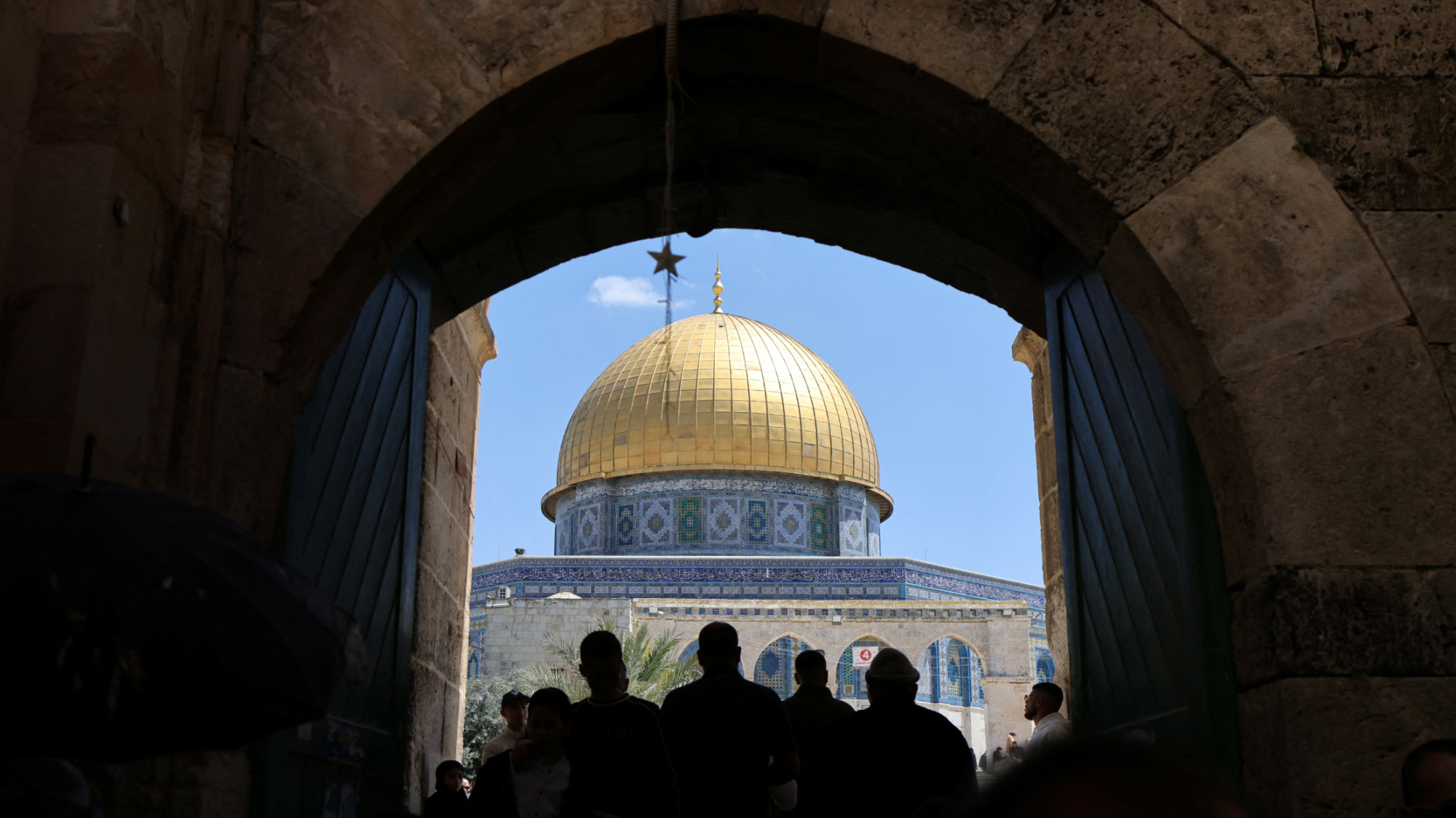
A controversial new decision by Israeli authorities to cancel entry permits for dozens of senior administrative and religious staff at Jerusalem’s Al-Aqsa Mosque has escalated long-running tensions over control of one of the world’s most contested religious sites, multiple sources familiar with the policy confirmed to Middle East Eye.
The revocation, set to take effect in June 2026, will impact approximately 30 long-tenured employees of the Jerusalem-based Islamic Waqf, the Jordanian-appointed body tasked with administering the holy site under decades-old international governance agreements. The affected staff include high-ranking Waqf officials such as senior treasurer Ayyash Abu Ayyash, as well as mosque-based teachers who are administratively affiliated with the Palestinian Ministry of Education. The move will bar these employees from accessing the site they have managed for years.
Palestinian religious and political leaders have condemned the decision as the latest step in a systematic campaign to consolidate Israeli control over Al-Aqsa, reduce Palestinian and Islamic institutional influence at the site, and dismantle the long-standing status quo arrangement that has governed the compound for generations.
Ekrima Sabri, imam of Al-Aqsa Mosque and head of the Higher Islamic Council, framed the permit revocation as part of a sharp escalation of “unprecedented actions” by Israeli authorities in recent months. “Every action taken by the occupation authorities is intended to change the status quo and pave the way for imposing Israeli sovereignty over the mosque, while stripping the Islamic Waqf of its authority,” Sabri told Middle East Eye. “In the past, we used to say Al-Aqsa was in danger, but now we say Al-Aqsa faces multiple dangers, not just one,” he added.
Omar Rajoub, director of the media office for the Jerusalem Governorate, traced the recent wave of restrictions to the outbreak of US-Israeli military operations against Iran in February. During that conflict, Israeli forces implemented an unprecedented 40-day full closure of Al-Aqsa, one of the holiest sites in Islam. While the mosque reopened following a ceasefire in April, Rajoub said many of the emergency restrictions imposed during the closure have been made permanent.
These ongoing restrictions include a ban on Waqf staff carrying out routine maintenance work across the mosque’s courtyards, from pruning overgrown trees to clearing vegetation. The permit revocations announced this month are not an isolated measure, Rajoub emphasized: already this year, at least 30 other Waqf employees, plus six additional sheikhs and imams, have been denied entry or had their permit applications rejected. Israeli authorities have also expanded restrictions on general worshippers, barring more than 600 Palestinian worshippers from accessing the compound in 2025 alone, he said. “The entire status quo at Al-Aqsa Mosque is rapidly deteriorating in favour of Israeli violations,” Rajoub added.
The Al-Aqsa Mosque compound, located in Israeli-occupied East Jerusalem, sits on a plateau that is revered as the Temple Mount, the holiest site in Judaism. For decades, the site has operated under an internationally recognized “status quo” agreement that designates Al-Aqsa as an exclusively Islamic holy site, with exclusive responsibility for access, worship rights, maintenance and daily management held by the Islamic Waqf.
In recent years, however, Israeli authorities have systematically eroded this arrangement and the Waqf’s governing authority. Most notably, Israeli police have allowed near-daily incursions into the compound by ultranationalist Jewish groups, who conduct Jewish prayer and religious rituals under armed police protection, a direct violation of the status quo agreement.
The permit revocation announcement comes amid a string of escalating provocative actions targeting the site in recent weeks. Earlier this week, Israeli cabinet ministers advanced a plan to seize privately owned Palestinian land near the Chain Gate (Bab al-Sila), one of the main entry points to the Al-Aqsa compound, to advance long-standing plans to Judaising the area around the site. Just days before that vote, dozens of Israeli ministers and members of parliament led a mass incursion into the Al-Aqsa compound, during which Israeli flags were raised, Jewish religious rituals were conducted, and one far-right lawmaker publicly called for the mosque to be demolished and replaced with a Jewish temple.
International law does not recognize Israel’s claim of sovereignty over occupied East Jerusalem, and the Fourth Geneva Convention explicitly prohibits occupying powers from making permanent territorial changes or asserting sovereignty over territory captured in conflict.