As the United States marks 250 years of formal independence from British rule, a year-long, on-the-ground survey of British public opinion by The Associated Press across the country — stretching from George Washington’s ancestral estates near the Scottish border to the urban hubs of Cambridge, Bristol, and London — reveals a striking, unanimous conclusion: it is impossible to talk about contemporary America without centering its 47th President, Donald Trump. The reporting found that even Britons who back some of Trump’s policy positions frame their entire view of the U.S. around his tenure, and his influence has reshaped the centuries-old “special relationship” between the two nations.
When asked “What do you think of America now?”, nearly every respondent opened with a deliberate pause before turning to coded or direct commentary on Trump and his second term. Phrases like “Your president…” and “The current state of politics…” are the universal opening, a pattern that itself reveals how deeply Trump has skewed British views of their former colony. “It’s Trump’s world now, isn’t it?” noted Mark Keightley, a printer technician working in Cambridge, roughly an hour north of London.
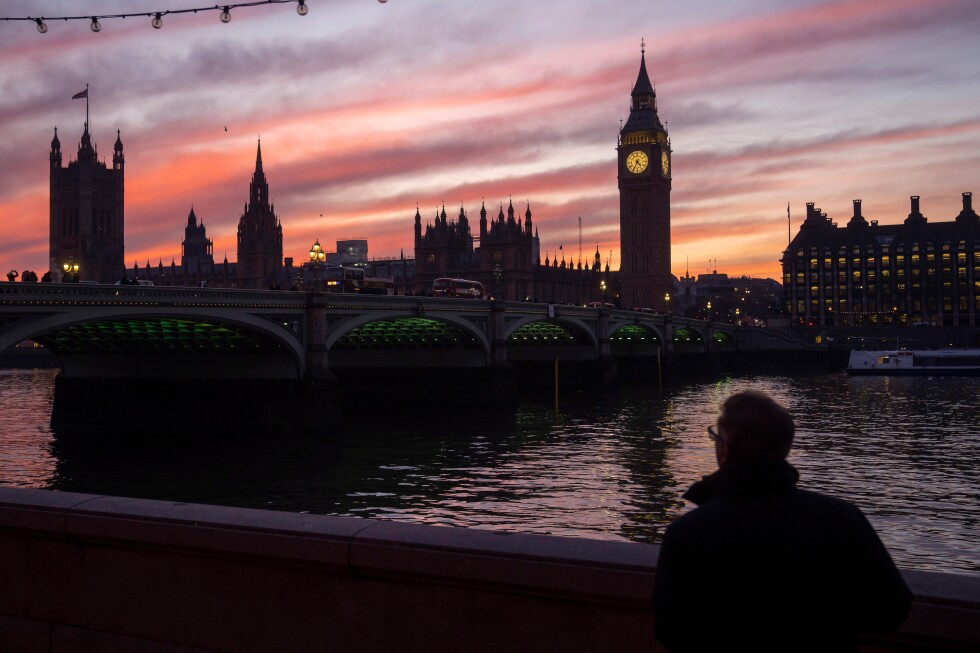
Eddie Boyle, a resident of Falkirk, Scotland, speaking while crossing London’s Westminster Bridge, summed up a common sentiment: “My own opinion of America is now dictated by the president and he’s not covering himself in glory as far as I’m concerned. It’s a shame that such a long arrangement between the two countries has been tarnished.”
Disappointment among Britons with the direction of the American experiment is not a new trend. As far back as 1842, famed British author Charles Dickens left his widely celebrated U.S. lecture tour — where he earned a substantial fortune from public readings — frustrated and disappointed by the young nation. Outraged by the continuation of chattel slavery, which Britain had abolished a decade earlier in 1833, Dickens also condemned what he saw as a debased American press, calling it more “mean, and paltry, and silly, and disgraceful than any country I ever knew.” He famously wrote to a friend, “This is not the Republic I came to see. This is not the Republic of my imagination. In every respect but that of National Education, the Country disappoints me.”
Over two and a half centuries, the U.S.-U.K. relationship has evolved through multiple defining turning points that cemented America’s status as a global power. The War of 1812, a rematch of the Revolutionary War, ended in a stalemate but proved the young nation could hold its own against British military and economic power, establishing it as a permanent global actor. The U.S. survival through its Civil War, followed by its critical role in helping Britain defeat Nazi Germany in World War II, solidified the alliance. Decades later, the close partnership between U.S. President Ronald Reagan and British Prime Minister Margaret Thatcher helped bring about the 1991 collapse of the Soviet Union, a joint achievement still recognized by many Brits today. “They did something great there,” said Maria Miston of Suffolk, speaking near London’s Big Ben. “They actually managed to bring the Cold War to an end.” Still, Miston argued that America’s global standing has declined steadily since the 2003 U.S.-led invasion of Iraq: “We’ve just gone backwards since then.”
In Trump’s second term, the decades-old “special relationship” has undergone a fundamental reorientation. Trump has had a tense relationship with British Prime Minister Keir Starmer, dismissing him publicly as “not Winston Churchill” after Starmer refused to commit British forces to a U.S. conflict with Iran. The president has repeatedly suggested he views King Charles III, not the elected prime minister, as his equal peer. Last year, Trump accepted an unprecedented second state visit invitation from the king, which included a state dinner at Windsor Castle, and he welcomed Charles for a return visit to Washington earlier this year. During his U.S. trip, Charles emphasized that the 250-year bilateral relationship “is more important today than it has ever been,” while also making a public case for the importance of democratic checks and balances — widely interpreted as an implicit rebuke of Trump. The White House drew international attention when it posted on social media describing the pair as “TWO KINGS,” a jab likely aimed at the anti-monarchy “No Kings” rallies that drew large crowds across the U.S. during Charles’ visit. The irony was not lost on Britons: the U.S. was founded on the rejection of monarchy, specifically rule by King George III, Charles’ five-times great-grandfather. Back in the U.K., pre-visit polling showed majority public opposition to Charles’ U.S. trip, but the king’s performance won broad praise as a deft display of soft power, even amid well-documented tensions over climate policy and Trump’s repeated playful (yet provocative) threat to annex Canada — a Commonwealth realm where Charles is head of state. Rock star Rod Stewart summed up a common British view when he told Charles at a May gala, within earshot of reporters: “May I say, well done in the Americas. You were superb, absolutely superb, put that little rat bag in his place.”
National polling confirms that British views of the U.S. have soured sharply during Trump’s second term. A Gallup poll conducted in late 2025 found just 28% of British adults approve of U.S. global leadership, with 68% holding a negative view. That number is roughly on par with approval during Trump’s first term, and far lower than the 45% approval recorded during Democratic President Joe Biden’s tenure. Pew Research Center’s 2025 Spring Global Attitudes Survey echoes this shift: while two-thirds of British adults held a favorable view of the U.S. in the first two years of Biden’s presidency, that number fell to 54% by spring 2024, and sits at just 50% in 2025. This is not the first period of strain between the two nations: the 1956 Suez Crisis marked a defining shift, when British power declined and American global dominance became the new global order, and a decade later London rejected U.S. pressure to join the Vietnam War.
For decades, following American politics has functioned as a national spectator sport in Britain, a way to watch the world’s oldest modern democracy evolve from across the Atlantic. Today, Britons still acknowledge a long list of American qualities they admire: national ambition, unprecedented economic wealth, unmatched military power, the sheer scale of the country, its global cultural output from television to music to film, and its political resilience even after crises like the January 6, 2021 Capitol insurrection. But alongside those positive perceptions are longstanding points of confusion and criticism. Topping the list for many is America’s persistent gun violence, which is nearly incomprehensible to Brits: the country banned private handgun ownership in 1997, after a mass shooting at a Scottish school that killed 16 children. Many Britons also express confusion at hardline U.S. immigration crackdowns, given the United States was founded by immigrants — even as the U.K. grapples with its own domestic debates over unauthorized migration.
On the 250th anniversary of American independence, Trump remains the central point of fascination and confusion for most British respondents. Discussing Trump is also a socially sensitive topic in the U.K., where Brexit has left deep political divisions and populist reform movements aligned with Trump’s agenda have gained ground in recent local elections. At The Cross Keys pub in Washington, England — a small town located just downhill from George Washington’s ancestral family home — local resident Mark Gibson sipped a pint and summed up the widespread confusion: “How can someone like that become president?” Gibson said he could rationalize the election of other American leaders, even when he disagreed with them, but Trump’s history of business bankruptcies and repeated legal scandals leave him bewildered. “I don’t understand it. He’s had bankruptcies and legal troubles,” Gibson said. “But, I guess that’s what people wanted. They elected him twice.”