In the sun-dappled kitchen of 55-year-old Nirmal Rao in New Delhi, India, a quiet shift in daily routine is unfolding that mirrors a growing trend across the country’s urban centers. As she lays boiled turmeric out to dry in the afternoon light, then grinds yesterday’s cured batch into a fine golden powder in her countertop mixer, Rao acknowledges this labor-intensive work is not what she envisioned for her retirement years. “We shouldn’t have to do this,” she says, tucking the finished bright yellow spice into a glass jar, “But you cannot trust what’s being sold in the markets anymore.”
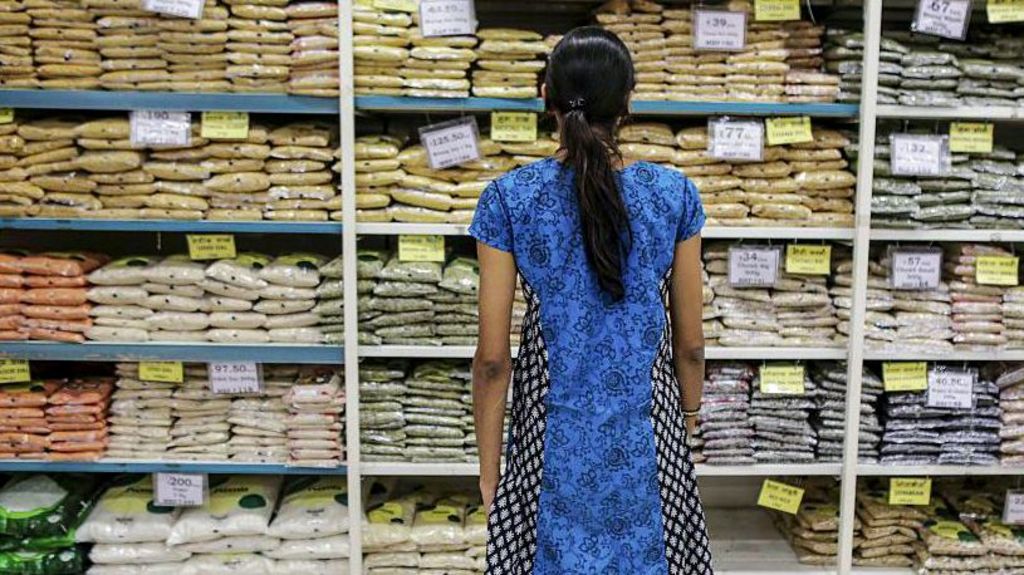
Rao is far from alone in this choice. Across India’s cities, a growing number of middle-class households are converting their domestic kitchens into small-scale food processing hubs: hand-grinding whole spices, crafting homemade paneer (Indian cottage cheese), and sourcing unprocessed grain directly from regional farms. What began as a niche hobby for food enthusiasts has evolved into a mass consumer response driven not by nostalgia for traditional cooking, but by deep-seated distrust of the country’s commercial food supply.
Official government data underscores the foundation of this anxiety: between 2022 and 2025, roughly one in six food samples collected by regulators failed to meet India’s national food safety standards. Over that same period, authorities revoked more than 1,100 operating licenses from food businesses for violations. Failed tests cover a spectrum of issues, ranging from inadequate hygiene and incorrect labeling to dangerous contamination and intentional adulteration, a practice where unethical producers cut high-quality ingredients with cheap, often harmful substitutes to boost profits.
Just last month, for example, food safety officials in Hyderabad seized over 3,000 kilograms of adulterated tea powder, according to local outlet The Indian Express. The seized product had been laced with synthetic coloring, low-cost jaggery juice, and expired tea leaves to mimic the appearance and weight of premium product before being sold to unsuspecting consumers.
While food adulteration is not a new challenge in India, a perfect storm of systemic gaps has amplified the current crisis of trust. The country’s massive informal food sector, which employs millions and supplies most of the food consumed by low- and middle-income households, operates far outside consistent regulatory oversight. At the same time, social media platforms spread warnings of food safety scandals at a speed that outpaces official responses, amplifying public anxiety faster than regulators can issue clarifications or corrections. Where adulteration once meant small-time offenses like diluting milk or adding pebbles to bulk grain, modern raids regularly uncover far more dangerous tampering: milk spiked with detergent, and spices colored with toxic synthetic dyes.
India has put in place a modern legal framework to address food safety: the Food Safety and Standards Authority of India (FSSAI), established by a 2006 law, replaced a fragmented patchwork of outdated local regulations to create unified rules for food production, storage, transportation, and sale. Every operation from large multinational food brands to neighborhood street vendors is required to hold an FSSAI license, and trained food safety officers are tasked with conducting inspections, collecting test samples, and investigating consumer complaints.
Pawan Agarwal, former chief executive of FSSAI, notes that India’s regulatory framework is “among the most modern food safety laws in the world” with clear, rigorous standards for legal food sales. But in practice, the system only acts after harm has already occurred. “Bigger companies are expected to test products before they go to market – but most of the food economy does not work that way,” Agarwal explains. “Food products are often tested only after complaints emerge or suspicions are raised. By then, adulterated goods may already have moved across cities or states.”
Another major challenge comes from the widespread sale of unpackaged, loose food items – including cooking oil, flour, and spices – sold without formal branding or standardized packaging across millions of small neighborhood outlets. These unlabeled products leave almost no paper trail, making it nearly impossible for regulators to trace unsafe goods back to their source or track where they have been distributed, according to industry experts.
The food testing system itself carries structural flaws, adds Saurabh Arora, managing director of Auriga Research, one of India’s leading independent food testing laboratories. Current rules require food businesses to submit product samples for safety testing only once every six to 12 months, a system that is widely manipulated by unethical operators. “They often make sure the tested batch meets standards – even if other batches produced at the same facility may not,” Arora explains.
Compounding these gaps is a crippling shortage of enforcement personnel. In Maharashtra, one of India’s largest and most economically developed states, fewer than 500 food safety officers are responsible for overseeing thousands of registered food businesses and millions of informal vendors, says Sanjay Indani, a food safety expert who has previously consulted for FSSAI. “It is nearly impossible to oversee everything,” Indani notes. “How can such few numbers [of officers] hold people accountable?”
Unlike developed economies such as Italy and the United Kingdom, which rely on tightly documented, digitized supply chains to trace and recall contaminated products in days, tracking a single bad batch in India can take weeks – and in many cases, never happens at all. The severity of the crisis has even reached the country’s top official bodies: last month, India’s National Human Rights Commission held a special high-level meeting on food safety, where participating officials warned that contaminated products can spread across entire regions before regulators can even identify the threat, much less remove it from store shelves.
For consumers, the systemic failure has led to two overlapping grassroots responses. For households with higher disposable incomes, many are opting to pay steep premiums for food they see as more trustworthy. Tiash De, a 29-year-old Mumbai resident, says fear of adulteration has pushed her to prioritize higher-cost branded products even when they strain her monthly budget. “I tend to go for bigger brands, even though they are costly and strain my budget, but in my head I am sure they are not adulterated,” she says. She also pays a 50% premium for a farm-to-home milk delivery service, a cost she says is worth the peace of mind it brings.
This growing demand for trusted, transparent food is driving rapid industry growth: Dr. Meenakshi Singh, chief scientist at the Council of Scientific and Industrial Research (CSIR), projects that India’s organic food market will reach $10.81 billion by 2033, as more consumers prioritize safety over low prices.
Medical experts warn that the hidden harm of regular exposure to adulterated food extends far beyond acute food poisoning. Unlike sudden bouts of foodborne illness that trigger immediate medical attention, repeated consumption of contaminated or substandard ingredients can cause chronic, long-term health damage that takes years to emerge. “In the short term, people may experience digestive issues, headaches or fatigue,” explains Rinkesh Kumar Bansal, chief of gastroenterology at a Fortis Hospital near New Delhi. “Over time, it can contribute to liver and kidney damage, hormonal problems and a higher risk of chronic disease.”
Industry experts point out that the current wave of public panic is not driven by a sudden spike in actual adulteration cases, but by the rapid spread of information online. “Food adulteration has not suddenly increased, but information about it now spreads rapidly because of social media,” former FSSAI chief Agarwal explains. “We are sensitive about the food we eat and it is very personal to us, so any such news immediately has our attention.”
Despite the systemic challenges, many experts see reason for long-term improvement, arguing that growing consumer awareness will ultimately force industry and regulatory change. “As awareness grows and people start demanding safer food, businesses will have no choice but to deliver,” Agarwal says. He points to one emerging positive shift: FSSAI now regularly publishes public guidance on how consumers can test for common adulterants at home, a transparency practice he says is rare among food regulators around the world.
Arora, the testing lab director, adds that lasting change will require a shift in cultural mindset as much as regulatory reform. “There has to be a sense of ownership from the manufacturer all the way to the consumer,” he says. “In India, the mindset often becomes – as long as I am not consuming it myself, it is someone else’s problem. Regulation alone cannot solve that.”
Back in her New Delhi kitchen, where shelves once lined with store-bought spice packets now hold jars of her homemade blends, Nirmal Rao sums up the frustration of ordinary consumers caught in the gaps of the system. She admits that hand-processing spices is time-consuming and impractical, especially for younger households where both adults work full-time. But for millions of Indians, it is the only choice they feel they have: “If even basic food cannot be trusted, what are ordinary people supposed to do?”