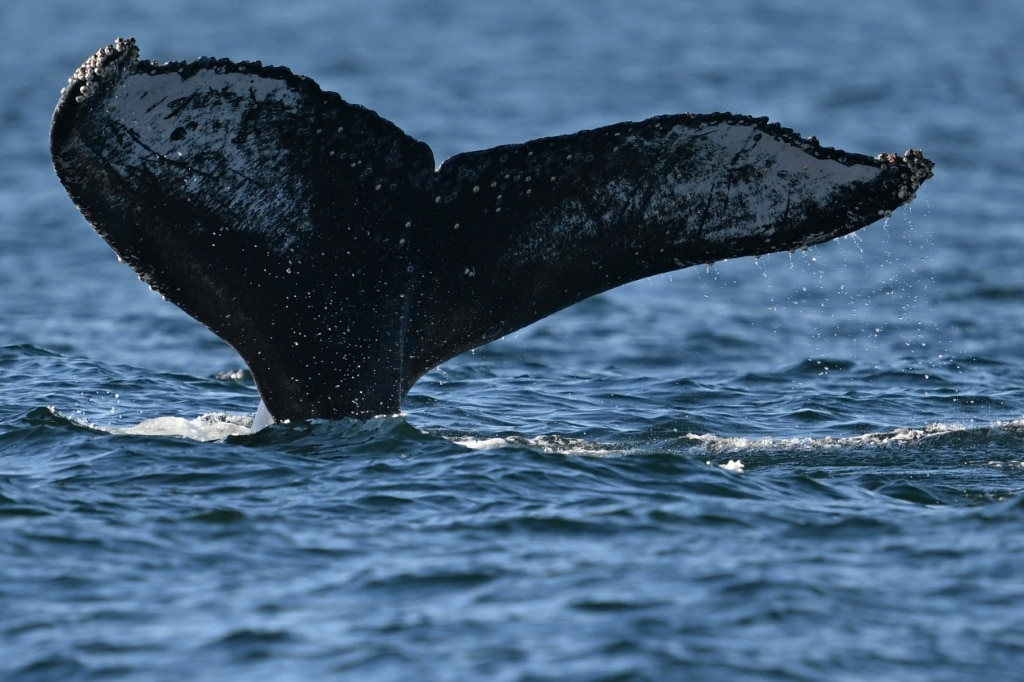
Marine biologists have announced an extraordinary discovery that rewrites our understanding of humpback whale migration: two individual humpbacks have completed unprecedented transoceanic journeys between Brazil and Australia, setting new world records for the longest recorded travel distance in the species. The international research team, whose findings are published in *Royal Society Open Science*, pieced together the whales’ multi-decade odysseys using unique identifying markings on their tail flukes, with contributions from both professional scientists and recreational amateur photographers who snapped photos decades apart. The study’s lead author, Cristina Castro, a marine biologist with the Pacific Whale Foundation based in Ecuador, shared that these open-ocean crossings are entirely unlike any movement previously documented for the species. While individual whales have occasionally been spotted straying slightly outside their established migratory paths, the scale of these journeys far exceeds any previously recorded deviation, Castro explained.
What makes this tracking possible is the fact that every humpback whale bears a one-of-a-kind pigment pattern on the underside of its tail fluke, a natural marker as distinct as a human fingerprint that allows researchers to identify individual animals across decades and vast distances. To trace the two whales’ paths, the team analyzed more than 19,000 photos collected between 1984 and 2005 from locations across eastern Australia and Latin America, running the images through a custom image recognition algorithm to find potential matches, then manually verifying each candidate to confirm the identities of the wandering whales. The first of the two record-breaking whales was first photographed and documented in 2007 in Hervey Bay, a well-known humpback habitat on Queensland’s east coast, and spotted again at the same location in 2013. Six years after that second sighting, the same whale was photographed off the coast of São Paulo, Brazil’s most populous coastal state. The straight-line distance between the Australian and Brazilian sighting points measures approximately 14,200 kilometers, or 8,800 miles; researchers note that the whale’s actual total travel distance is likely even longer, as its exact route between the two points remains unknown. The second whale took the reverse route across the South Pacific: it was first photographed swimming alongside eight other adult humpbacks off the coast of Bahia, Brazil in 2003. Nearly 25 years later, in 2025, the same whale was spotted and confirmed in Hervey Bay, Australia, with a straight-line distance of 15,100 kilometers between the two sightings. This journey surpasses the previous record for the longest recorded humpback migration, which was set by a whale that traveled more than 13,000 kilometers from Colombia’s Pacific coast to Zanzibar off the eastern coast of Africa.
For Southern Hemisphere humpback whales, migratory routes are deeply entrenched cultural behaviors. Most populations live in distinct, well-separated pods and follow the same fixed route year after year, moving between cold, nutrient-rich feeding grounds in polar waters and warm tropical breeding grounds where they give birth and mate. Castro notes that these routes are passed down socially: mother humpbacks teach the traditional migratory paths to their calves when they are young, cementing the patterns across generations. That makes these extraordinary deviations all the more surprising, and researchers are now exploring multiple potential explanations for why the two whales strayed so far from their expected paths. One leading hypothesis ties the unusual movement to human-driven climate change, which is altering ocean conditions, food availability, and traditional migration corridors in ways that are still not fully understood. Castro explains that increasing environmental pressure or disturbance to the whales’ original feeding and breeding habitats could push more individual animals to venture far beyond their traditional ranges in search of more suitable conditions, while changes in the distribution of their prey could also encourage long-distance exploration.
Beyond rewriting what we know about humpback migration capacity, these long-distance crossings also carry ecological benefits for the species. After being hunted to the brink of extinction by commercial whaling in the 20th century, humpback whale populations have made a remarkable rebound across much of their global range over the past 50 years. When whales travel between previously isolated breeding populations, they introduce new genetic material that boosts overall genetic diversity, strengthening the long-term resilience of the species. The wandering whales may also drive cultural exchange among humpback populations: male humpback whales are famous for their long, complex songs, which spread rapidly through populations as individuals copy new melodies. If a male from one isolated breeding population travels to a new region and sings his native song, he can introduce entirely new musical themes that spread through the local population, creating a lasting cultural shift. Researchers say the discovery highlights the value of long-term photo identification projects that combine scientific data with contributions from citizen scientists, to reveal unexpected behaviors in one of the ocean’s most iconic inhabitants.