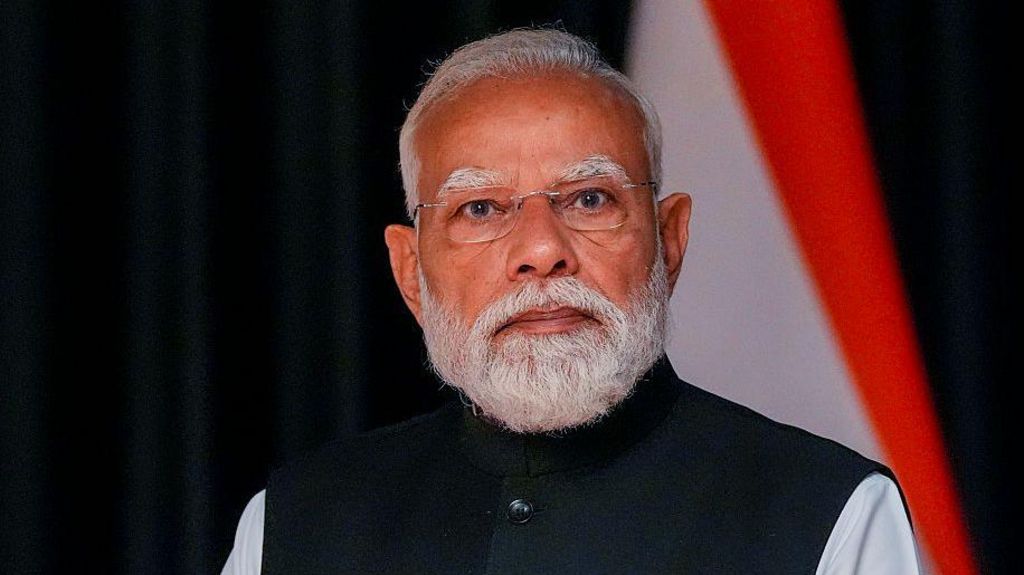
A scheduled two-day bilateral working visit by Indian Prime Minister Narendra Modi to Oslo, Norway this week has ignited a heated cross-border dispute after a local journalist posed unscripted, critical questions to the Indian leader, triggering backlash from Indian social media users and official pushback from New Delhi.
The incident unfolded following a joint press appearance between Modi and his Norwegian counterpart Jonas Gahr Støre, an event where both leaders had pre-confirmed they would not field questions from reporters. As the two prime ministers exited the stage, veteran Norwegian journalist Helle Lyng called out repeatedly to Modi, asking why he refused to engage with the press and challenging him to respond to questions about alleged human rights violations in India. Modi did not offer a response to Lyng’s questions, and security personnel later intervened to stop her from asking follow-up questions as the prime minister departed.
Lyng, a political correspondent for multiple Norwegian national outlets, later shared video footage of the exchange on social platform X, alongside posts raising concerns about declining press freedom and human rights standards in India. She told BBC Hindi in a post-incident interview that she saw the questions as a core part of her professional duty, noting that Modi’s long-standing pattern of avoiding unscripted press engagement left few other opportunities to raise issues of public interest. “That’s how confrontational journalism works. You have to try to interrupt, you have to try to get the answers you are looking for,” she explained, adding that her questions were based on reporting from what she called trusted global sources including Amnesty International and Human Rights Watch.
Within hours of the incident going viral online, Lyng faced widespread harassment and trolling from Indian social media users. Many accused her of acting as a “foreign plant” or spy, framing her questions as a deliberate attempt to embarrass India on the international stage. Several prominent Indian news outlets also criticized her approach, arguing that confronting a visiting head of state in that manner violated basic standards of diplomatic respect.
The official Indian response came shortly after the exchange, when the Indian Embassy in Norway publicly responded to Lyng’s social media post inviting her to raise her questions at a scheduled evening press briefing with senior Indian diplomats. At the briefing, Lyng repeated her core question: “Why should we trust you (India)? Can you try to stop the human rights violations that goes on in your country?”
Senior Indian diplomat Sibi George flatly rejected the allegations, pushing back strongly against the framing of Lyng’s question. He emphasized that India’s constitution explicitly enshrines democratic protections, including freedoms of thought, expression, belief, and worship for all citizens. He also criticized foreign critics for relying on what he called inaccurate reports from uninformed non-governmental organizations, noting “People have no understanding of the scale of India. They read one or two reports published by some God-forsaken, ignorant NGOs and then come and ask questions. Don’t worry about it. We are proud to be a democracy; we are a democratic society for centuries.”
This incident is not an isolated case: earlier in the same European trip, two Dutch journalists raised similar questions about minority rights and press freedom in India during Modi’s visit to the Netherlands, prompting an identical rebuttal from George.
The dispute comes against a backdrop of growing international scrutiny of press freedom in India. Last month, global press freedom watchdog Reporters Without Borders released its annual World Press Freedom Index, which ranked India 157th out of 180 assessed countries. Norway, by contrast, has held the top spot on the index for multiple consecutive years, reinforcing its global reputation as a defender of aggressive independent journalism.
Modi, who has led India as prime minister since 2014, has never held a traditional solo press conference since taking office, and has rarely taken unscripted questions from journalists during domestic or international visits. This pattern has long drawn criticism from press freedom advocates, who argue it reduces transparency and accountability for the Indian government.