In a sharp rebuke of Israeli military action in international waters, Ireland’s top political leaders have decried the detention of 12 Irish citizens who were part of a humanitarian aid convoy bound for Gaza, calling the move illegal, unacceptable, and a violation of international law.
The interception, carried out early Monday by Israeli forces, targeted the Global Sumud Flotilla, a 60-vessel collective organized to deliver critical aid to Palestinian civilians in Gaza amid a lingering humanitarian crisis. Flotilla organizers confirmed that Israeli commandos boarded and seized 10 of the convoy’s boats while the group was operating in international waters. Among the detained Irish citizens is Dr. Margaret Connolly, the sister of Irish President Catherine Connolly.
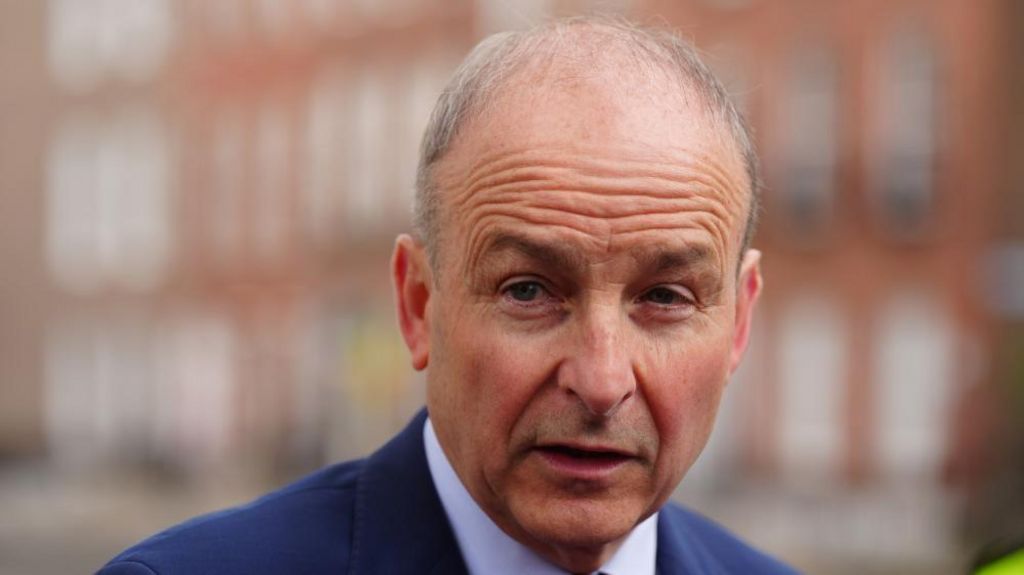
Speaking publicly about the incident, Taoiseach Micheál Martin, Ireland’s head of government, emphasized that the aid mission was rooted in a legitimate effort to draw global attention to the catastrophic humanitarian situation unfolding in Gaza. “In the first instance, what happened is absolutely unacceptable and is wrong,” Martin stated, adding that participants had every right to engage in peaceful protest for the cause. The Irish government, he confirmed, will escalate the issue to the European Union to push for collective international action.
Deputy Prime Minister Simon Harris went further, labeling Israel’s actions outright illegal. “My heart goes out to President Connolly and her family, and indeed all of the families of those detained,” Harris said, noting that the Irish government, opposition, and global observers have repeatedly condemned Israeli policy in Gaza, yet Israel has consistently ignored international condemnation. “That’s why I think it’s important that we look at the actions that can be taken,” he added.
For her part, President Catherine Connolly — currently on a scheduled three-day official visit to the United Kingdom — described the news of her sister’s detention as “quite upsetting.” While she expressed deep pride in her sister’s commitment to the humanitarian cause, she made clear that she is consumed by worry for her safety.
Israeli Prime Minister Benjamin Netanyahu defended the interception, framing the operation as a necessary measure to counter what he called a “malicious plan” to break the blockade Israel has imposed on Hamas, the governing group in Gaza. The Israeli foreign ministry also pushed back against the need for the flotilla, claiming that Gaza is already “flooded with aid,” asserting that more than 1.5 million tonnes of aid and thousands of tonnes of medical supplies have entered the enclave over the past seven months.
That narrative directly contradicts recent assessments from the United Nations, which warned last week that the humanitarian situation in Gaza remains catastrophic despite an October 2024 ceasefire between Israel and Hamas. The UN report highlighted that more than 2.1 million Palestinians — the vast majority of Gaza’s total population — have been displaced from their homes, with most forced to shelter in overcrowded tents or badly damaged buildings with no access to safer alternatives. Basic services remain severely compromised: clean water access is inconsistent, waste management systems are non-functional, and public health risks linked to unsanitary conditions and pest infestations continue to grow.
The current conflict traces its origins back to the October 7, 2023, attack led by Hamas on southern Israel, which killed approximately 1,200 people and took 251 hostages. Israel’s subsequent large-scale military campaign in Gaza has left more than 72,770 people dead in the enclave, according to Gaza’s Hamas-run Ministry of Health.