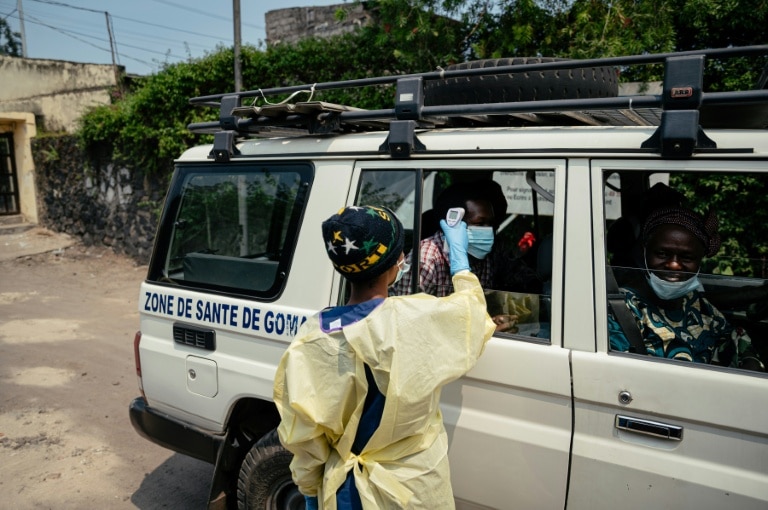
The World Health Organization’s top leader has issued urgent warnings about the alarming scale and rapid spread of a new Ebola outbreak in the eastern Democratic Republic of Congo (DRC), which has already claimed more than 130 lives and pushed global health bodies to activate the highest levels of emergency response.
In remarks delivered Tuesday to the World Health Assembly in Geneva, WHO Director-General Tedros Adhanom Ghebreyesus acknowledged the decision to declare a Level 3 international public health emergency — the second-highest alert under international health regulations — was not made lightly, adding that “I’m deeply concerned about the scale and speed of the epidemic.”
As of Tuesday, Congolese Health Minister Samuel Roger Kamba reported roughly 131 total deaths and approximately 513 suspected cases across affected regions, marking a sharp jump from just five days prior, when officials recorded 91 deaths among 350 suspected cases. Kamba emphasized that not all recorded deaths have been definitively linked to Ebola, as most cases remain unconfirmed by laboratory testing. The outbreak is centered in the gold-rich northeastern province of Ituri, a remote region that shares borders with Uganda and South Sudan. Years of militia violence and poor infrastructure have left much of the area inaccessible to health responders, and the province’s status as a cross-border mining hub drives constant population movement that facilitates rapid virus spread.
The current outbreak is caused by the Bundibugyo strain of Ebola, a particularly dangerous variant for which no licensed vaccine or targeted therapeutic treatment currently exists. Across Africa over the past 50 years, Ebola viruses have killed more than 15,000 people overall. With limited access to affected communities, few suspected cases have had samples collected for laboratory confirmation, meaning official caseloads are based on preliminary symptomatic reports.
Local community delays have compounded the crisis, Kamba explained. Many residents initially misidentified Ebola symptoms as a “mystical illness,” slowing the spread of public health alerts and preventing sick patients from seeking urgent hospital care. The virus has already outgrown its original epicenter: suspected cases have been detected more than 120 miles away in Butembo, a major commercial hub in neighboring North Kivu province, and one confirmed case has been recorded in Goma, North Kivu’s capital, which is currently controlled by the Rwanda-backed M23 armed group.
The outbreak has already crossed international borders. Tedros confirmed that Uganda has reported two confirmed Ebola cases in its capital Kampala, linked to travelers who entered from the DRC; one of those patients has already died. The U.S. Centers for Disease Control and Prevention announced this week that one U.S. citizen has tested positive for Ebola after contracting the virus during work-related exposure in the DRC. German health officials confirmed the patient will be transported to Germany for specialized treatment. The U.S. has already moved to strengthen border protections, implementing entry screening for air passengers traveling from affected regions and temporarily suspending routine visa services for residents of the outbreak zone. U.S. health authorities are also arranging the evacuation of six additional people for mandatory health monitoring.
The Africa Centres for Disease Control and Prevention has already designated the outbreak a continental public health emergency, a step that unlocks additional resources, including emergency response teams and expanded cross-border surveillance operations. To date, 30 cases have been definitively confirmed as Ebola in Ituri province, according to WHO data.
First identified in 1976 and thought to originate in bat populations, Ebola is a highly contagious viral hemorrhagic fever that spreads through direct contact with infected bodily fluids. It causes severe symptoms including uncontrollable bleeding and organ failure, with mortality rates often exceeding 50 percent in untreated outbreaks. This is the 17th Ebola outbreak recorded in the DRC, a central African nation of more than 100 million people. The country’s deadliest outbreak on record ran from 2018 to 2020, killing nearly 2,300 people out of more than 3,500 confirmed cases. The previous outbreak, which ended in December 2023, killed 45 people over three months, per WHO records.