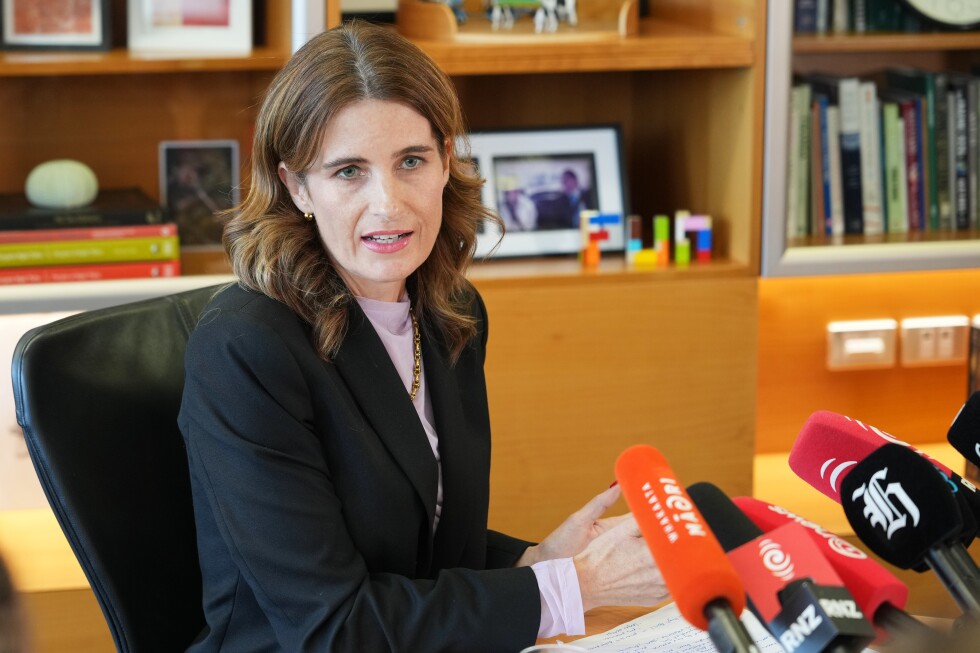
AUCKLAND, New Zealand – New Zealand’s incumbent center-right National Party government has announced a far-reaching plan to downsize the country’s public sector, slashing nearly 9,000 positions — equivalent to 14% of the current public workforce — by mid-2029 in a push to cut billions in government spending, Finance Minister Nicola Willis revealed Tuesday during a speech to a business audience in Auckland, the nation’s largest city.
Under the proposal, the cuts will bring the total public service workforce in Wellington, the country’s capital where most public servants are based, down to 55,000 from the projected 63,700 headcount in December 2025. This adjustment will reduce the share of public servants in New Zealand’s overall population from 1.2% to 1%, matching Willis’ stated goal of aligning the country’s public sector size with global benchmarks. “That’s unsustainable, it’s unaffordable and it’s out of step with international trends,” Willis told the gathering, adding that critical front-line roles including military personnel, primary and secondary school teachers, and hospital doctors will be fully exempt from the layoffs.
Beyond workforce reductions, the plan includes a multi-year program of budget cuts for most public agencies, starting with an initial 2% funding trimming in the national budget set to be released at the end of May. If the National Party government secures re-election in the upcoming November general election, it will follow the initial cut with two additional 5% annual funding reductions for most departments. The government also intends to consolidate the public sector by significantly shrinking the current 39 government departments and agencies, though no final target number has been released. Additionally, Willis mandated that public services speed up adoption of artificial intelligence and digital tools, arguing the sector has fallen behind on modern technological integration.
In total, the package of cutbacks is projected to save 2.4 billion New Zealand dollars ($1.4 billion USD) over the course of the restructuring period. The National Party, which has held power since 2023, campaigned in the last election on a platform of public sector downsizing, and has blamed the previous center-left Labour administration for the growth in public service headcount. During Labour’s time in office, the number of public servants grew from 48,000 to 63,000 after the party reversed a public sector job cap implemented by the prior National government. At the time, Labour argued the cap had forced agencies to overspend on external contractors and consultants to avoid hiring full-time employees, creating more costs than it saved.
Notably, the layoffs will be phased gradually over multiple years, and Willis has not yet released details on how positions will be selected for elimination. Prime Minister Christopher Luxon, who has positioned his administration as a more responsible fiscal steward than its predecessor amid ongoing sluggish national economic growth, framed the plan as a step toward a more efficient, effective public sector. “The public service is not a make-work function,” Luxon said Tuesday, adding he found the prospect of a streamlined public sector “exciting.”
The announcement has already drawn fierce pushback from opposition groups and public sector unions. Chris Hipkins, leader of the opposition Labour Party, warned that cutting such a large share of the public workforce would inevitably erode the quality of public services delivered to New Zealanders. Duane Leo, a spokesperson for the union representing tens of thousands of public servants, called the restructuring plan “an act of willful destruction.” Political analysts note the cuts come as the government works to demonstrate tangible progress on economic recovery ahead of the upcoming national election in November, when voters will decide whether to return the National Party administration to power.