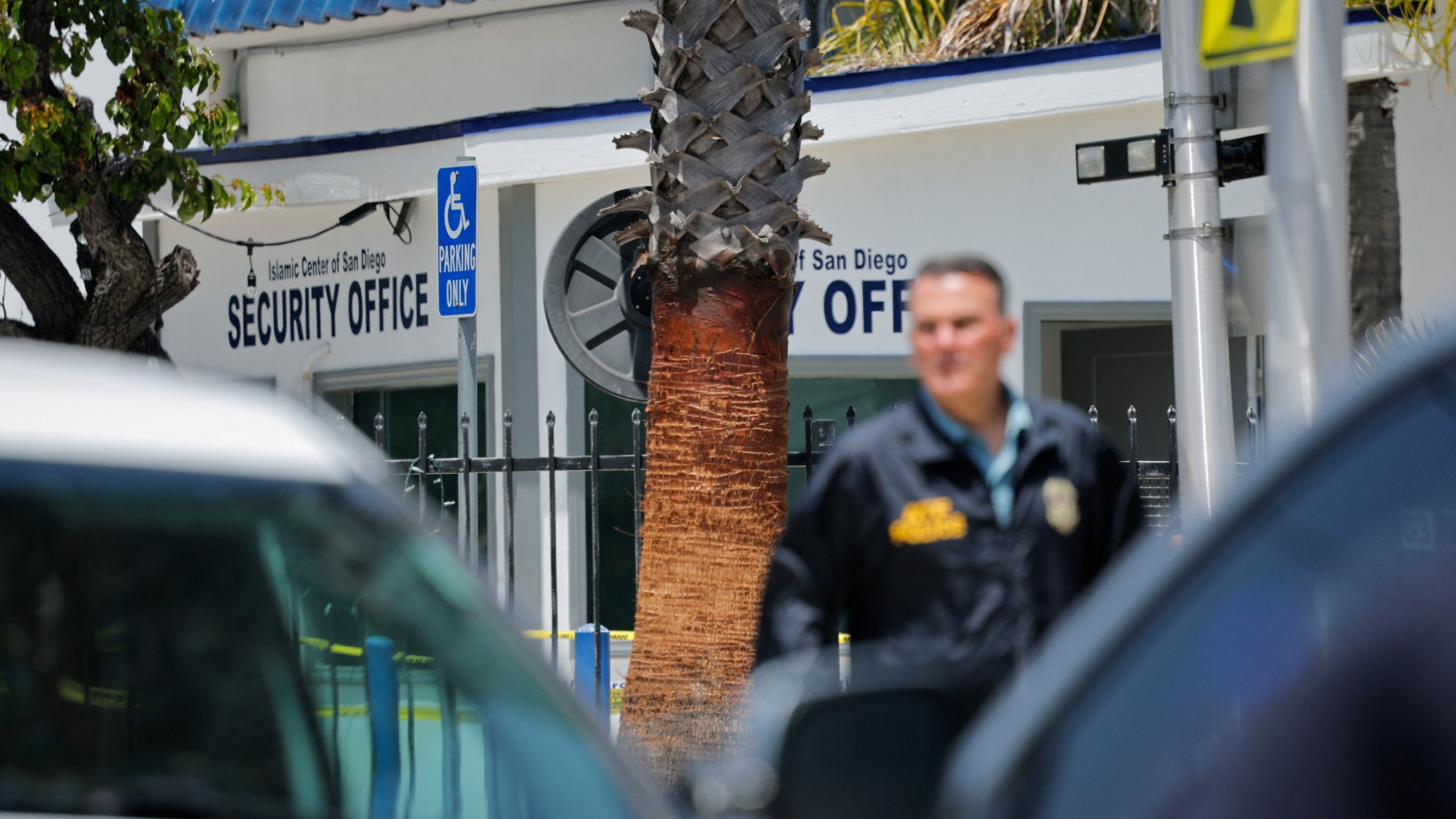
On a Monday afternoon in Southern California, emergency dispatchers flooded with calls of an active shooter at the Islamic Centre of San Diego triggered a massive law enforcement response, leaving three people dead – including an on-site security guard – and sending shockwaves through the local Muslim community. Dozens of patrol cars and emergency vehicles descended on the mosque complex, which is formally recognized as the largest Muslim place of worship across San Diego County, according to the institution’s official website.
Local officials quickly confirmed the unfolding situation via social media. “I am aware of the active shooter situation at the Islamic Center of San Diego,” Todd Gloria, mayor of San Diego, posted on X, the platform formerly known as Twitter, adding that first responders had already deployed to the site to secure the area and safeguard local residents.
Within hours of the initial response, San Diego Police Chief confirmed during a formal press briefing that two teen suspects were located dead inside a vehicle parked just a few blocks from the mosque. The chief noted that preliminary evidence indicates both suspects died from self-inflicted gunshot wounds, and that law enforcement is officially treating the attack as a bias-driven hate crime. Shortly after clearing the scene, the San Diego Police Department announced the active threat had been fully neutralized, with no further danger to community members remaining in the area.
California Governor Gavin Newsom received full briefings on the developing incident from state and local law enforcement, according to his press office. “We are grateful to the first responders on the scene working to protect the community and urge everyone to follow guidance from local authorities,” the governor’s office shared in a post on X.
Federal law enforcement resources have also been mobilized to support the investigation: CNN confirmed Monday that the FBI is assisting local authorities with the probe into the deadly attack.
This shooting comes amid a documented sharp upward trend in anti-Muslim violence across the United States. A report released last month by the Muslim Public Affairs Committee (MPAC) revealed that Islamophobic attacks across the country surged to a 15-month high in April of this year. The organization linked this surge in targeted violence to shifting U.S. foreign policy in the Middle East, specifically pointing to the Trump administration’s military strike on Iran that began in late February. Khuram Zaman, founding director of the Center for Security, Technology and Policy at MPAC, previously told Middle East Eye that the strike marked a clear turning point in hate crime statistics: “The one factor we can identify in March is that at the end of February, the war in Iran started, and that is what we think is the delineation between what we saw before in 2025 versus what we’re seeing here.”