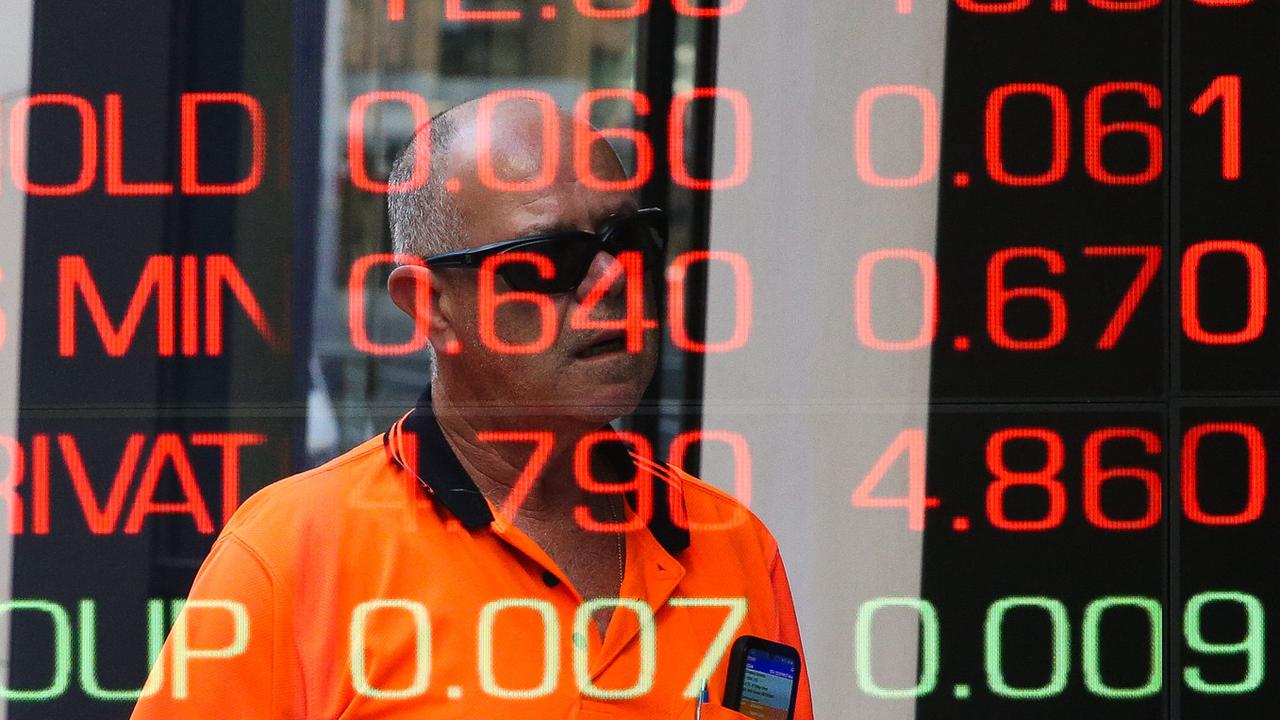
A sharp downturn has dragged Australia’s benchmark sharemarket to its lowest point in seven weeks, driven by skyrocketing global crude oil prices that have punished oil-reliant industries and triggered widespread selloffs across multiple blue-chip and mid-cap stocks on Monday.
The S&P/ASX 200 closed the trading session at 8,505.3 points, marking a 1.45% drop that was twice as steep as pre-market futures had forecast. Out of the benchmark index’s 11 industry sectors, only energy managed to end the day in positive territory, while materials and industrial firms recorded the largest losses. The broader All Ordinaries index followed a similar trajectory, falling 1.52% for the day.
Multiple individual stocks suffered dramatic single-day declines, driven by company-specific challenges alongside broader market headwinds. Pallet and supply chain giant Brambles led the blue-chip losses, plummeting 20.2% after issuing an $84 million revenue downgrade. The company disclosed that widespread labor shortages have left it unable to repair and refurbish pallets to the strict specifications required for automated robotic handling systems – robots cannot accommodate splintered, chipped, or bent pallets, disrupting Brambles’ core CHEP operations. Brambles is the latest in a string of major Australian blue chips, including Cochlear, Commonwealth Bank, and CSL, to see major selloffs in recent weeks.
Other notable losers included Singapore-based telco holding company Tuas, which collapsed 62.8% after Singaporean authorities blocked a planned acquisition and revealed one of the firm’s local subsidiaries may have been illegally using unapproved radio frequencies. Agribusiness wholesaler Elders dropped 22.9% following the release of its half-year results, where the company reaffirmed that elevated diesel prices would continue to hit its bottom line. While high wool and livestock prices and favorable growing conditions in South Australia and Victoria have offset some losses, Elders is still grappling with severe drought and reduced crop yields in northern New South Wales, with diesel costs showing no signs of easing.
The oil price surge that shook market sentiment on Monday saw Brent crude climb above $110 per barrel, while West Texas Intermediate crossed the $107 per barrel threshold. This rally delivered clear gains to domestic energy producers: Woodside Energy rose 2.9%, Santos added 2.7%, Beach Energy gained 2.7%, and Viva Energy closed up 1.3%.
In contrast, 36 of Australia’s 40 largest mining firms dropped by at least 1.3% on the day. BHP fell 2.8%, Fortescue Metals Group declined 2.9%, Rio Tinto slid 3.6%, and Northern Star Resources shed nearly 2.5%. Rising bond yields and persistent inflation concerns also weighed heavily on gold-focused mining equities, with Newmont dropping 4.2% and Greatland Resources falling 5.9%. The lone gainer among the 40 largest miners was Lynas Rare Earths, which rose 5.5% after federal Treasurer Jim Chalmers ordered Chinese shareholders to divest their holdings in rare earth miner Northern Minerals, clearing a path for increased market access for Australian producers.
Justin Lin, a strategist at Global X ETFs, noted that the ASX materials sector has actually outperformed financials for nine consecutive months (excluding volatility tied to geopolitical tensions around Iran), marking the longest streak of relative outperformance in more than two decades. This run has been fueled by a range of tailwinds, including a low post-pandemic base, Western-led supply chain restructuring away from China, and surging global demand for critical minerals used in semiconductor manufacturing. “Smart money has clocked this trend for a while now,” Lin explained. “Due to the significant overweight position of financials within the domestic index, the road ahead for Australian equities could still prove challenging, even with materials acting as a ballast against weakening conditions in the local economy.”
The Australian dollar also saw extreme volatility in May, completing what Westpac currency analysts described as a “full round trip” that erased almost 1.4 US cents of earlier gains. After trading comfortably above the US$0.72 mark for much of the month, the currency suffered a bruising pullback to end last week. Westpac analysts noted in a research note that the ongoing global bond selloff is now clearly spilling over into risk-sensitive assets, leaving the Australian dollar facing a packed week of market events with significant uncertainty to price in.