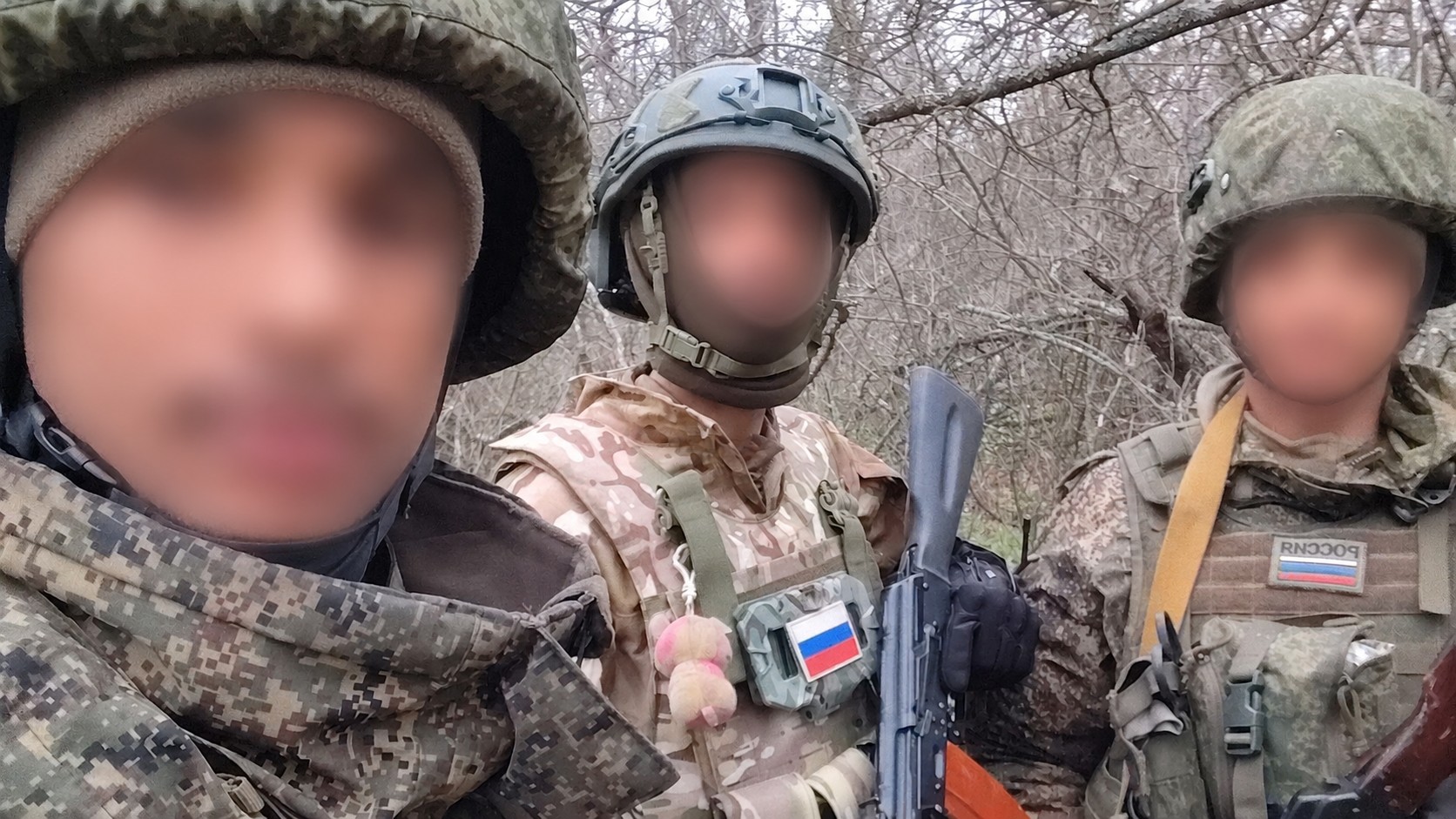
For nearly a decade, Yemen has been torn apart by a brutal civil war that has gutted its economy, pushed millions to the brink of famine, and left even experienced frontline fighters struggling to feed their families. Now, a new report from independent news outlet Middle East Eye reveals that Russia has turned this widespread economic despair into a recruiting ground, drawing battle-hardened Yemeni fighters to join its invasion of Ukraine with offers of life-changing cash, steady high salaries, and a path to Russian citizenship.
Multiple on-the-ground sources confirmed to MEE that the recruitment campaign targets young men with prior combat experience across Yemen’s most active battlefields – from the contested cities of Taiz and Marib to the frontlines along the Saudi border – regardless of whether they previously fought for Houthi forces, the internationally recognized Yemeni government, or militias backed by the United Arab Emirates. The financial terms on offer far outstrip any income available to fighters in Yemen, turning service in Russia’s war in Ukraine into a risky but seemingly viable escape from cycles of crippling poverty.
Ahmed Nabil, a young fighter who previously served with Yemeni Republican Guard forces on the country’s western coast, was one of dozens of recruits who made the journey over the past year. Fawzi, a fellow Republican Guard soldier who fought alongside Nabil, told MEE that even though Nabil already earned roughly $260 a month – on par with the salary of an experienced professional accountant in Yemen – the promise of far higher pay in Russia was too tempting to pass up.
“In the middle of 2025, around 10 soldiers, including Nabil, decided to travel to Russia. It seems they were in contact with someone who was already in Russia, but we weren’t aware,” Fawzi recalled. “We tried to advise them, telling them that the fighting there is dangerous, but they confirmed they had enough experience to join any front line in the world.”
Early reports after Russia’s 2022 full-scale invasion of Ukraine claimed that many Yemeni recruits were deceived into traveling to Russia, after being promised well-paying civilian jobs only to be forced into military service. But Fawzi emphasized that every one of his former comrades who made the trip understood full well they would be deployed to the Ukrainian front lines.
The scope of the financial incentives makes clear why fighters are willing to take the risk: Brokers have promised recruits an upfront payment of $15,000, a monthly salary of $5,000, and eventual Russian citizenship – sums that are virtually unheard of in Yemen’s collapsed economy. Even Fawzi, who knew the risks, admitted he considered the offer at first.
“When I was told about these offers, I myself thought about joining the battles in [Ukraine],” he said. “But when I saw that almost none of my colleagues had returned, I dismissed it, realising that those financial rewards would be paid with my blood.”
Despite growing reports of Yemeni recruits being killed or going missing in Ukraine, Fawzi added that new groups of fighters continue to depart Yemen every day, confident that their years of combat experience in their home country’s civil war will help them survive the conflict.
Over the past year, a number of Yemeni fighters deployed to Ukraine have taken to social media to share firsthand accounts of what awaits new recruits, and many have issued urgent warnings to others considering making the journey. Multiple posts have confirmed that recruits who arrive at the front lines are barred from leaving before they complete their mandatory one-year contracts with the Russian military. Many fighters have described conditions on the front that are far harsher and more deadly than anything they encountered during years of fighting in Yemen.
Dozens of the social media accounts MEE monitored for this report have stopped posting updates for months, leading to widespread speculation that the users have been killed in combat. A small number of surviving fighters have released public video appeals begging the Yemeni government to intervene and help them return home. To date, the Yemeni government has not taken any public action to assist these recruits. There are also no official counts of how many Yemenis are currently fighting in Ukraine, as nearly all travel through unregulated private brokers rather than formal government or military channels.
The human cost of this recruitment network is already devastating for Yemeni families. Umm Tawheed, a mother whose son was killed in Ukraine after traveling to Russia without her knowledge, told MEE she is still grieving not just his death, but the fact that she cannot even bring his body home for burial.
“My son was fighting on the border with Saudi Arabia, but five months ago I was shocked to discover he had travelled to fight in [Ukraine],” she said. “I was not happy to hear that, and I asked his wife to tell him to return, but I was told it was impossible.”
After weeks of begging relatives and neighbors for help to arrange her son’s return, Umm Tawheed received the devastating news she had feared.
“I heard Tawheed’s wife crying and shouting. At that point I knew Tawheed had been killed,” she recalled. “I don’t remember what happened next, but it seems I fainted for a while before I woke up to find the whole family surrounding me, everyone except Tawheed, who was gone forever.”
Tawheed, a father of three, had originally joined Yemeni forces on the Saudi border solely to earn enough money to support his wife, children, and mother. Now, his mother’s only remaining wish – to see his body one last time before burying him – remains unfulfilled.
“My last hope was to see his dead body, but that was also impossible,” she said. Unable to continue speaking through her grief, she offered a warning to other Yemeni families: “Do not allow your husbands and sons to join battles, whether in Yemen or in [Ukraine], because the pain of this loss is unforgettable.”
While many families fiercely oppose their loved ones joining the war in Ukraine, for the fighters themselves, the decision to travel to Russia is almost always a desperate response to Yemen’s ongoing economic collapse. Mahmoud Al-Sabri, 37, a veteran of multiple Yemeni front lines, told his family in late 2025 that he was taking a civilian restaurant job in Djibouti, a small Horn of Africa nation neighboring Yemen. While he did travel to Djibouti, his family later discovered he had continued onward to Russia.
“No one is happy to see their son fight in [Ukraine],” Mustafa Al-Sabri, Mahmoud’s father, told MEE. “That is not our war, and I’m not sure what made my son join it.”
Mustafa said he believes his son may have been manipulated by recruiters, rather than acting solely out of a desire for higher pay. “He told me he was travelling to work in Djibouti, and then we were shocked to discover he was in Russia. I can’t talk to him now, but I hope he returns soon so we can know the truth,” he said. The family last heard from Mahmoud in early April, when he sent a message saying he was stationed in a forest alongside other foreign recruits. “We don’t know if he is alive, dead, or detained, but I hope we hear his voice soon,” Mustafa added.
Mohammed Ali, a veteran Yemeni journalist and security observer, told MEE that while most current recruits know they will be deployed to fight in Ukraine, earlier waves of recruitment did rely on widespread deception. “The brokers tell the victims they will be doing civilian work, such as working in restaurants or on farms. But when they arrive in Russia, they find themselves in military camps and have no choice but to sign one-year military contracts,” Ali explained. He noted that this deceptive tactic was most common for recruitment groups sent to Russia in 2023 and early 2024, while most recruits who have traveled more recently are fully aware they will be sent to the front lines.
At its core, Ali emphasized, the trend of Yemeni fighters joining Russia’s war is driven by the country’s catastrophic economic conditions. “The poor economic situation and the irregular payment of salaries within the Yemeni army and other military groups have played a major role in forcing Yemeni fighters to travel to Russia in search of a better income,” he said.
This is not the first time Russian recruiters have targeted vulnerable young men in the Middle East. Last year, MEE reported that young Jordanian men were promised safe, high-paying civilian jobs in Russia, only to be coerced into fighting in Ukraine through threats, deception, and fraudulent contracts.
Russian officials have previously denied forcing foreigners to fight in Ukraine. In March, Russian Foreign Minister Sergey Lavrov acknowledged that foreigners serve in Russian forces in Ukraine, but claimed the Russian government does not recruit people to fight against their will. “Volunteers get there in full compliance with Russian legislation,” he said.
MEE reached out to the foreign ministries of Yemen, Russia, and Ukraine to request comment for this report, but did not receive a response before publication.