A groundbreaking new research published in *Science Advances* on Friday has uncovered a quiet, growing threat to global river ecosystems: human-caused global warming is driving a steady decline in dissolved oxygen levels across the world’s waterways, putting fish populations and entire aquatic habitats at severe risk. The research, led by environmental scientist Qi Guan from the Chinese Academy of Sciences in Nanjing, combines decades of satellite data and artificial intelligence analysis to deliver one of the most comprehensive assessments of river deoxygenation to date.
Guan’s team tracked changes in oxygen content in more than 21,000 rivers spanning every continent from 1985 onward. The data revealed an average 2.1% drop in dissolved oxygen across all studied systems over the 38-year study period. While this decline may seem modest at first glance, researchers warn that it represents a cumulative trend that will escalate if current warming rates continue. By the end of the 21st century, the study projects an additional average 4% oxygen loss globally, with some vulnerable river basins facing drops close to 5% that would trigger severe ecological harm.
The basic science behind the trend is well-established: warmer water inherently holds less dissolved oxygen than colder water, and rising water temperatures drive more oxygen out of rivers and into the atmosphere. Guan’s study quantified the share of global deoxygenation driven by warming: nearly 63% of the observed oxygen loss can be traced directly to rising water temperatures from anthropogenic climate change. Other contributing factors include nutrient pollution from agricultural fertilizers, urban stormwater runoff, altered flow patterns from dam construction, and changes in surface wind dynamics, but warming remains the single largest driver of the trend.
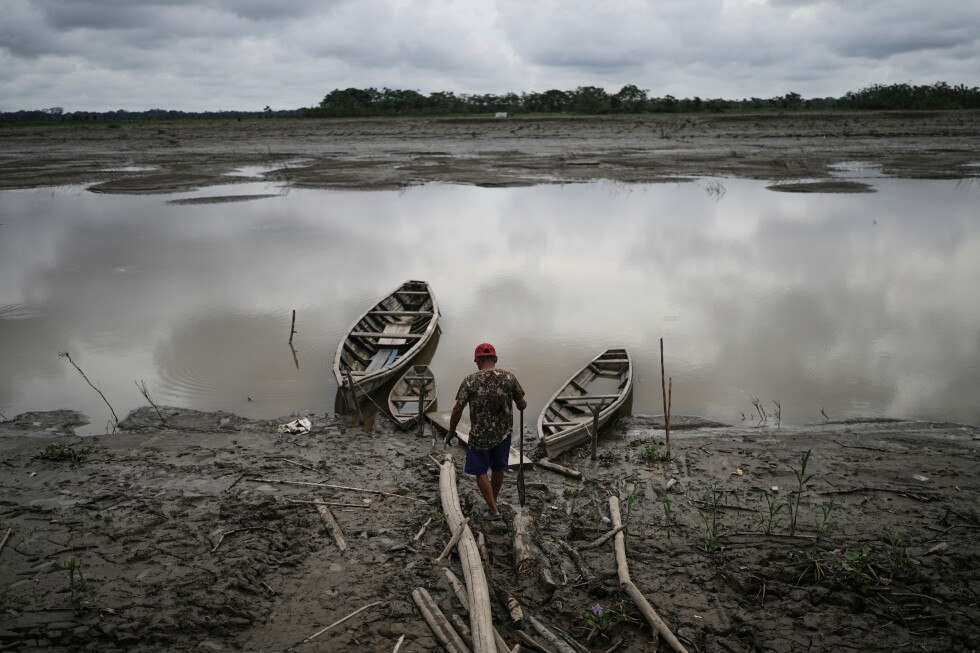
If current deoxygenation rates persist, the study warns that heavily impacted regions including the eastern United States, India, the Arctic and most of tropical South America could see a 10% total oxygen loss from 1985 levels by 2100, even under moderate carbon emissions scenarios, not the most severe worst-case climate projections. Already, one of India’s most important and heavily polluted water systems, the Ganges River, is losing oxygen more than 20 times faster than the global average, according to the analysis. Tropical systems such as the Amazon Basin are particularly at risk: previous research found the number of days with dead zone conditions in the Amazon has increased by nearly 16 days per decade since 1980.
When dissolved oxygen drops low enough, it creates hypoxic (low-oxygen) or anoxic (no-oxygen) dead zones, areas where most aquatic life cannot survive. Fish suffocate, biodiversity collapses, and water quality degrades in these areas, which already threaten major water bodies including the Gulf of Mexico, Chesapeake Bay and Lake Erie. Outside experts not involved in the study echoed Guan’s team’s alarm over the emerging trend.
Karl Flessa, a geoscientist at the University of Arizona, noted that deoxygenation is an incremental process that builds over time to create irreversible harm. “Deoxygenation is a very slow process. If we have a long period, the negative impact will attack the river ecosystems,” Guan said. “The low level of oxygen can cause a series of ecological crises such as biodiversity decline, water quality degradation and maybe some fish will die.” Flessa added that many already stressed rivers are just a small temperature increase away from tipping into dangerous hypoxic conditions, which would eliminate sport and commercial fish populations in popular fishing areas.
Emily Bernhardt, an ecologist and biogeochemist at Duke University, explained that rising river temperatures amplify the harm caused by existing water pollution. “As rivers warm it becomes easier and easier for the same pollution problems as before to cause more severe, more long lasting or more widespread hypoxia and anoxia,” she said. That means cutting water pollution has become an even more critical priority as the climate warms, she added. Marc Bierkens, a hydrology professor at Utrecht University in the Netherlands who also was not part of the new study, has observed similar trends in his own independent research: he found global river oxygen stress has increased by 13 days per decade, and dead zone occurrences by nearly 3 days per decade, since 1980, trends that will accelerate with continued warming.
The Associated Press’ climate and environmental reporting for this article was supported by funding from private philanthropic foundations, with the AP retaining full editorial control over all content.