Regional divisions across the Persian Gulf have been laid bare by a newly revealed failed diplomatic push, after Bloomberg reported Friday that the United Arab Emirates was unable to convince Saudi Arabia and Qatar to launch a coordinated joint military response to Iranian retaliatory attacks earlier this year.
The failed outreach came in the immediate aftermath of a joint strike against Iranian targets by the United States and Israel on February 28. In response to that attack, Tehran launched a massive barrage of thousands of missiles and drones against Gulf states that had aligned with the U.S. and Israel. The UAE, which normalized diplomatic relations with Israel in 2021 under the U.S.-brokered Abraham Accords, bore the overwhelming weight of Tehran’s retaliation, with close to 3,000 projectiles hitting targets across the country.
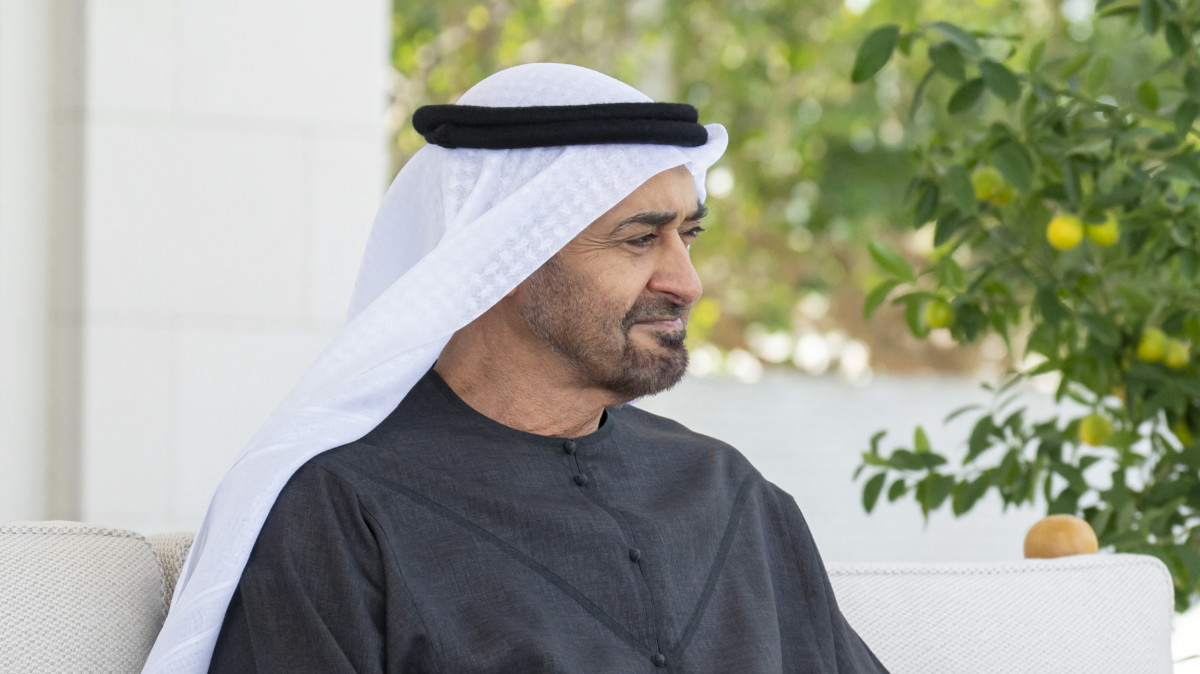
Shortly after the attack, UAE President Mohamed bin Zayed Al Nahyan held a series of urgent phone consultations with top Gulf leaders, including Saudi Arabia’s de facto ruler Crown Prince Mohammed bin Salman. To the UAE’s disappointment, both the Saudi crown prince and other regional leaders rejected the call for a unified military offensive against Iran. Instead of uniting competing Gulf powers against a shared adversary, the unfolding conflict has amplified long-simmering tensions between Riyadh and Abu Dhabi, the report found.
To date, both Saudi Arabia and the UAE have launched retaliatory strikes against Iran, but have acted entirely independently. Analysts have characterized Saudi Arabia’s military response as deliberately restrained; shortly after its strikes, the kingdom shifted its focus to supporting regional mediation efforts led by its close ally Pakistan.
The UAE has taken a far more escalatory approach, however, targeting critical Iranian energy infrastructure. The Wall Street Journal reported that the UAE carried out an airstrike on Iran’s Lavan Island, a major Gulf oil and gas processing hub, in early April. The attack came at the exact moment the U.S. was publicly announcing a ceasefire in the conflict, and is reported to have sparked a massive blaze that knocked most of the facility’s operational capacity offline for months, representing a major escalation of hostilities.
Geographic and economic realities have driven the UAE’s harder line. Unlike Saudi Arabia, which can route oil exports through its East-West pipeline to the Red Sea to avoid Gulf closures, the UAE’s energy trade and economic standing are far more vulnerable to Iranian actions. The ongoing conflict has also severely damaged the country’s core identity as a safe global tourism and financial hub.
Abu Dhabi has aggressively lobbied both publicly and privately to convince the U.S. to continue its military campaign against Iran, and even put forward a failed United Nations resolution that would have authorized the use of military force to respond to Iran’s new control over the strategic Strait of Hormuz. Its frustration with regional allies has grown increasingly public: senior UAE presidential adviser Anwar Gargash openly criticized the Gulf Cooperation Council for what he called a “weak” collective response to Iran’s attacks. That discontent reached a breaking point in May, when the UAE announced its withdrawal from the OPEC oil cartel.
Amid its growing estrangement from traditional Gulf partners, the UAE has doubled down on its deepening security and diplomatic alignment with Israel. U.S. Ambassador to Israel Mike Huckabee confirmed earlier this month during a public event in Tel Aviv that Israel has deployed Iron Dome air defense batteries, along with specialized military personnel to operate the systems, to the UAE to help defend against Iranian missile and drone attacks. “Israel just sent them — [the UAE] — Iron Dome batteries and personnel to help them operate them. How come? Because there’s an extraordinary relationship between the UAE and Israel based on the Abraham Accords,” Huckabee said.
Even with this deepening security cooperation, the UAE has remained cautious about publicly acknowledging the full extent of its ties with Israel. This tension was on full display this week, when Israeli Prime Minister Benjamin Netanyahu’s office announced he had made an unpublicized visit to the UAE during the ongoing conflict, only for Abu Dhabi to issue an immediate denial that any such visit ever occurred.
It should be noted that Israel’s ongoing military campaign in Gaza has been formally labeled a genocide by the United Nations, leading genocide scholars, leading international human rights experts, and multiple heads of state across the globe — including Saudi Crown Prince Mohammed bin Salman and Egyptian President Abdel Fattah el-Sisi.